Cast Iron Skillet Pizza: Ultimate Crispy Crust Recipe
- The Secret to Pizzeria-Quality Crusts at Home
- The Science of the Skillet: Achieving the Ultimate Crunch
- Cornerstone Ingredients for Your Perfect Pizza Base
- Crafting Your Cast Iron Skillet Pizza: The Essential Method
- Pro Chef Strategies for No-Fail Pizza Making
- Extending Your Pizza Enjoyment: Storage and Make-Ahead Prep
- Perfect Pairings to Elevate Your Skillet Pizza Night
- Recipe FAQs
- 📝 Recipe Card
The Secret to Pizzeria Quality Crusts at Home
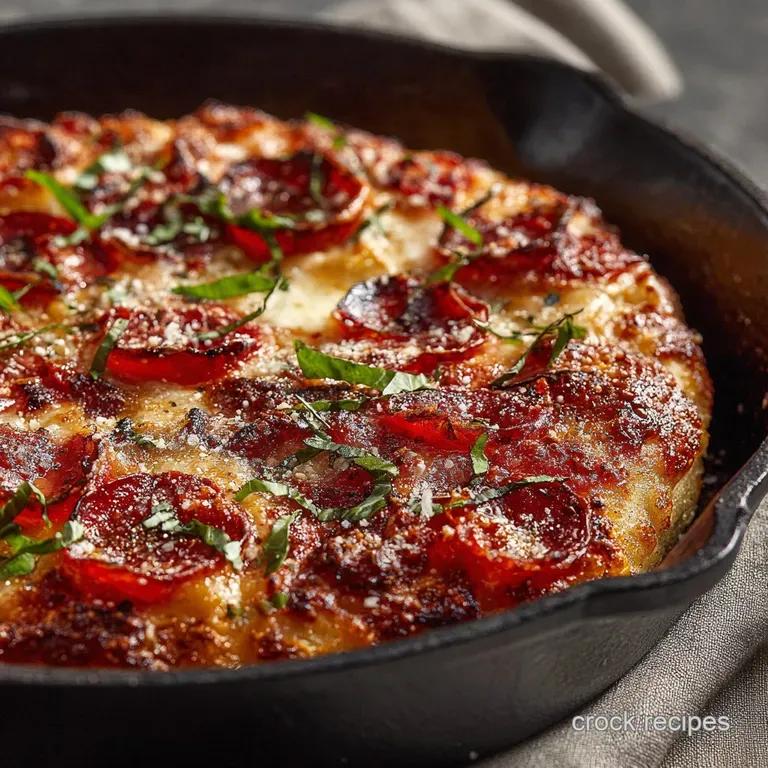
That glorious smell hits you first. It’s yeast, melted cheese, and charred tomato, all wrapping around the house like a warm hug. When you pull this perfect Cast Iron Skillet Pizza out of the oven, you hear the crust crackle, and that sound is absolutely everything.
That crunch, that deep, golden brown edge that is the mark of true success.
Forget paying thirty bucks for a soggy delivery. Making this Cast Iron Skillet Pizza is cheaper, faster, and honestly, way more fun. It’s my go-to "fakeaway" recipe, perfect for Friday nights when you need maximal comfort food with minimal kitchen chaos.
We’re leveraging a kitchen workhorse your cast iron skillet to mimic the high, consistent heat of a professional pizza oven.
Ready to ditch the flimsy store-bought crusts forever? I’ve run all the kitchen experiments so you don’t have to, learning exactly what temperature and timing yields the perfect deep dish pan pizza texture.
Let’s crack on and master this incredible Cast Iron Skillet Pizza Dough Recipe together.
The Science of the Skillet: Achieving the Ultimate Crunch
This is not just another pizza recipe; this is a masterclass in heat transfer. The reason this Cast Iron Skillet Pizza works so much better than pizza baked on a standard tray is simple: thermal mass. Cast iron holds heat like a beast.
It stores a huge amount of thermal energy and releases it slowly and consistently right into the bottom of your dough.
Why the Cast Iron Skillet is Your Secret Weapon
The heavy metal surface acts like a miniature pizza stone, but better. Unlike a thin sheet pan that quickly loses heat, the skillet maintains a blazing hot temperature, instantly shocking the dough fibers the moment they touch the oil.
This shock is what creates the exceptional crust on this Easy Cast Iron Pizza . You get instant lift, fantastic internal structure, and a base that sings when you slice it.
Defining the Perfect 'Fakeaway' Crust: Crispy, Chewy, and Deep
We are aiming for a crust profile known as 'pan pizza' or 'Skillet Pan Pizza.' Think soft, slightly airy focaccia on the inside, surrounded by a thick, crunchy perimeter that is caramelized and chewy where it meets the skillet.
Achieving this specific texture is dependent on two key things: oil volume and the dual cooking method we employ for this amazing Cast Iron Skillet Pizza .
Essential Equipment Check: Gearing Up for High Heat Success
A 10 inch or 12 inch cast iron skillet is non-negotiable here. Make sure it’s well seasoned; if your skillet is sticky, your pizza will be too! A baking steel or stone, placed on the upper rack during preheating, is optional but highly recommended.
It helps regulate the overall oven temperature and boosts the radiant heat. If you love skillet cooking, you might also enjoy making my [Keto Chocolate Skillet Cookie: Easy, Gooey Low Carb Skillet Dessert] in a similar pan when dessert calls.
The Hob-to-Oven Method Explained: Dual Heating Zones
This is the secret sauce for our Cast Iron Skillet Pizza . You start the pizza on the stovetop (hob) over medium high heat for about five minutes. This searing phase guarantees the bottom crust develops that deep, beautiful golden brown color and serious crunch.
Then, you transfer the whole skillet immediately into a screaming hot oven to finish the baking. This ensures the top melts and bubbles while the center of the dough fully cooks.
Maximizing the Maillard Reaction for Golden Flavor
The Maillard reaction is just a fancy term for what makes food taste good browning! Because we use oil in the skillet and cook at such high heat, the sugars in the dough caramelize intensely right where they contact the pan.
This reaction is responsible for that nutty, complex flavor and the deep coloring of the Cast Iron Pizza Baking process.
The Role of Dough Hydration in Creating Chew
Our Cast Iron Skillet Pizza Dough Recipe uses a fairly high hydration level, meaning it has a good amount of water relative to the flour. Higher hydration keeps the crust tender and airy on the inside, contrasting perfectly with the crispy exterior created by the pan.
Don't be afraid if the dough seems slightly sticky; that's actually a good thing for chewiness.
Cornerstone Ingredients for Your Perfect Pizza Base
The best pizza, even a simple Cast Iron Skillet Pizza , requires attention to its core components. Keep it simple and focus on quality; you’ll taste the difference.
Choosing the Right Flour for Structure and Lift
I always reach for bread flour for this Cast Iron Skillet Pizza Dough Recipe . It has a higher protein content than all-purpose flour (around 12 14%), which leads to more gluten development. More gluten equals more chew and better structure to hold up all those delicious toppings.
If you only have all-purpose flour, it will work, but the final texture won’t be quite as resilient.
| Ingredient | My Top Choice | Substitution |
|---|---|---|
| Flour | High Protein Bread Flour | Strong All-Purpose Flour |
| Yeast | Active Dry Yeast | Instant Yeast (reduce rise time by 15 min) |
| Oil | Extra Virgin Olive Oil | Grapeseed or Canola Oil |
| Salt | Kosher Salt | Fine Sea Salt (reduce volume slightly) |
The Importance of high-quality Crushed Tomato Sauce
Don't cook the sauce beforehand! For a true Neapolitan style Cast Iron Skillet Pizza , you want a fresh tasting sauce. I recommend using San Marzano whole peeled tomatoes. Crush them by hand it sounds messy, but it gives the sauce a perfect, chunky texture that retains freshness.
Mix only with a touch of garlic, salt, pepper, and oregano.
Dairy Decisions: Selecting Mozzarella That Melts, Not Weeps
This is a critical tip. Avoid fresh, water packed mozzarella here. It releases too much moisture under high heat, leading to a soggy middle crust disaster. Use low-moisture, factory shredded mozzarella or a block of low-moisture mozzarella that you grate yourself.
This cheese melts beautifully and prevents water logging your perfect Cast Iron Skillet Pizza .
Quick Guide to Ingredient Prep and Temperature
Make sure your water for the yeast is warm, not hot (around 105°F/40°C). Too hot, and you kill the yeast. The temperature of your oven should be as high as it will safely go I use 500°F (260°C).
Get that oven hot long before you start the assembly process for your Cast Iron Skillet Pizza .
Crafting Your Cast Iron Skillet Pizza: The Essential Method
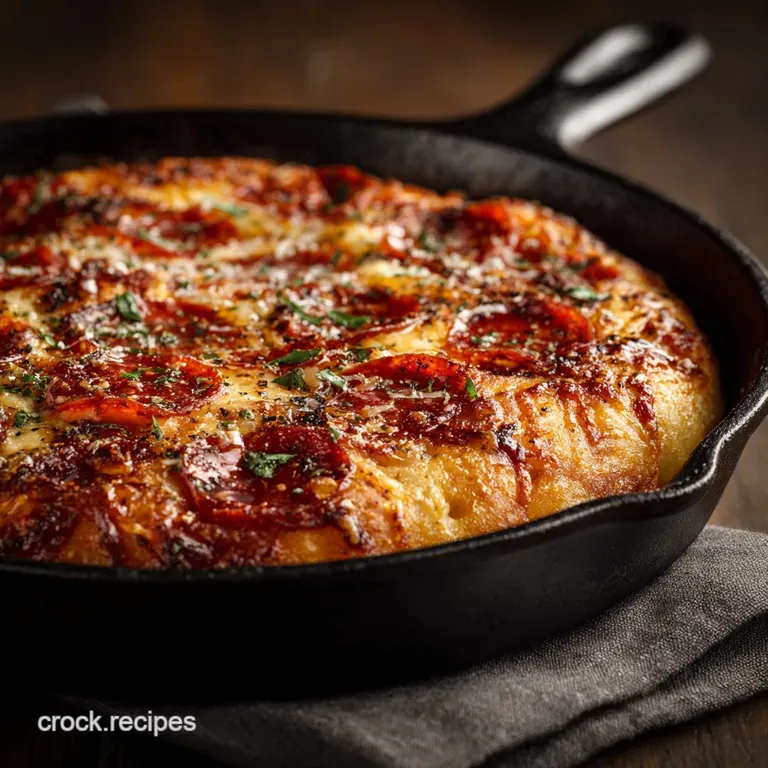
This detailed method ensures you get the perfect crust from edge to edge. Follow these steps precisely to achieve the ideal Pan Pizza Crust .
Developing the Dough: The First Rise and Stretch
Once your dough is kneaded and smooth, it needs time to relax and proof. The first rise, or bulk fermentation, takes about 60 to 90 minutes. I usually put it in the oven (turned off, of course) with the light on that provides just enough warmth.
When the dough has doubled, gently punch it down. Don’t get aggressive; you just want to deflate the larger gas bubbles.
Prepping the Skillet: Oiling and Pressing the Dough
Pour a generous tablespoon of olive oil into your cold cast iron skillet. Trust me, oil is your friend here. It helps the dough fry slightly, contributing to the crispness. Transfer the dough ball to the center and turn it to coat it fully in the oil.
Now, press the dough out with your fingertips, covering the bottom of the pan. If it snaps back, let it rest for 10 minutes, covered, then try again. The gluten needs to chill out!
The Crucial Hob Start: Building the Foundation
After the final proof (when the dough has reached the edges and puffed up slightly), apply your sauce and toppings quickly. Now, place the skillet on the stovetop over medium high heat. You are listening for a gentle sizzle. Cook it here for 4 to 5 minutes.
The crust around the edges should start to bubble and crawl slightly up the sides. Use a spatula to peek underneath; you want a deep, golden brown color before moving on. This sear is non-negotiable for a crisp bottom on your Cast Iron Skillet Pizza .
Baking and Finishing: Achieving the Golden Top
Once seared, immediately transfer the skillet to the preheated 500°F oven. This dual attack blasts the top with heat while the bottom is already set. Bake for 10– 15 minutes until the cheese is bubbling and has nice caramelized spots.
The final golden brown color of the crust is your indicator that this Easy Cast Iron Pizza is done.
Chef's Note: If your skillet base is browning too fast but the cheese hasn't fully melted, move the skillet to a lower oven rack for the last few minutes. If the cheese is done but the crust needs more color, switch to the broiler for 60 seconds (watch it like a hawk!).
Pro Chef Strategies for No-Fail Pizza Making
I’ve made enough mistakes (like the time I tried to use a frozen crust that welded itself to the pan never again!) to know the pitfalls. These tips will ensure your Cast Iron Skillet Pizza turns out flawlessly every time.
Troubleshooting the Sticky Dough Disaster
If your dough is too sticky during the stretch and press phase, dust your fingers lightly with flour, but not the pan itself. The key to successful stretching is time. If the dough resists, cover it and walk away for 10 minutes.
This allows the gluten strands to relax, making the dough pliable and easy to handle for your Cast Iron Skillet Pizza Dough .
Managing Oven Spring: Preventing a Puffy Center
Sometimes, the middle of the dough puffs up too much during the initial bake. This happens when gas pockets are trapped. To prevent this, gently dock the center of the dough with a fork before saucing and topping, being careful not to pierce the edges.
The Perfect Slice Time: Why Patience Matters Post Bake
Do not slice your pizza the second it leaves the oven. The molten cheese needs a couple of minutes to solidify slightly, and the internal steam needs to dissipate. Let your Cast Iron Skillet Pizza rest in the pan for 2– 3 minutes.
This resting time prevents a sloppy topping slide and ensures clean, structural slices.
Extending Your Pizza Enjoyment: Storage and make-ahead Prep
We all need options for leftovers or batch cooking. Knowing how to handle your dough and cooked slices is crucial for future enjoyment of your delicious Cast Iron Skillet Pizza .
Reheating Leftovers: Re-Crisping the Crust
Never, ever microwave leftover pizza. It turns the crust into sad, rubbery sadness. The best way to reheat your Skillet Pan Pizza is back in the cast iron skillet!
Place the slices in a cold skillet, cover it loosely with foil, and heat on medium low until the cheese is melted and the crust is crisp again (about 8- 10 minutes).
Freezing Unbaked Dough for Future Use
This is genius for quick weeknight meals. After the first rise, shape the dough into a disk, rub it lightly with oil, and place it in a freezer safe zip-top bag. Squeeze out all the air and freeze for up to three months.
To use, transfer it to the fridge overnight, then let it come up to room temperature for 1- 2 hours before pressing it into the skillet for your Cast Iron Skillet Pizza .
Best Practices for Refrigerating Cooked Pizza
Store slices in an airtight container or tightly wrapped in foil in the fridge. They will keep well for 3 to 4 days. If you've been doing some low-carb cooking lately, this reheating method also works perfectly for my [Keto Cheeseburger Casserole Easy Creamy Skillet Bake], keeping the crust on that skillet bake firm.
Perfect Pairings to Elevate Your Skillet Pizza Night
Troubleshooting the Sticky Dough Disaster
If the dough resists stretching into the pan, the gluten is too tight. Give it a time out. That ten-minute rest is pure gold for relaxing the dough, allowing you to press it right to the edges without tearing.
This is a common issue with any high hydration dough like the one we use for this particular Cast Iron Pizza Crust Recipe .
Managing Oven Spring: Preventing a Puffy Center
If the center puffs up dramatically, it’s a sign that the dough was slightly under proofed or that steam got trapped. Next time, try the light docking technique mentioned above. Also, ensure your oven is fully preheated; sometimes low initial heat contributes to uneven rise.
The Perfect Slice Time: Why Patience Matters Post Bake
Seriously, wait three minutes. I know the aroma of this fresh Cast Iron Skillet Pizza is overwhelming, but if you cut it too soon, the hot cheese and sauce will slide right off. Resting ensures structural integrity and a cleaner cut every time.
Reheating Leftovers: Re-Crisping the Crust
The skillet method detailed above truly revives the texture. The slow, gentle heat conducted by the cast iron base crisps the bottom without burning the cheese on top, transforming your day-old Best Cast Iron Skillet For Pizza into something nearly as good as fresh.
Freezing Unbaked Dough for Future Use
Having pre-made dough ready to go is the ultimate kitchen hack for busy evenings. Make a double batch of the Cast Iron Skillet Pizza Dough Recipe next time you bake, and thank yourself later. You can go from freezer to fantastic pizza in about two hours.
Best Practices for Refrigerating Cooked Pizza
Always separate layers of pizza with parchment paper if stacking in a container. This prevents the top of one slice from fusing with the cheese on the next. It makes the next day reheat of your incredible Cast Iron Skillet Pizza much easier.
Recipe FAQs
Why is the bottom crust burning before the toppings are fully cooked?
This usually indicates that your hob heat is too aggressive during the initial cook phase. Ensure you are using a consistent medium high heat, not full high, and allow the skillet to heat evenly before placing the dough inside.
If you suspect your oven is running hot, you can also tent the pizza lightly with foil during the final minutes of baking.
How do I prevent the dough from sticking to the cast iron skillet?
Generous lubrication is absolutely key; use at least two tablespoons of a high smoke point oil, like grapeseed or refined olive oil, covering the entire base and sides. Furthermore, make sure the skillet is fully preheated and smoking slightly before adding the dough, as this immediate sear creates a protective, non-stick barrier.
What size cast iron skillet works best for this Crispy Crust Pizza recipe?
A standard 10 inch or 12 inch skillet provides the ideal balance between surface area and manageability. Keep in mind that the heavier the skillet, the better its heat retention will be, which is crucial for achieving that signature deep dish crispness.
Can I use store-bought pizza dough, and will it affect the texture?
Absolutely, store-bought dough works beautifully and significantly reduces prep time, but you must ensure it is at room temperature before stretching. For the best rise and texture, allow the dough to proof for an extra 15 20 minutes once it is already pressed into the oiled skillet.
My center crust is still soggy after baking. What might be the issue?
Sogginess usually stems from using too much sauce or overly wet toppings, such as fresh mozzarella or uncooked mushrooms. Be conservative with your sauce application, keeping it away from the absolute center, and always pat down high moisture ingredients before adding them to the pizza.
What is the best way to store and reheat leftover skillet pizza?
Store individual slices in an airtight container in the refrigerator for up to four days once the pizza has cooled completely. To reheat, place slices into a dry, cold skillet and bring the heat up slowly on the hob, which is the most effective method for reviving the crispy crust.
How do I know when the initial cook on the hob is finished?
The crust is ready to transition to the oven when the dough has fully set and the underside is a deep golden brown, not just light yellow. You should be able to gently slide a spatula underneath the pizza and lift it slightly without any sticking, indicating that the bottom crust structure is strong.
Crispy Cast Iron Skillet Pizza
Ingredients:
Instructions:
Nutrition Facts:
| Calories | 549 kcal |
|---|---|
| Protein | 21.7 g |
| Fat | 25.9 g |
| Carbs | 57.6 g |
