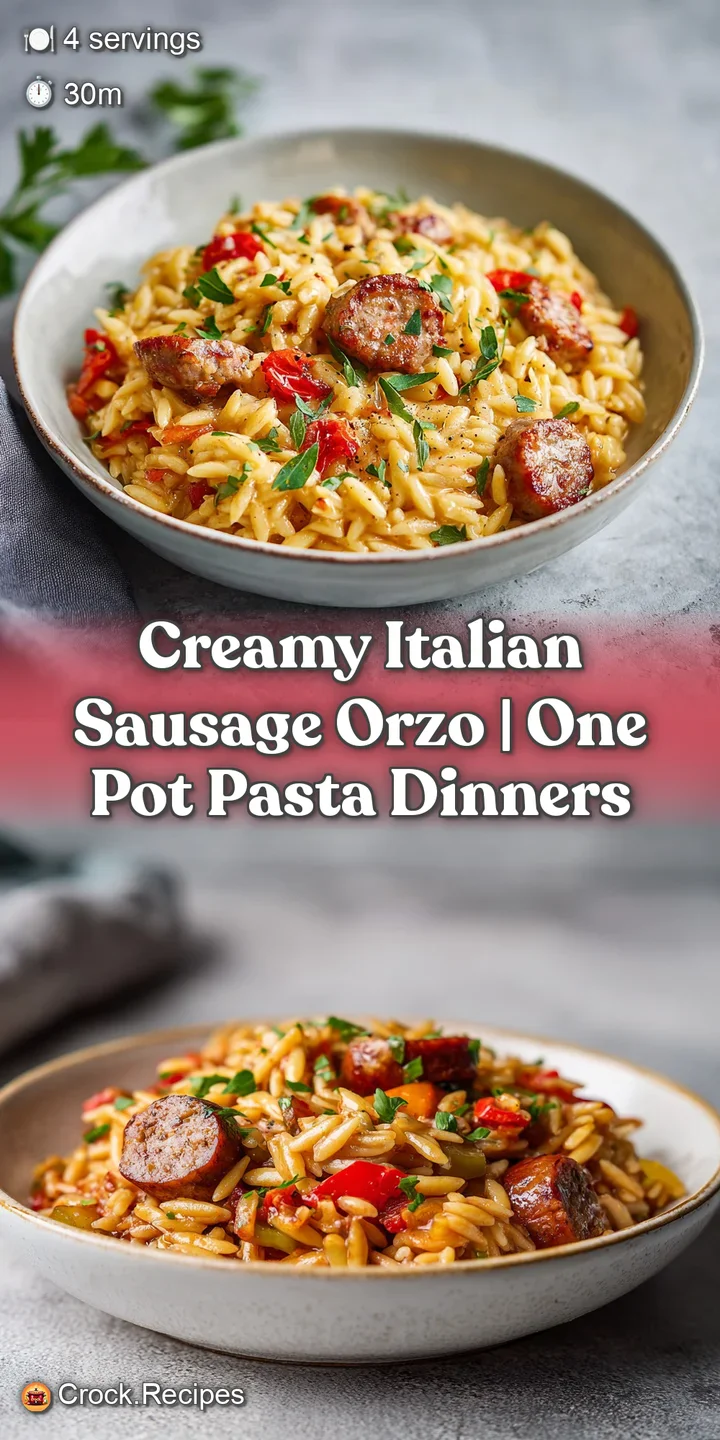
Italian Sausage Orzo Recipe
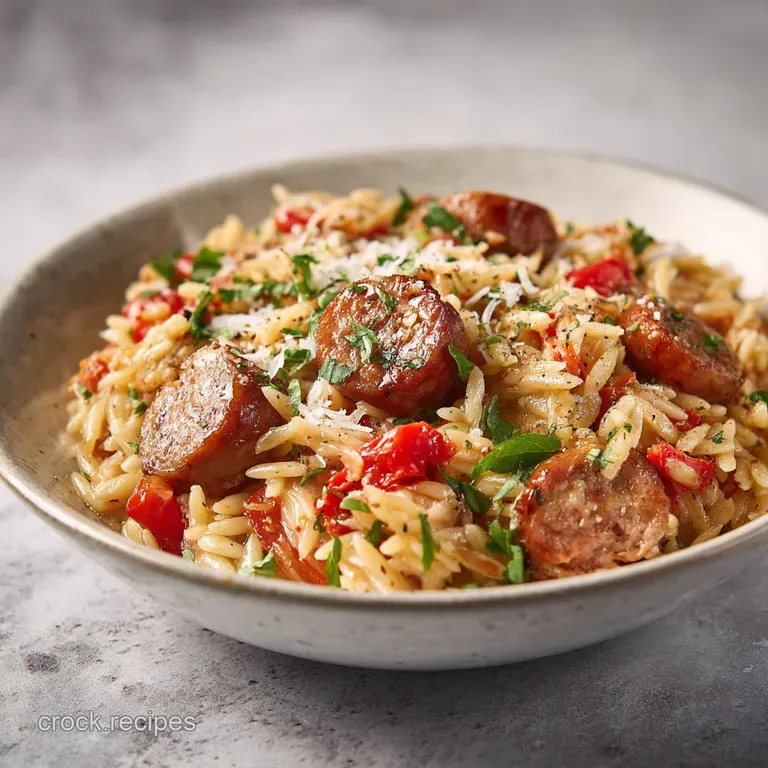
- Time: Active 10 mins, Passive 20 mins, Total 30 mins
- Flavor/Texture Hook: Savory browned sausage with velvety, toasted pasta
- Perfect for: Busy weeknight dinners or a cozy, one pot comfort meal
- Making Hearty Italian Sausage Orzo Tonight
- Mastering The Sizzle and Toast
- Component Analysis Deep Dive
- Your Component Shopping Guide
- Tools For The Job
- Step By Step Cooking Guide
- Fixing Sogginess and Salt
- Scaling the Recipe Properly
- Variations For Every Mood
- Storing and Freezing Tips
- Myths About Cooking Orzo
- What To Serve Alongside
- High in Sodium (⚠️)
- Recipe FAQs
- 📝 Recipe Card
Making Hearty Italian Sausage Orzo Tonight
Picture this: you walk into the kitchen after a long day, and the first thing you hear is that aggressive sizzle as the pork hits a hot pan. Within seconds, the aroma of toasted fennel and sharp garlic starts drifting through the house.
I remember the first time I tried making this; I was in a rush and dumped everything in at once. It was... fine. But "fine" isn't what we’re going for here. I want that glossy, restaurant quality finish that makes you want to scrape the bottom of the skillet.
This dish is my go to when I want something that feels like a slow cooked ragu but only takes about half an hour to pull off. It’s all about building layers. We aren't just boiling pasta in sauce; we are frying the meat, toasting the grains, and emulsifying the fats into something truly satisfying.
If you've ever felt like your one pot meals end up a bit "one note," this is the recipe that will change your mind.
We’re going to use a few simple tricks like toasting the dry orzo in the rendered sausage fat to ensure every single grain of pasta is infused with flavor. It's a technique I picked up after many trials (and many mushy errors).
Trust me, once you see how the starch transforms into a silky sauce, you'll never go back to the "dump and stir" method again.
Mastering The Sizzle and Toast
The secret to why this works so well lies in the chemistry of the pan. We aren't just cooking ingredients; we are transforming them through specific heat applications. By controlling the moisture and the temperature, we create a depth of flavor that usually takes hours of simmering.
- Maillard Browning: When the sausage hits the hot oil, proteins and sugars react to create a brown crust. This "shatter" of flavor on the meat provides the savory backbone for the entire dish.
- Starch Dextrinization: Toasting the dry orzo in fat before adding liquid breaks down some starches into dextrins. This prevents the grains from becoming a gummy mess and adds a nutty, toasted aroma.
- Fat Emulsification: As the orzo releases starch into the simmering broth, and we stir in the Parmesan at the end, the fat from the sausage and cheese binds with the liquid to create a velvety coating.
| Done ness Check | Internal Temp | Rest Time | Visual Cue |
|---|---|---|---|
| Sausage Crumbles | 160°F (71°C) | None | No pink remains; edges are crispy |
| Al Dente Orzo | N/A | 3 mins | Grains are tender but have a slight bite |
| Finished Sauce | N/A | 2 mins | Liquid has reduced to a glossy coating |
The table above helps you nail the timing. Most people overcook the orzo, turning it into a porridge like consistency. By watching for that al dente bite and letting the dish rest for just a couple of minutes after the heat is off, the sauce thickens naturally without becoming heavy or dry.
Component Analysis Deep Dive
Understanding the "why" behind your shopping list changes how you cook. Every element in this recipe serves a structural or flavor based purpose. I’ve spent years swapping things in and out, and these are the ones that actually make a difference in the final bowl.
| Ingredient | Science Role | Pro Secret |
|---|---|---|
| Italian Sausage | Primary Fat/Protein | Use bulk sausage or remove casings for maximum surface area browning. |
| Dry Orzo | Starch Source | Look for "bronze cut" orzo; the rougher surface helps the sauce cling better. |
| Chicken Broth | Liquid Base | Use low sodium so you can control the salt level as the liquid reduces. |
| Parmesan Cheese | Emulsifier | Grate it fresh from the block; pre shredded has cellulose that prevents melting. |
Don't underestimate the power of that Parmesan. It isn't just a topping; it's the glue that holds the sauce together. When it hits the hot, starchy liquid, it melts into the gaps, creating that signature velvety mouthfeel we're after.
Your Component Shopping Guide
Here is exactly what you need to grab from the store. I've included a few notes on why these specific items matter, along with some easy swaps if your local market is out of stock.
- 1 lb (450g) Italian sausage, casings removed: Why this? Provides the foundational fat and spice profile (fennel/pepper) for the dish.Substitute: Ground pork with 1 tsp fennel seeds and 0.5 tsp smoked paprika.
- 1.5 cups (300g) dry orzo pasta: Why this? The small shape cooks quickly and mimics the texture of a rich risotto.Substitute: Pearl couscous (though it will be slightly less starchy).
- 3 cups (710ml) low sodium chicken broth: Why this? Adds more depth than water while allowing for reduction without over salting.Substitute: Vegetable broth or water with a bouillon base.
- 1 small yellow onion, finely diced: Why this? Sweating the onions adds a subtle sweetness that balances the savory pork.Substitute: Two large shallots for a milder, more refined flavor.
- 3 cloves garlic, minced: Why this? Essential aromatic that blooms in the sausage fat.Substitute: 1 tsp garlic powder added with the liquids.
- 2 cups (60g) fresh baby spinach, packed: Why this? Adds a pop of color and earthy bitterness to cut through the richness.Substitute: Finely chopped kale or swiss chard.
- 0.5 cup (50g) freshly grated Parmesan cheese: Why this? Acts as a natural thickener and adds a salty, nutty finish.Substitute: Pecorino Romano for a sharper, tangier bite.
- 1 tbsp olive oil: Why this? Helps the sausage sear without sticking before its own fat renders.Substitute: Avocado oil or any neutral over high heat oil.
- 0.5 tsp red pepper flakes: Why this? Provides a background heat that wakes up the palate.Substitute: A pinch of cayenne or omitted for a mild version.
- Salt and Black pepper to taste: Why this? Essential for brightening all the other flavors.
Tools For The Job
You don't need a kitchen full of gadgets, but the right pan makes a massive difference in how the sausage browns.
- Large Skillet or Dutch Oven: I highly recommend a 12 inch heavy bottomed skillet (like a Lodge cast iron or a Le Creuset braiser). The wide surface area allows the orzo to cook evenly and the liquid to evaporate at the right rate.
- Wooden Spoon or Flat Spatula: You need something sturdy to scrape up the "fond" those brown bits stuck to the bottom of the pan after searing the meat. That's where the flavor lives!
- Fine Box Grater: As mentioned before, grating your own cheese is non negotiable for a smooth sauce.
step-by-step Cooking Guide
Let’s get into the flow of the kitchen. This is a rhythmic process sear, soften, toast, simmer. Keep your heat at medium high during the meat browning, then drop it down to medium once you add the aromatics to prevent burning the garlic.
- Sear the meat. Heat the olive oil in your skillet over medium high heat. Add the 1 lb (450g) sausage and break it apart with your spoon. Note: Don't move it too much at first; let it develop a dark, crispy crust.
- Soften the aromatics. Once the sausage is browned, add the diced onion. Cook for 3-4 minutes until translucent, using the moisture from the onions to scrape the bottom of the pan.
- Bloom the spices. Stir in the minced garlic and red pepper flakes. Cook for 60 seconds until fragrant and golden.
- Toast the pasta. Add the 1.5 cups (300g) dry orzo directly to the pan. Stir constantly for 2 minutes until the grains smell nutty and turn pale brown.
- Deglaze the pan. Pour in about half a cup of the chicken broth. Use your spoon to scrape up every last bit of flavor from the bottom.
- Simmer the base. Pour in the remaining broth. Bring to a boil, then immediately reduce the heat to a low simmer.
- Cook the grains. Cover the pan and simmer for 10-12 minutes. Note: Stir once or twice during this time to prevent the pasta from sticking to the bottom.
- Wilting the greens. When the orzo is tender and most liquid is absorbed, stir in the 2 cups (60g) of baby spinach. It will wilt in about 30 seconds from the residual heat.
- The final emulsion. Turn off the heat. Stir in the 0.5 cup (50g) Parmesan cheese and black pepper.
- Rest and serve. Let the dish sit for 2 minutes until the sauce is thick and glossy. Season with salt only after tasting, as the sausage and cheese are already salty.
Fixing Sogginess and Salt
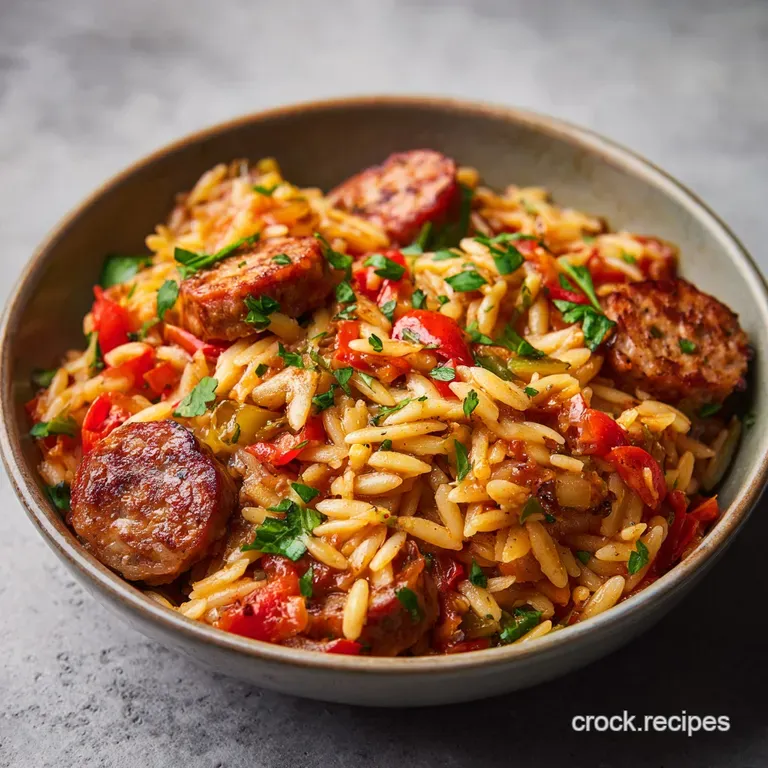
Even the most seasoned cooks hit a snag sometimes. The most common issue with orzo is texture management it can go from "perfect" to "mush" in a heartbeat if the liquid ratios are off.
Why Your Orzo Is Gummy
This usually happens if you skip the toasting step or if you use too much liquid. If the pasta sits in a pool of water without enough heat to evaporate it, the starches swell and burst, creating a sticky texture.
To fix this mid cook, remove the lid and increase the heat slightly to boil off the excess moisture quickly.
Managing High Salt Levels
Sausage and Parmesan are salt bombs. If you find the dish is too salty, don't add more salt during the process! You can balance it at the end with a squeeze of fresh lemon juice the acid cuts through the sodium and brightens the whole dish.
| Problem | Root Cause | Solution |
|---|---|---|
| Liquid is all gone but pasta is hard | Heat was too high | Add 1/4 cup broth, cover, and simmer 2 more mins. |
| Dish looks oily | Sausage fat didn't emulsify | Stir in 2 tbsp of hot broth and more Parmesan vigorously. |
| Spinach is slimy | Added too early | Fold it in only at the very end when the heat is off. |
Common Mistakes Checklist: ✓ Pat the sausage dry before adding it to the pan (excess moisture prevents browning). ✓ Don't drain all the fat! You need about 1 tablespoon to toast the orzo properly. ✓ Use a lid that fits tightly to ensure the orzo cooks evenly in the steam.
✓ Stir the Parmesan in off the heat to prevent the cheese from clumping or breaking. ✓ Always taste before adding salt; the broth and pork often provide enough.
Scaling the Recipe Properly
If you're cooking for a crowd or just for yourself, adjusting this recipe requires a little bit of math regarding the liquid to pasta ratio.
- Scaling Down (1-2 People): Cut everything in half. Use a smaller 8 inch skillet. Since there is less surface area, you might need to add 2-3 extra minutes to the simmer time to ensure the orzo softens.
- Scaling Up (8 People): Double the ingredients but only use 1.5x the red pepper flakes to avoid overpowering heat. You will likely need a very large Dutch oven. Increase the simmer time by about 5 minutes as the larger volume takes longer to reach temperature.
- The Golden Ratio: If you want to customize the amount, remember the ratio: for every 1 cup of orzo, you generally need 2 cups of broth.
Variations For Every Mood
While the classic version is hard to beat, this framework is incredibly flexible. You can swap the protein or the veggies based on what’s in your fridge.
The "Marry Me" Sausage Orzo
To give this that famous "Marry Me" flavor profile, add 1/2 cup of heavy cream and 1/3 cup of chopped sun dried tomatoes when you add the broth. It turns the sauce into a rich, blush colored dream. For more Italian inspiration, you might enjoy the techniques used in my Comforting Mezzi Rigatoni recipe.
The Bake Method
If you want a crispy top, follow the steps until the orzo is about 80% cooked (around 8 minutes of simmering). Transfer everything to a baking dish, top with extra mozzarella, and broil for 3-4 minutes until the cheese is bubbling and brown.
dairy-free Option
To make this without the cheese, swap the Parmesan for 2 tablespoons of nutritional yeast and a teaspoon of white miso paste. It provides that same umami punch without the lactose.
Storing and Freezing Tips
Orzo is a starch, which means it loves to soak up moisture. If you have leftovers, they will likely be much thicker the next day because the pasta has continued to drink up the sauce.
- Fridge: Store in an airtight container for up to 4 days. When reheating, add a splash of water or broth to loosen the sauce back to its original velvety state.
- Freezer: I don't recommend freezing the finished dish, as the orzo can become quite mushy upon thawing. However, you can freeze the cooked sausage and onion mixture for up to 3 months.
- Zero Waste: Have leftover spinach stems? Chop them finely and sauté them with the onions. If you have a Parmesan rind, toss it into the broth while the orzo simmers for an extra boost of flavor just remember to fish it out before serving! If you love these flavors, you'll also enjoy my Sausage Spinach Soup recipe.
Myths About Cooking Orzo
There are a few misconceptions that might be holding your pasta game back. Let's clear those up so you can cook with confidence.
Myth 1: You must boil orzo like standard pasta. While you can boil it in a big pot of water and drain it, you lose all the starch. Cooking it "risotto style" in the exact amount of liquid it needs creates a self thickening sauce that you just can't get with the boiling method.
Myth 2: Rinsing the pasta makes it less sticky. Rinsing removes the surface starch. In this recipe, we want that starch to create the sauce. Rinsing would result in a thin, watery liquid rather than a velvety coating.
What To Serve Alongside
Since this is a heavy, savory dish, you want sides that offer contrast either through acidity, crunch, or freshness.
- A Simple Arugula Salad: Toss arugula with lemon juice, olive oil, and shaved fennel. The peppery bite and citrus help reset your palate between bites of rich sausage.
- Garlic Bread: You’ll want something to mop up every drop of that sauce. A crusty baguette with herb butter is the traditional (and best) choice.
- Roasted Broccolini: The charred florets add a nice bitterness that complements the sweet Italian sausage perfectly.
| Feature | Fast Method (30 min) | Classic Slow Method (1 hr+) |
|---|---|---|
| Texture | Silky and light | Dense and ragu like |
| Depth | Bright and fresh | Deep and caramelized |
| Effort | One pan, minimal cleanup | Multiple steps, longer simmer |
If you want X, do Y: If you want it creamier, stir in 2 tbsp of heavy cream at the very end. If you want it spicier, double the red pepper flakes and use "Hot" Italian sausage. If you want it lighter, swap the sausage for ground turkey and add extra lemon zest.
High in Sodium (⚠️)
1057 mg of sodium per serving (46% of daily value)
American Heart Association recommends limiting sodium intake to about 2,300mg per day for overall cardiovascular health.
Tips to Reduce Sodium in Your Orzo Pasta Recipe
-
Broth Swap-30%
Replace the low-sodium chicken broth with no-sodium added chicken broth. This single swap can significantly reduce the sodium content of the dish.
-
Parmesan Portion-15%
Reduce the amount of Parmesan cheese used in the recipe from 0.5 cup to 0.25 cup. Parmesan is naturally high in sodium, so using less will make a difference.
-
Sausage Selection-15%
Choose a lower sodium Italian sausage variety or substitute with ground turkey or chicken with Italian seasoning for a healthier option. Look for options with less than 400mg of sodium per serving.
-
Skip Added Salt-25%
Eliminate adding any additional salt to the recipe. The sausage, broth, and Parmesan already contribute a significant amount of sodium. Taste and adjust seasonings (other than salt!) after cooking.
-
Herb Power
Enhance the flavor profile with fresh herbs like basil, oregano, or parsley to compensate for the reduced sodium. Experiment with different herb combinations to find your preferred taste.
Recipe FAQs
Can I use sweet Italian sausage instead of hot Italian sausage?
Yes, absolutely. Sweet Italian sausage provides the essential fennel and garlic backbone without the lingering heat; simply increase the red pepper flakes if you miss the spice.
How to prevent the orzo from turning into a gummy mush?
Toast the dry orzo in the rendered sausage fat first. This key step seals the exterior of the grains, allowing them to cook slowly in the broth without releasing too much starch too quickly, resulting in a better texture.
What is the best substitute for Parmesan cheese if I need a dairy-free version?
Use nutritional yeast combined with white miso paste. The yeast mimics the nutty, cheesy flavor, and the miso adds the necessary umami depth, similar to how we balance strong flavors in the Bolognese Sauce 7 recipe.
Is it true that I must use low sodium broth if the sausage is salty?
Yes, use low sodium broth or water. Since both the Italian sausage and the Parmesan cheese contribute significant sodium, starting with unsalted liquid gives you precise control over the final seasoning.
How do I achieve that glossy, restaurant quality sauce finish?
Turn off the heat before stirring in the cheese. The residual heat allows the fat from the cheese to emulsify properly with the starchy liquid, creating a smooth, glossy coating rather than a clumpy texture.
How long can I safely make this sausage mixture ahead of time?
Brown the sausage mixture up to two days in advance. Cool the cooked sausage completely, drain off any excess solidified fat if desired, and store it in an airtight container in the refrigerator.
What technique helps develop the deepest flavor when browning the meat?
Apply high heat and do not overcrowd the pan. Allow the sausage to sit undisturbed until a dark crust forms (Maillard reaction); mastering this searing principle is essential for deep flavor in dishes like our Baked Tortellini Cheese recipe.
Italian Sausage Orzo In 30 Mins
Ingredients:
Instructions:
Nutrition Facts:
| Calories | 713 calories |
|---|---|
| Protein | 30.5 g |
| Fat | 36.1 g |
| Carbs | 63.3 g |
| Fiber | 3.4 g |
| Sugar | 3.1 g |
| Sodium | 1057 mg |
