Kimchi and Dumpling Noodle Soup | Umami Depth Fast
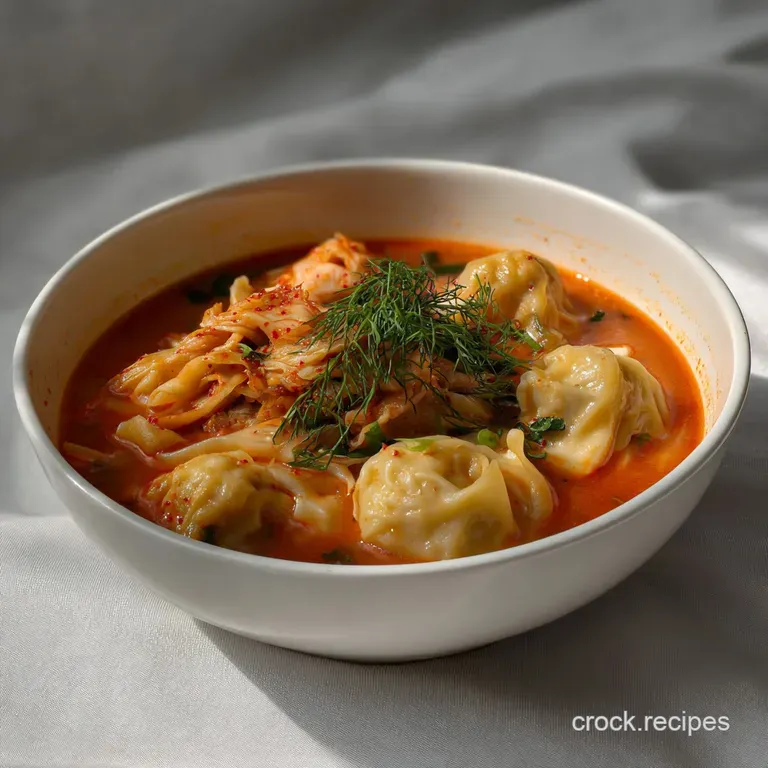
- Effort/Time: Low-effort assembly with a 25 minute total runtime.
- Flavor Hook: Tangy, lactic acid brightness balanced by toasted sesame warmth.
- Perfect for: A recovery-day lunch or a quick-burn weeknight dinner.
- The Science of Umami Synergy and Heat
- Performance Metrics and Temporal Logistics
- The Alchemy of Fermentation: Selecting Your Elements
- Essential Tools for Thermal Efficiency and Flavor Extraction
- Precision Assembly Protocol: Mastering the Broth and Texture
- Avoiding Structural Failure and Flavor Imbalance
- Flavor Architecture: Creative Variations for Your Soup
- Common Myths
- Preservation Physics: Storage and Rethermalization
- Enhancing the Sensory Experience: Final Touches
- Recipe FAQs
- 📝 Recipe Card
I once spent forty dollars on "premium" imported ingredients only to produce a Kimchi and Dumpling Noodle Soup that tasted like spicy dishwater. The broth was thin, the noodles were a sodden mess, and the expensive pork tenderloin had the texture of a pencil eraser.
It was a failure of physics and timing, proving that even the best ingredients cannot save a dish if you ignore the mechanics of flavor extraction.
I destroyed at least five batches of this soup by rushing the kimchi sautéing process. I used to think boiling everything together would save time, but I ended up with a metallic, raw-cabbage flavor that lacked any soul.
I realized that without the initial application of high heat to the aromatics, the soup remains a collection of disparate parts rather than a cohesive, velvety emulsion.
The secret to a Kimchi and Dumpling Noodle Soup that actually satisfies is the Maillard reaction combined with controlled starch gelatinization. By searing the pork and aged kimchi in toasted sesame oil first, we create complex flavor compounds that simple boiling can't achieve.
This process, followed by poaching the dumplings directly in the broth, releases just enough surface starch to give the soup a luxurious, tongue coating body that feels incredibly substantial.
The Science of Umami Synergy and Heat
Building a Masterclass Kimchi and Dumpling Noodle Soup requires understanding how fermented acids interact with proteins and starches to create a balanced palate.
- Lactic Acid Brightness: The aged kimchi provides a complex acidic profile that cuts through the richness of the pork and dumplings, preventing sensory fatigue.
- Starch Driven Viscosity: Poaching 8 large kimchi dumplings directly in the 1.2 Liters low-sodium chicken stock releases amylopectin, which naturally thickens the liquid without the need for flour slurries.
- Capsaicin Dispersion: Searing the 1 tbsp Gochugaru in oil rather than water ensures the heat is evenly distributed and the flavor is toasted rather than bitter.
- Fat-Soluble Aromatics: The sulfur compounds in the 2 cloves garlic and 2 green onions are fat-soluble, meaning they need the 1 tbsp toasted sesame oil to "bloom" and reach their full olfactory potential.
Performance Metrics and Temporal Logistics
Precision in timing ensures the 200g fresh ramen noodles retain their structural integrity while the dumplings reach a safe internal temperature.
- Prep Time: 10 minutes
- Cook Time: 15 minutes
- Total Time: 25 minutes
- Yield: 2 servings
- Serving Size: ~750ml soup per person
The Alchemy of Fermentation: Selecting Your Elements
The quality of your Kimchi and Dumpling Noodle Soup hinges on the specific maturity of your fermented cabbage and the protein-to-liquid ratio.
| Ingredient | Chemical/Physical Role (Science) | The Pro Secret (Why This Matters) |
|---|---|---|
| Aged Kim Chi | Lactic acid acts as a tenderizer and flavor enhancer | Older kimchi (sour) provides deeper complexity than "fresh" versions. |
| Pork Tenderloin | Myofibrillar protein denaturation for texture | Slicing against the grain ensures the 100g of pork stays tender during the fast poach. |
| Gochugaru | Fat-soluble capsaicin and smoky aromatic esters | Toasting the flakes in oil removes the "raw" vegetable edge. |
| Fresh Ramen Noodles | High alkaline starch for "chew" and spring | Alkaline salts prevent the noodles from dissolving into mush in the hot broth. |
- 150g aged Kim Chi, chopped: Why this? Higher acidity (lower pH) provides the necessary tang to balance the savory chicken stock.
- 1.2 Liters low-sodium chicken stock: Why this? Allows for precise salt control via the added soy sauce and kimchi juice.
- 100g pork tenderloin, thinly sliced: Why this? Lean protein that cooks instantly without releasing excess rendered fat into the broth.
- 1 tbsp toasted sesame oil: Why this? High smoke point isn't needed; we want the aromatic toasted compounds for the base layer.
- 8 large kimchi dumplings (frozen or fresh): Why this? The filling mimics the soup base, creating a unified flavor profile.
Essential Tools for Thermal Efficiency and Flavor Extraction
Using a heavy bottomed pot, such as a Lodge Cast Iron Enamel Dutch Oven, is critical for maintaining the thermal mass required when adding frozen dumplings to boiling stock. A thin walled pot will suffer a massive temperature drop, leading to soggy dough.
- Chef’s Knife (e.g., Wüsthof Classic): For the 100g pork tenderloin and 50g shiitake mushrooms.
- Heavy Bottomed Pot: Prevents the 150g chopped kimchi from scorching during the initial sear.
- Microplane or Garlic Press: Ensures the 2 cloves garlic are fine enough to emulsify into the base.
- Tongs: Specifically for handling the delicate 8 large kimchi dumplings.
Precision Assembly Protocol: Mastering the Broth and Texture

Follow these atomic steps to ensure your Kimchi and Dumpling Noodle Soup achieves the perfect balance of heat and silkiness.
- Slice 100g pork tenderloin into 1/8 inch strips against the grain. Note: Shortens muscle fibers for maximum tenderness.
- Heat 1 tbsp toasted sesame oil in a pot over medium high heat until shimmering and a faint nutty aroma fills the air.
- Sear the pork strips for 2 minutes until the exterior is mahogany brown and no longer sticks to the pot.
- Add 150g chopped kimchi, 2 cloves minced garlic, and 50g sliced shiitake mushrooms.
- Sauté for 4 minutes until the kimchi edges slightly caramelize and the mushrooms have released their moisture.
- Stir in 1 tbsp Gochugaru and 1 tsp soy sauce for 30 seconds until the oil turns a vibrant, deep crimson red.
- Pour in 1.2 Liters low-sodium chicken stock and 2 tbsp Kim Chi juice.
- Boil the liquid, then gently drop in 8 large kimchi dumplings.
- Simmer for 5 minutes (or 8 if frozen) until the dumplings float and the skins appear translucent and slightly puffed.
- Add 200g fresh ramen noodles for 2 minutes until they are al dente and spring back when pulled with tongs.
- Garnish with 2 sliced green onions, 1 tsp toasted sesame seeds, and 1 sheet shredded Nori.
Chef's Note: If using dried ramen instead of fresh, cook them in a separate pot of plain water first. This prevents the excess starch from making your soup base too thick or "muddy." If you love a crisp side, this soup is incredible when served alongside a refreshing Cucumber Salad with recipe.
Avoiding Structural Failure and Flavor Imbalance
The most common issue with Kimchi and Dumpling Noodle Soup is a lack of broth clarity or a "one-note" spicy flavor.
Why Your Soup Broth Is Cloudy or Thick
If your broth looks like gravy rather than soup, you’ve likely experienced excessive starch gelatinization. This happens when the dumplings are overcooked or the ramen is boiled too long, causing the flour to leach out and thicken the stock.
| Problem | Root Cause | The Fix | Pro Protocol |
|---|---|---|---|
| Mushy Dumplings | Over simmering | Pull the pot off heat as soon as they float | Add dumplings 3 mins after the broth returns to a boil |
| Weak Flavor | Under aged Kimchi | Increase the 2 tbsp Kim Chi juice to 4 tbsp | Add 1/2 tsp fish sauce for fermented depth |
| Tough Pork | Overcooking/Incorrect Cut | Slice thinner and add later in the process | Marinate pork in 1 tsp of the sesame oil before searing |
Flavor Architecture: Creative Variations for Your Soup
While the core of this Kimchi and Dumpling Noodle Soup is solid, you can adjust the components based on dietary needs or pantry availability.
| Original Ingredient | Substitute | Why It Works |
|---|---|---|
| Pork Tenderloin (100g) | Firm Tofu (100g, cubed) | High protein but lacks the Maillard driven fat of pork. |
| Chicken Stock (1.2L) | Vegetable Soup recipe base | Maintains volume but requires more soy sauce for umami. |
| Fresh Ramen (200g) | Udon Noodles | Thicker gauge provides a more "chewy" textural contrast. |
| Gochugaru (1 tbsp) | Sriracha (1 tbsp) | Adds heat but introduces a vinegar/garlic profile not in the original. |
⚗️ The Scaling Lab
When doubling this recipe to serve four, the physics of your kitchen equipment becomes the bottleneck.
- The Evaporation Paradox: When using a larger pot for a double batch (2.4L stock), the surface-to-volume ratio changes. Reduce the stock by 10% (use 2.1L instead) to ensure the flavor isn't diluted by less than-proportional evaporation.
- Pan Crowding (Maillard Killer): Doubling 100g of pork to 200g in a standard pot will cause the temperature to crash. The pork will steam in its own juices rather than sear. Mandatory instruction: Sear the pork in two separate batches to maintain the 300°F (150°C) required for browning.
- Thermal Mass Recovery: Adding 16 frozen dumplings instead of 8 will kill the boil. It may take 4 5 minutes to return to a simmer, which can lead to the dumpling skins becoming soggy before the centers cook. Allow the broth to reach a "rolling" boil before adding the second batch of dumplings.
Common Myths
Myth: You must use expensive bone broth for a good soup. Truth: No. The 150g of aged kimchi and 2 tbsp juice provide enough organic acids and umami to make standard chicken stock taste like a 12 hour simmered broth.
Myth: Frozen dumplings are inferior to fresh for this soup. Truth: Frozen dumplings actually hold their shape better during the poaching process because the starch on the exterior has been "set," preventing them from falling apart in the 1.2L of boiling stock.
Preservation Physics: Storage and Rethermalization
Kimchi and Dumpling Noodle Soup is best consumed immediately, but it can be managed with specific storage techniques.
- Fridge: Store for up to 2 days. Critical: Separate the noodles from the broth, or they will absorb all the liquid and become a gelatinous mass.
- Freezing: Do not freeze the assembled soup. The dumplings will lose their structural integrity. You can freeze the broth base (kimchi and pork) for up to 3 months.
- Reheating: Reheat the broth on the stovetop until bubbling. Add fresh noodles and dumplings only during the reheating phase to ensure texture.
💡 ZERO WASTE PHILOSOPHY Don't discard the Nori scraps or the Kimchi liquid at the bottom of the jar. Transform: Use leftover Nori as a topping for Air Fryer Bacon recipe for a smoky salty snack. Science: The Nori is packed with glutamate, which acts as a natural flavor enhancer for any savory dish.
Enhancing the Sensory Experience: Final Touches
The final presentation of your Kimchi and Dumpling Noodle Soup should focus on the contrast between the hot, spicy broth and the cold, fresh garnishes.
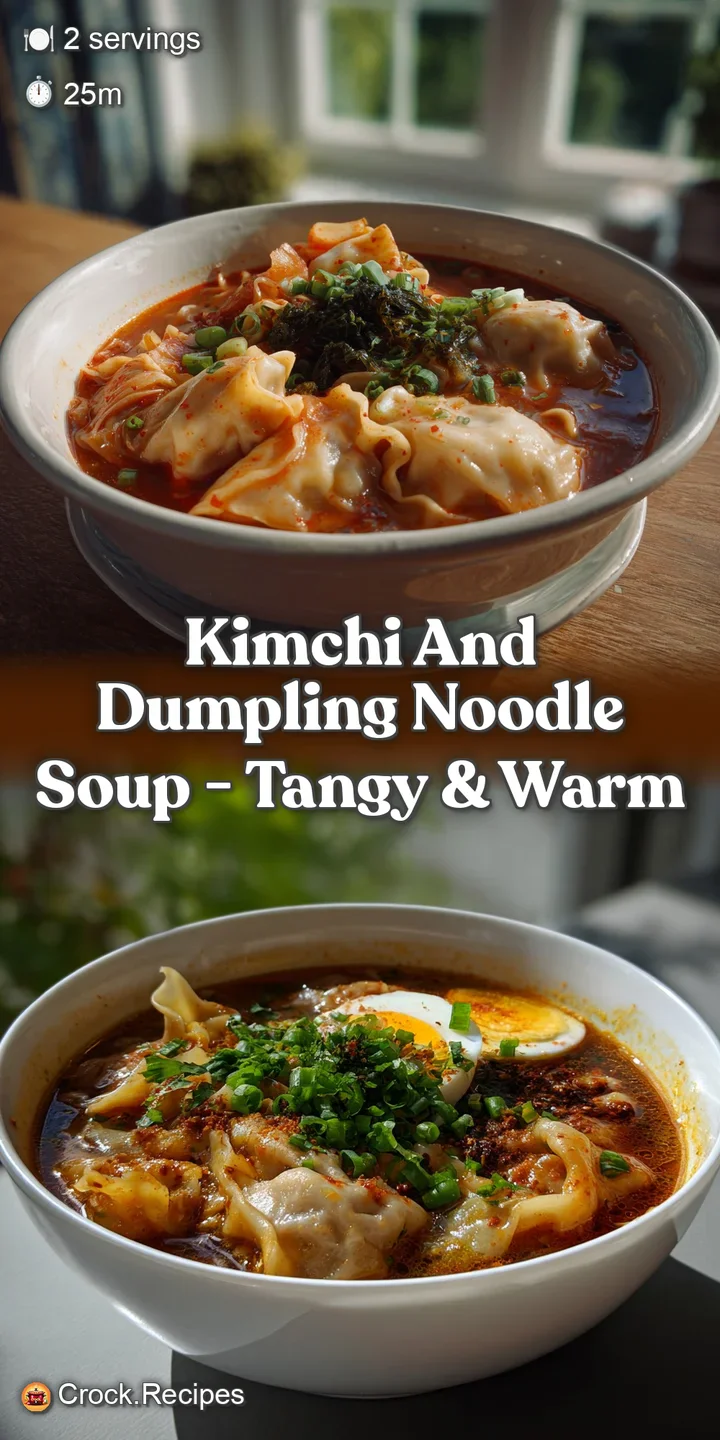
Serve the soup in deep ceramic bowls to retain heat. The 1 tsp of toasted sesame seeds provides a subtle "crackle" against the velvety texture of the dumplings. For a truly professional finish, use a pair of kitchen shears to shred the Nori sheet directly over the bowl just before serving; this preserves the "shatter" of the seaweed before it absorbs the steam.
The interplay between the vibrant red broth, the green onions, and the dark Nori creates a visual appeal that matches the intensity of the flavor. This recipe isn't just a meal; it's a study in how simple, fermented ingredients can be engineered into a sophisticated culinary experience.
Recipe FAQs
What is kimchi dumplings?
Kimchi dumplings (Mandu) contain fermented cabbage filling. They combine the spicy, sour tang of kimchi with ground pork or tofu, encased in thin dough. Their acidity is crucial for cutting richness in soups.
Can I substitute dried ramen for fresh ramen noodles?
Yes, but cook them separately first. Dried noodles release more starch during their initial cooking, which can over thicken the soup base significantly. If you enjoyed controlling starch texture here, apply that same separate cooking logic when making The Chefs Secret Comforting Homemade Wonton Soup.
Why is my pork tenderloin tough after simmering?
Slicing against the muscle grain prevents toughness. Thin strips cooked quickly yield maximum tenderness due to short muscle fibers. If fibers run parallel to the cut, they contract into rigid rods when heated.
- Slice pork thinly (1/8 inch)
- Ensure the pot is shimmering hot before adding meat
- Only sear for 2 minutes total
Is it better to use gochujang instead of gochugaru?
Gochugaru provides superior flavor clarity and heat dispersion. Gochugaru (chili flakes) toasts cleanly in the oil, releasing fat-soluble capsaicin compounds. Gochujang (paste) contains added sugars and thickeners that cloud the broth and can scorch.
Can I use low-sodium vegetable broth if I have no chicken stock?
Vegetable broth works but requires flavor fortification. Vegetable stock lacks the natural glutamates found in poultry stock, meaning you must compensate by increasing the kimchi juice or adding a touch more soy sauce for savory depth.
Myth: You must let the broth boil vigorously while cooking the dumplings.
Myth: You must let the broth boil vigorously while cooking the dumplings. Reality: A gentle simmer after the initial boil prevents the thin dumpling skin from tearing apart due to rapid thermal stress.
How do I ensure the kimchi flavor isn't too raw?
Sauté the kimchi with the aromatics for 4 minutes. The goal is to lightly caramelize the cabbage edges in the fat, driving off residual raw cabbage flavors and unlocking deeper lactic acid complexity, similar to the flavor extraction needed for The Perfect French Onion Soup A Comforting Classic Recipe.
Kimchi Dumpling Noodle Soup

Ingredients:
Instructions:
Nutrition Facts:
| Calories | 832 kcal |
|---|---|
| Protein | 31.8 g |
| Fat | 18.5 g |
| Carbs | 74 g |
| Fiber | 6.5 g |
| Sugar | 5.2 g |
| Sodium | 1840 mg |
