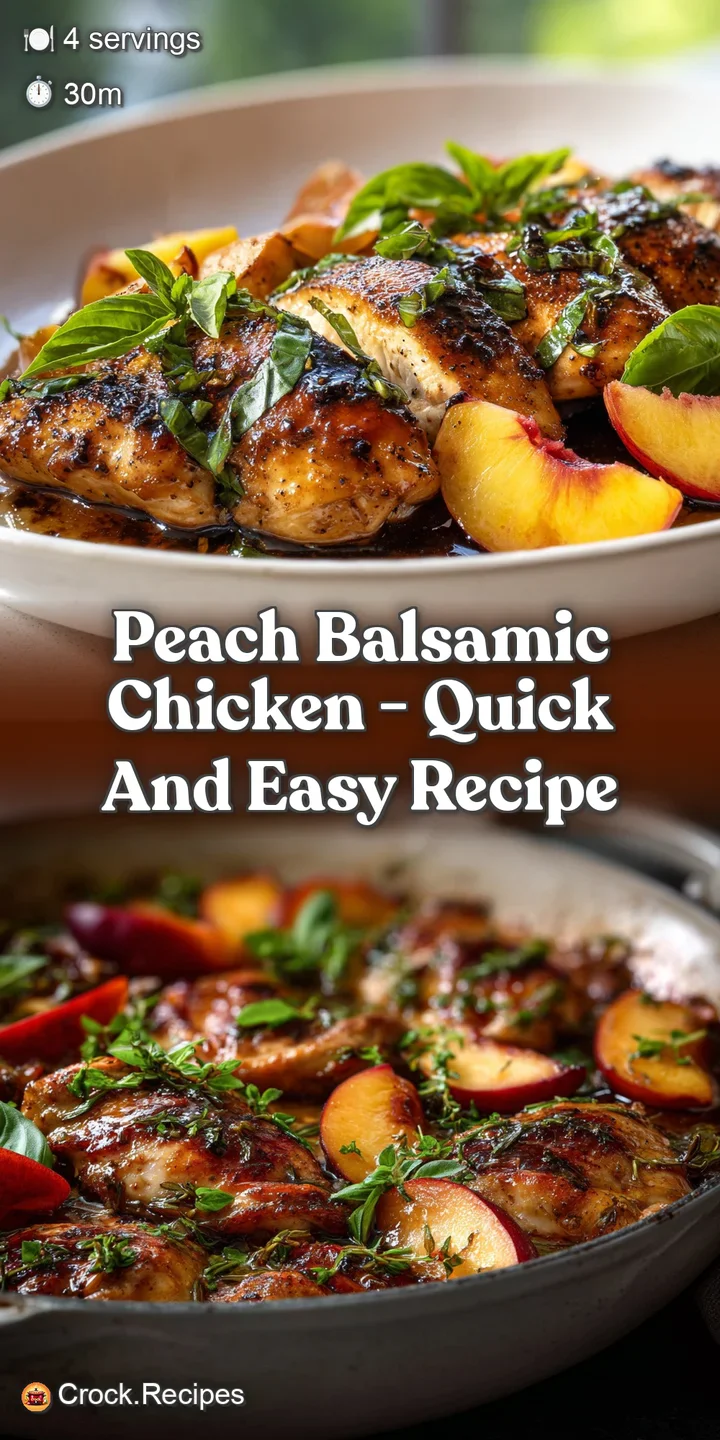
Peach Balsamic Chicken with Basil Glaze
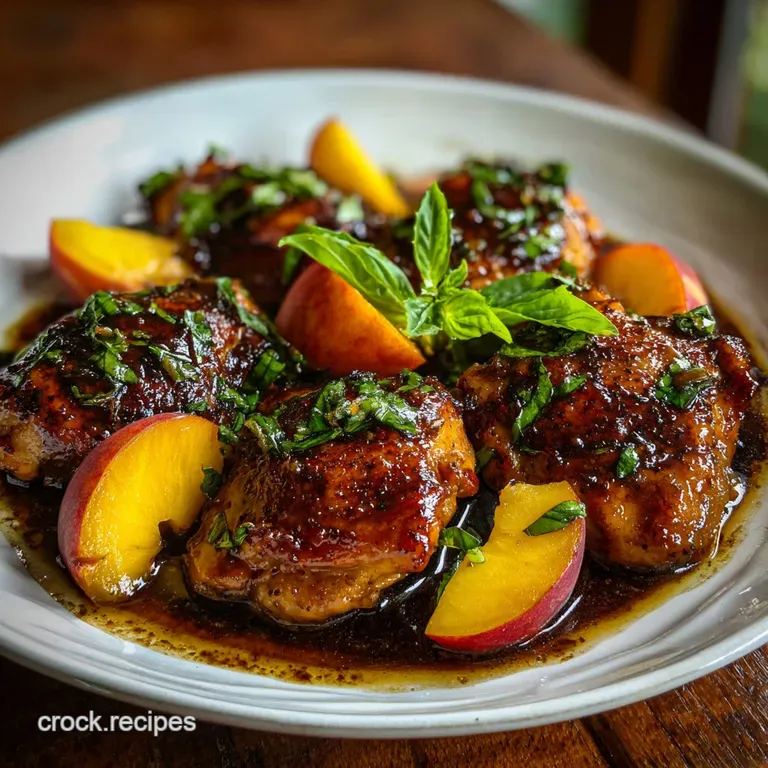
- Time: Active 10 minutes, Passive 20 minutes, Total 30 minutes
- Flavor/Texture Hook: Sticky sweet glaze with a peppery, herbal finish
- Perfect for: A fast but impressive weeknight dinner that tastes like summer.
- Deciphering the Recipe Specs and Performance Benchmarks
- A Scientific Breakdown of Every Flavor Component
- Essential Tools Required for This Stovetop Technique
- Executing the Searing and Glazing Instructions Precisely
- Solving Common Texture and Flavor Balance Problems
- Exploring Flavor Variations and Healthier Ingredient Swaps
- Storage Guidelines for Food Safety and Waste Reduction
- Selecting Side Dishes to Enhance the Main Course
- Recipe FAQs
- 📝 Recipe Card
Deciphering the Recipe Specs and Performance Benchmarks
When we talk about getting this dish right, it’s all about the heat management. You want that initial sizzle to be loud and confident, but you have to know when to dial it back so the honey in the sauce doesn't turn into a burnt mess.
We're aiming for that specific "glaze" consistency where the sauce coats the back of a spoon and leaves a clear trail if you run your finger through it.
The chicken thighs are the MVP here because they can handle the high heat without drying out like a piece of cardboard. If you've ever struggled with dry, stringy meat, this is the recipe that will change your mind about chicken.
We’re looking for an internal temperature of 165°F, which gives us that juicy, tender bite every single time.
The Physics of the Sticky Glaze
Molecular Reduction: As the balsamic vinegar simmers, water evaporates, concentrating the acetic acid and natural sugars into a thick syrup. The addition of honey provides extra glucose molecules that create a glossier, more stable emulsion that clings to the protein.
| Chicken Thickness | Internal Temp | Rest Time | Visual Cue |
|---|---|---|---|
| 0.75 inch | 165°F | 3 minutes | Juices run clear when pierced |
| 1.0 inch | 165°F | 5 minutes | Center is no longer opaque |
| 1.25 inch | 165°F | 5 minutes | Firm texture with deep brown crust |
Wait for the pan to get truly hot before you even think about dropping that chicken in. If it doesn't sizzle immediately, you're just steaming the meat, and we definitely don't want that.
A Scientific Breakdown of Every Flavor Component
Selecting your ingredients is half the battle. For the peaches, you want them "just right" if they’re too hard, they won't release their juices into the sauce; if they’re mush, they’ll disappear into a grainy paste. I usually look for fruit that gives just a tiny bit when I press near the stem.
It's that balance of structure and sweetness that makes the Peach Balsamic Chicken work.
The balsamic vinegar is another big one. You don't need a fifty dollar bottle of aged traditional balsamic, but avoid the stuff that’s basically brown colored water. A decent Balsamic Vinegar of Modena has enough natural sugar to caramelize properly without needing a mountain of extra honey.
| Ingredient | Science Role | Pro Secret |
|---|---|---|
| Balsamic Vinegar | Acid Catalyst | Brightens heavy fats and breaks down surface proteins for tenderness. |
| Honey | Hygroscopic Agent | Attracts moisture and creates a "shatter" effect on the caramelized edges. |
| Dijon Mustard | Emulsifier | Contains mucilage that prevents the oil and vinegar from separating in the pan. |
| Fresh Peaches | Fructose Source | Provides natural sugars that reach caramelization at a lower temp than table sugar. |
It’s tempting to use dried basil if you’re out of fresh, but I’m telling you now: don’t do it. The volatile oils in fresh basil are what give this dish its life. Dried basil just tastes like dusty hay in comparison to the bright, peppery snap of the fresh leaves.
Essential Tools Required for This Stovetop Technique
You don’t need a kitchen full of gadgets, but a heavy bottomed skillet is non negotiable here. I swear by my cast iron, but a good stainless steel pan like an All Clad works wonders too. The key is heat retention. You want a pan that doesn't drop 50 degrees the moment you add the 1.5 lbs of chicken thighs.
A sharp chef's knife is also your best friend for getting those 0.5 inch peach wedges. If your knife is dull, you'll end up bruising the fruit instead of slicing it, which leads to a messy look. And please, use a meat thermometer.
Guessing the doneness of chicken is a recipe for disaster (or at least a very dry dinner).
Chef Tip: Freeze your peach wedges for about 10 minutes before adding them to the pan. This allows the outside to sear and caramelize in the hot balsamic while keeping the center from turning into mush.
Executing the Searing and Glazing Instructions Precisely
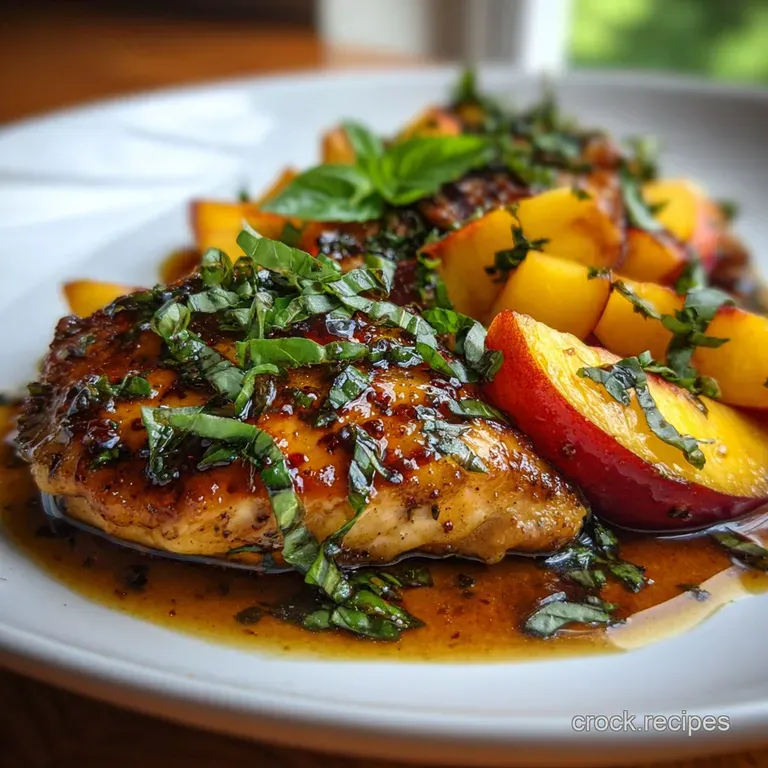
Right then, let's get into the actual cooking. We’re going to work in stages to make sure every ingredient gets its moment in the spotlight without being overcrowded.
- Prep the protein. Pat the 1.5 lbs chicken thighs completely dry with paper towels. Note: Excess moisture creates steam, which prevents the Maillard reaction from creating that golden crust.
- Season thoroughly. Sprinkle 1 tsp Kosher salt and 0.5 tsp black pepper over both sides of the chicken.
- Heat the skillet. Add 1 tbsp olive oil to a large pan over medium high heat until the oil shimmers and barely wisps smoke.
- Sear the chicken. Place chicken in the pan and cook for 5-6 minutes per side until deeply browned and a crust forms. Remove chicken and set aside.
- Whisk the base. In a small bowl, combine 0.5 cup balsamic vinegar, 1 tbsp honey, 3 minced garlic cloves, and 1 tsp Dijon mustard.
- Deglaze the pan. Pour the balsamic mixture into the hot skillet, scraping up the brown bits (fond) with a wooden spoon.
- Add the aromatics. Toss in the 0.25 sliced red onion and 2 sliced peaches.
- Simmer and reduce. Cook for 3-5 minutes until the sauce thickens into a syrupy glaze.
- Combine. Return the chicken to the pan, turning to coat in the glaze.
- The Aromatic Finish. Remove from heat and stir in 0.25 cup fresh Italian basil chiffonade right before serving.
| Original Ingredient | Substitute | Why It Works |
|---|---|---|
| Balsamic Vinegar | Apple Cider Vinegar + 1 tbsp Brown Sugar | Mimics the acidity and sweetness. Note: Lacks the deep oaky notes of balsamic. |
| Fresh Peaches | Frozen Peach Slices (thawed) | Consistent sweetness year round. Note: Texture will be slightly softer. |
| Honey | Maple Syrup | Similar viscosity. Adds a woodsy undertone that pairs well with pork too. |
| Red Onion | Shallots | Provides a more delicate, garlicky sweetness. |
If you're looking for a slightly different flavor profile for a future meal, this technique is actually very similar to how I handle the sauce in my Slow Cooker Orange Chicken recipe. Both rely on that balance of acid and sugar to create a high impact glaze.
Solving Common Texture and Flavor Balance Problems
The biggest mistake people make with Peach Balsamic Chicken is rushing the reduction. If the sauce is too thin, it’ll just puddle on the plate like soup. If it's too thick, it turns into fruit flavored taffy. You’re looking for the sweet spot where it looks like warm maple syrup.
Why Your Chicken Is Rubbery
This usually happens when the pan isn't hot enough. Instead of searing the outside quickly, the chicken sits in its own juices and essentially poaches. This tightens the muscle fibers without creating the flavorful crust that keeps the interior tender.
Why Your Sauce Is Bitter
If you burn the garlic or let the balsamic reduce too far, it can take on a metallic or burnt taste. If this happens, try whisking in a teaspoon of butter at the end; the fat will help mellow out those harsh notes.
| Problem | Root Cause | Solution |
|---|---|---|
| Peaches are mushy | Added too early or cooked too long | Add peaches in the last 4 minutes of simmering. |
| Sauce won't thicken | Not enough heat or too much liquid | Increase heat to high and whisk constantly for 2 minutes. |
| Chicken is dry | Overcooked beyond 170°F | Use a thermometer and pull meat at 160°F; carryover heat hits 165°F. |
Common Mistakes Checklist:
- ✓ Pat chicken dry before it hits the pan to ensure a "shatter" crisp crust.
- ✓ Don't crowd the pan; if the thighs are touching, they'll steam instead of sear.
- ✓ Use a wooden spoon to scrape the "fond" (brown bits) into the sauce that's where the flavor lives.
- ✓ Add the basil only after the heat is turned off to keep the color vibrant and the flavor fresh.
Exploring Flavor Variations and Healthier Ingredient Swaps
Sometimes you want to change things up. If you aren't a fan of peaches, this recipe works remarkably well with fresh plums or even halved figs. The acidity of the balsamic loves dark stone fruits.
- For a Spicy Kick: Add a pinch of red pepper flakes to the balsamic mixture before reducing. The heat against the sweet peach is incredible.
- Making it Paleo Friendly: Swap the honey for additional peach puree or date syrup to keep it refined sugar-free.
- If you want a creamier vibe: Similar to the base of a Creamy Chicken Breast recipe, you could add a splash of heavy cream at the very end for a "Peach Melba" inspired savory sauce.
When scaling this recipe up for a crowd, remember that you'll need to work in batches for the chicken. If you try to sear 3 lbs of thighs in one pan, the temperature will plummet, and you'll lose that crispy exterior.
| Scale Direction | Adjustment | Technique Change |
|---|---|---|
| Down (Half) | Use 0.75 lb chicken | Use a smaller 8 inch skillet to prevent the sauce from evaporating too fast. |
| Up (Double) | Use 3 lbs chicken | Sear in two batches. Keep first batch warm in a 200°F oven while finishing. |
Storage Guidelines for Food Safety and Waste Reduction
I’ll be honest, this is one of those dishes that is best eaten immediately. The peaches lose their structural integrity once they've been refrigerated and reheated. However, the flavors actually deepen the next day as the garlic and balsamic penetrate the meat further.
- Fridge Life
- Store leftovers in an airtight container for up to 3 days.
- Freezing
- I don’t recommend freezing this dish once the peaches are added, as the fruit will turn to mush upon thawing. If you must freeze, freeze the seared chicken and the balsamic sauce separately, then add fresh peaches when you're ready to cook.
- Reheating
- Use a skillet over low heat with a splash of water or chicken broth to loosen the glaze. Avoid the microwave, which will make the chicken rubbery.
Zero Waste Tip: If you have leftover balsamic reduction but no chicken, it makes an incredible dressing for a spinach and goat cheese salad. Don't let that liquid gold go down the drain!
Selecting Side Dishes to Enhance the Main Course
Because this dish has such a bold, sweet and tangy profile, you want sides that are relatively neutral but capable of soaking up that extra glaze. A bed of fluffy quinoa or a simple wild rice pilaf is usually my go to.
If you want to keep it light, a massaged kale salad with a lemon vinaigrette provides a nice bitter contrast to the sweetness of the peaches. Or, for a more indulgent meal, serve it alongside some roasted asparagus or even a sourdough baguette to wipe the plate clean.
Searing meat does not "seal in juices." This is a total kitchen myth. The reason we sear is purely for the Maillard reaction a chemical reaction between amino acids and reducing sugars that gives browned food its distinctive flavor.
The juice retention actually comes from letting the meat rest for 5 minutes after cooking, allowing the fibers to relax and reabsorb the moisture.
Another myth is that you have to peel the peaches. You absolutely don't! The skin holds the wedge together and adds a nice bit of color and fiber to the dish. Plus, it saves you five minutes of tedious prep work, and in my kitchen, we're all about working smarter, not harder. Let's crack on and get cooking!
Recipe FAQs
Can I substitute balsamic vinegar with apple cider vinegar?
Yes, but modification is required. Apple cider vinegar lacks the aged depth of balsamic, so add one tablespoon of brown sugar to the mix to compensate for the missing sweetness and richness.
How to tell when the balsamic glaze is perfectly reduced on the stovetop?
Reduce until the sauce coats the back of a spoon. You should be able to run your finger through the coating and see a clear trail remain without the sauce immediately running back together.
Is it true that searing the chicken seals in the juices?
No, this is a total kitchen myth. Searing creates flavor through the Maillard reaction; juice retention actually comes from allowing the meat to rest after cooking, which lets the muscle fibers reabsorb moisture.
What is the safest internal temperature to cook chicken thighs for this recipe?
Pull the chicken at 160°F for a final temperature of 165°F. Use an instant read thermometer to check, as overcooking is the primary cause of dry meat, even with high fat thighs.
How to avoid turning the peaches into mushy paste during simmering?
Add the peach wedges during the last four minutes of simmering. This allows them to warm and release juice without breaking down completely, preserving their structure.
Can I make a larger batch of this for meal prep, and how should I adjust the cooking?
Yes, but sear the chicken in batches to maintain high heat. If you overcrowd the pan, the temperature drops, causing the chicken to steam instead of sear, preventing that essential crispy crust you want. If you're practicing high heat searing, you might find similar temperature control rewarding in our How to Bake recipe.
What should I serve with Peach Balsamic Chicken to soak up the extra sauce?
Serve over neutral starches like wild rice or fluffy quinoa. These starches effectively absorb the glaze without competing with the rich, sweet, and tart flavors of the main dish.
Peach Balsamic Chicken Recipe
Ingredients:
Instructions:
Nutrition Facts:
| Calories | 320 |
|---|---|
| Protein | 34 g |
| Fat | 11 g |
| Carbs | 20 g |
| Fiber | 2 g |
| Sugar | 16 g |
| Sodium | 625 mg |
