Cauliflower Soup: Silky Smooth Roasted Garlic Recipe
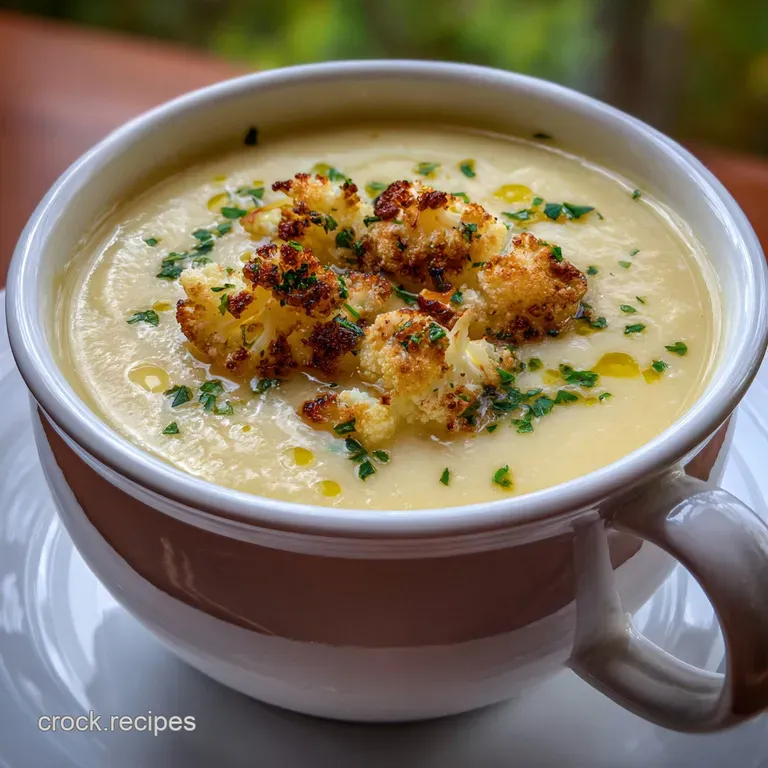
- Silky Smooth Roasted Garlic and Cauliflower Soup: The Secret to Restaurant-Quality Velvety Texture
- Achieving Velvety Texture: The Science of Roasted Cauliflower
- Ingredients List and Essential Flavor Boosts
- How to Make Silky Roasted Garlic Cauliflower Soup
- Expert Tips, Troubleshooting, and Common Mistakes
- Storage, Freezing, and Reheating Instructions
- Delicious Toppings and Serving Pairings
- Recipe FAQs
- 📝 Recipe Card
Silky Smooth Roasted Garlic and Cauliflower Soup: The Secret to Restaurant Quality Velvety Texture
Are you ready for the scent of buttery roasted garlic and sweet, caramelized vegetables filling your kitchen? Because that’s what happens 30 minutes into making this truly incredible Cauliflower Soup .
Seriously, if you think you don't like vegetable soup, or if your previous attempts tasted thin and watery, you’re about to be converted. This is the ultimate, rich, and ridiculously easy Cauliflower Soup recipe.
I’ve made every mistake in the book, from boiling the cauli until it was sulfuric and gray, to dumping in enough heavy cream to stop a heart. But I’ve nailed the perfect technique.
This Cauliflower Soup is naturally thickened, intensely flavored, and takes under an hour of total time. You get all the comfort of a heavy cream soup, but with deep, complex flavor notes. I'M Obsessed With Super Creamy Cauliflower Soup!
So ditch the boring boiled florets. We are going to harness the magic of the oven to build flavor right from the start.
Achieving Velvety Texture: The Science of Roasted Cauliflower
Why This Works: The Magic Behind Your Super Creamy Cauliflower Soup!
The reason most homemade Cauliflower Soup Recipes fall flat is simple: boiling. Boiling cooks the vegetable, yes, but it doesn't build flavor. When you roast the cauliflower and garlic, two amazing things happen that fundamentally change the structure of your soup.
The Maillard Reaction: Deepening the Flavor Profile
When the florets hit the high heat of the oven, their sugars caramelize and proteins brown this is the glorious Maillard Reaction. The texture of the cauliflower breaks down, turning starchy and incredibly tender, and those lovely, golden brown edges develop nutty, savory undertones.
This caramelization is what replaces the flavor depth you usually only get from cooking with thick, heavy stocks for hours.
How to Thicken Soup Without Heavy Cream
Cauliflower is a powerhouse of starches and fibers. When you blend cooked starches at high speed, they release into the liquid, acting as natural thickeners. By using a high speed blender, you completely shatter the cell walls of the cauliflower, releasing every bit of thickening power. The result?
A smooth, silky texture that looks and feels like it’s loaded with heavy cream, even if you skip the dairy entirely.
The Role of Acidity (Lemon Juice) in Finishing
Don't skip the final squeeze of lemon juice! Rich soups, especially those relying on the dense body of blended vegetables, often taste heavy or flat on the palate. The acid in the lemon juice cuts through the richness, balancing the intense savory notes and brightening the overall flavor profile.
It’s like adding the final punctuation mark to your Creamy Cauliflower Soup Recipe.
Ingredients List and Essential Flavor Boosts
Getting the flavor right starts with quality ingredients, but don't panic if you’re missing something. There are always smart substitutions.
Mandatory Ingredients for the Perfect Base
- Cauliflower & Garlic: Roasting is non-negotiable.
- Aromatics: Onion and Leek (leeks add a subtle sweetness and complexity that plain onion just can't match).
- Fat: Butter is best for the creamy mouthfeel, but olive oil works for vegan.
- Stock: Low-sodium chicken or vegetable stock. If you’re making a Cauliflower Soup with Coconut Milk variation, stick to vegetable stock.
Smart Substitutions for the Stock and Aromatics
| Ingredient | Role | Smart Swap | Why it Works |
|---|---|---|---|
| Leek | Depth, Subtle Sweetness | Celery heart (inner ribs) | Provides necessary subtle vegetal sweetness and breaks down fully. |
| Vegetable/Chicken Stock | Liquid Base, Savory Notes | Water + 1 Tbsp White Miso Paste | Miso adds intense, low-sodium umami depth, replacing stock richness. |
| Butter | Sauté Fat, Richness | Coconut Oil or Extra Virgin Olive Oil | Provides fat for building the base flavors (sautéing) for this Super Creamy Cauliflower Soup! |
| Dried Thyme | Herbaceous Flavor | Dried Sage or Rosemary (use half the amount) | Adds a necessary earthy counterpoint to the sweet cauliflower. |
How to Make Silky Roasted Garlic Cauliflower Soup

Step 1: Preparing the Vegetables for Roasting
Preheat your oven to 400°F (200°C). Toss the cauliflower florets with olive oil and salt right on the baking sheet. Trim the top of the garlic bulb, drizzle it with a tiny bit more oil, and wrap it loosely in foil like tucking in a tiny baby. Roast both for 30– 35 minutes.
You are looking for deeply tender cauliflower with golden brown edges. That color means flavor.
Step 2: Building the Aromatic Base
In a large pot or Dutch oven, melt the butter over medium heat. Add the diced onion and sliced leek (if using). Sauté gently for 8– 10 minutes. The key here is not to rush; we want them soft and translucent, smelling sweet, without any browning.
Stir in the dried thyme for 30 seconds until its fragrance shatters and hits you in the face.
Step 3: Simmering and Tenderizing
Now, squeeze the softened, caramelized garlic pulp out of its skin and add it to the pot along with the roasted cauliflower, the stock, and the bay leaf. Bring it all to a boil, then immediately turn it down to a gentle simmer. Let it cook for 15 minutes. This is where the roasted flavors fully marry with the base. If you enjoy rich, creamy vegetable soups, you should also check out my recipe for Keto Clam Chowder: Rich, Creamy Potato Free Soup — it uses a similar technique for maximum creaminess.
Step 4: Achieving the Smoothest Texture (Blending)
Carefully remove the bay leaf. Transfer the soup mixture to your high speed blender. Safety Warning: When blending hot liquids, only fill the blender halfway and cover the lid with a towel to hold it tight.
Blend starting low, then rapidly increasing to high speed, until the soup is perfectly smooth. It should look like liquid velvet, not grainy. If you’re using an immersion blender, work slowly, tilting the pot to ensure all solids are pulverized.
Step 5: Finish and Adjust
Return the blended Cauliflower Soup to the pot over low heat. Stir in the fresh lemon juice and nutritional yeast (if using). If you want an intensely rich final texture, stir in the heavy cream or coconut milk now. Taste it. Adjust the salt and pepper.
This is the moment to transform a great soup into a perfect one.
Expert Tips, Troubleshooting, and Common Mistakes
Why Your Soup Tastes Flat (and How to Fix It)
Flavor comes from layering, and if your soup tastes thin or one-note, chances are you skipped the final seasoning balance.
| Problem | Cause | The Fix |
|---|---|---|
| Soup Tastes Flat/Dull | Needs acid and salt. The blending process mutes seasoning. | Stir in another 1/2 tsp salt and 1 tsp fresh lemon juice. The acid wakes up the whole dish. |
| Soup is Grainy/Lumpy | Not blended long enough or insufficient heat. | Blend again on the highest speed for 60 seconds minimum, or strain through a fine mesh sieve. |
| Soup is Too Thin | Used too much stock or the cauliflower wasn't fully broken down. | Simmer gently, uncovered, for 10– 15 minutes to reduce liquid. OR, blend in 1/4 cup pre-cooked rice or 1/2 cup raw cashews. |
The Best Blending Equipment for Silky Results
I highly recommend a high speed countertop blender for the best Silky Smooth Cauliflower Soup. An immersion blender can get the job done, but you have to be vigilant to ensure there are absolutely no lumps left.
Storage, Freezing, and Reheating Instructions
One of the best things about making a huge batch of Cauliflower Soup is how well it stores.
How Long Does Homemade Cauliflower Soup Last in the Fridge?
Store the cooled Cauliflower Soup in an airtight container in the refrigerator for up to 4 5 days. If you find yourself with extra cauliflower, you could easily whip up a batch of Cheesy Baked Cauliflower: Ultimate Creamy Keto Gratin to use up the rest!
Best Practices for Freezing Soup
This Super Creamy Cauliflower Soup freezes beautifully.
- Cool Completely: Never freeze hot soup; it degrades the quality and risks freezer burn.
- Use Air-Tight Containers: Leave about an inch of headspace in your container, as the liquid will expand.
- Label: Label with the date. Frozen Cauliflower Soup is best consumed within 3 months.
Pro Tip: If you added heavy dairy cream in the finishing step, the soup may look slightly separated upon thawing. This is normal.
Reheating Frozen Soup Without Separating
Thaw the soup overnight in the fridge. Reheat it gently over medium low heat on the stove. If it looks broken or grainy, whisk vigorously as it heats, or use an immersion blender for 10 seconds to re-emulsify the fats and liquids back together.
Delicious Toppings and Serving Pairings
Crunchy Topping Ideas
The best way to serve creamy soups is with textural contrast. You want something that will shatter!
- Crispy fried sage leaves
- Toasted pepitas (pumpkin seeds) or slivered almonds
- Crumbled bacon or prosciutto (adds amazing salty depth)
- A spoonful of high-quality pesto or chili oil
What to Serve Alongside this Creamy Soup
This rich Cauliflower Soup is satisfying enough to be a meal, but it pairs perfectly with something light and crusty, like a fresh, sharp Caesar salad or a toasted slice of rustic sourdough bread rubbed with garlic. Enjoy this Easy Cauliflower Soup often!
Recipe FAQs
Why is roasting the cauliflower and garlic essential for this recipe?
Roasting is the key step that builds the complex, deep flavor profile of this soup. It caramelizes the natural sugars in the vegetables, which provides a rich, nutty sweetness and complexity that boiled cauliflower cannot achieve.
This robust base allows the soup to taste deeply satisfying while minimizing the need for heavy cream.
How do I ensure the soup is truly "silky smooth" and not grainy?
To achieve maximum smoothness, use a high speed blender (like a Vitamix) or an immersion blender for at least 60 seconds after all liquids are added. If your soup seems slightly grainy, running it through a fine mesh sieve after blending will catch any remaining fibrous pieces and guarantee a velvety texture.
Can I make this roasted cauliflower soup entirely vegan or dairy-free?
Yes, absolutely. Replace the butter used for sautéing with olive oil or plant based margarine. For richness, substitute vegetable broth for chicken broth, and swap any heavy cream or milk additions with full fat coconut milk or cashew cream.
My soup turned out too thin. How can I thicken it without adding flour or starch?
Since the cauliflower itself is the primary thickener, the easiest solution is to simmer the blended soup uncovered for 5 to 10 minutes to allow excess moisture to evaporate. If you prefer not to reduce it, you can blend in a half cup of reserved cooked cauliflower florets or a few cooked white beans for structure.
How long does leftover cauliflower soup last, and can I freeze it?
Stored in an airtight container in the refrigerator, the soup remains fresh and delicious for 3 4 days. This cauliflower soup freezes exceptionally well; portion it into freezer safe containers, leaving a little headspace, and store for up to 3 months.
Should I peel the roasted garlic before blending it into the soup?
Yes, you must remove the paper skins. The garlic cloves should be roasted whole within their protective skins to prevent burning. Once roasted and cooled slightly, squeeze the soft, caramelized garlic pulp out of the skins directly into the pot before blending, discarding the skins afterward.
What is the best way to reheat frozen cauliflower soup?
Thaw the soup overnight in the refrigerator first. Reheat gently over medium low heat on the stovetop, stirring frequently to ensure even temperature distribution. Avoid boiling, as high heat can sometimes cause the fat solids (if dairy is used) to separate slightly.
Silky Roasted Cauliflower Soup

Ingredients:
Instructions:
Nutrition Facts:
| Calories | 315 kcal |
|---|---|
| Protein | 10 g |
| Fat | 17.5 g |
| Carbs | 30 g |
| Fiber | 7 g |
