Celery Root Recipes: Velvet Celeriac Purée Guide
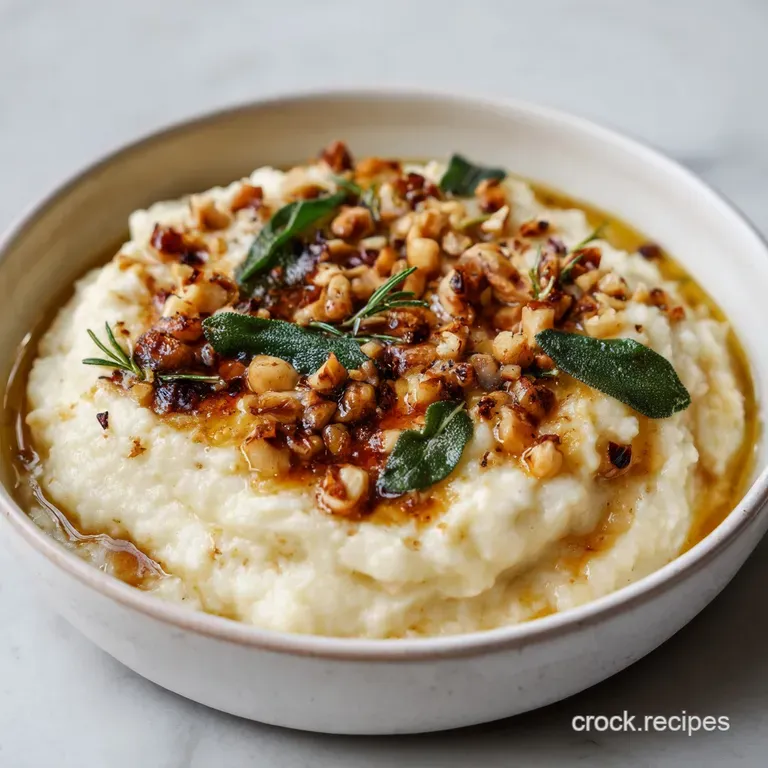
- Introducing the Star: How to Turn Celery Root into a Velvet Purée
- The Flavor Science Behind This Perfect Celery Root Recipe
- Everything You Need: Detailed Notes and Ingredient Substitutions
- Step-by-Step: Crafting Your Velvet Celery Root Purée
- Troubleshooting and Achieving Restaurant-Quality Texture
- Keeping Your Purée Fresh: Storage, Reheating, and Freezing
- Recipe FAQs
- 📝 Recipe Card
Introducing the Star: How to Turn Celery Root into a Velvet Purée
That deep, earthy, slightly nutty smell that hits you when celeriac hits the pot? It's intoxicating. I know, celeriac (or celery root) looks like a scary, knobbly alien turnip that demands a blood sacrifice just to peel, but when you transform it into a purée, the texture is pure velvet.
This is easily one of the most underrated Celery Root Recipes in my arsenal.
You need this in your life, especially if you think elevated side dishes take forever. Forget boring mashed potatoes for your next special occasion. This purée looks incredibly fancy, tastes deeply complex thanks to the browning butter, but it actually requires very little hands-on time once you get past that initial, slightly intense peeling stage.
It’s an elegant, low-carb side that makes you look like a kitchen genius without breaking a sweat.
We’re going beyond the basics here to achieve ultimate smoothness, infuse the dish with glorious brown butter, and layer it with crunchy hazelnuts. Trust me, once you master these techniques, you'll be making all your Celery Root Recipes this way.
The Flavor Science Behind This Perfect Celery Root Recipe
What Exactly is Celery Root (Celeriac)?
Celeriac is the edible bulb of the celery plant, but it doesn't taste like the stalks you put in soup. It offers a wonderful, subtle flavour blend think parsley, light celery, and nutty undertones. It’s dense, packed with nutrients, and provides an earthy counterpoint to rich main courses.
This makes it ideal for healthy Celery Root Recipes .
The Magic of Brown Butter, Sage, and Hazelnut
Why do we bother browning the butter? Because heating the milk solids creates the Maillard reaction, giving the butter a deep, nutty, toffee like flavour. That complexity pairs perfectly with the earthiness of the root.
The crisp sage leaves and crunchy hazelnuts provide the textural contrast that takes this simple purée from good to absolutely spectacular .
Why This Recipe Belongs in Your Collection of Elegant Side Dishes
This isn't just about flavour; it's about presentation and versatility. A truly silky celeriac purée rivals high end restaurant sides. Because the flavour is strong enough to stand up to robust sauces but subtle enough to complement delicate ones, it’s a brilliant foundation for many gourmet plates.
It’s one of those easy-to-master Celery Root Recipes that immediately ups your dinner party game.
Balancing Earthiness: Why We Pair Celeriac and Potato
You could use 100% celeriac, but the starch structure can sometimes be a bit stringy and the flavour can be intensely earthy. We add one small Russet or Yukon Gold potato not just for bulk, but for chemistry .
The potato's starch helps stabilize the purée, giving it that creamy mouthfeel and binding the root vegetables together smoothly.
Achieving Ultimate Smoothness: Mashing vs. Blending Techniques
This is non-negotiable for true velvet texture. If you try to mash celeriac with a fork or hand masher, you’ll end up with a chunky, somewhat fibrous mess. Passing it through a potato ricer or food mill is step one, which eliminates those tough little fibres.
Step two, blending with an immersion blender, ensures it’s airy and silky smooth.
The Maillard Reaction: Browning the Butter for Nutty Depth
Browning butter might sound intimidating, but it’s easy if you watch the colour closely. The minute the white solids turn golden amber and smell like toasted nuts, pull it from the heat.
That shift from yellow to deep brown is the Maillard Reaction, unlocking an incredible layer of flavour that plain melted butter simply can't provide.
Everything You Need: Detailed Notes and Ingredient Substitutions
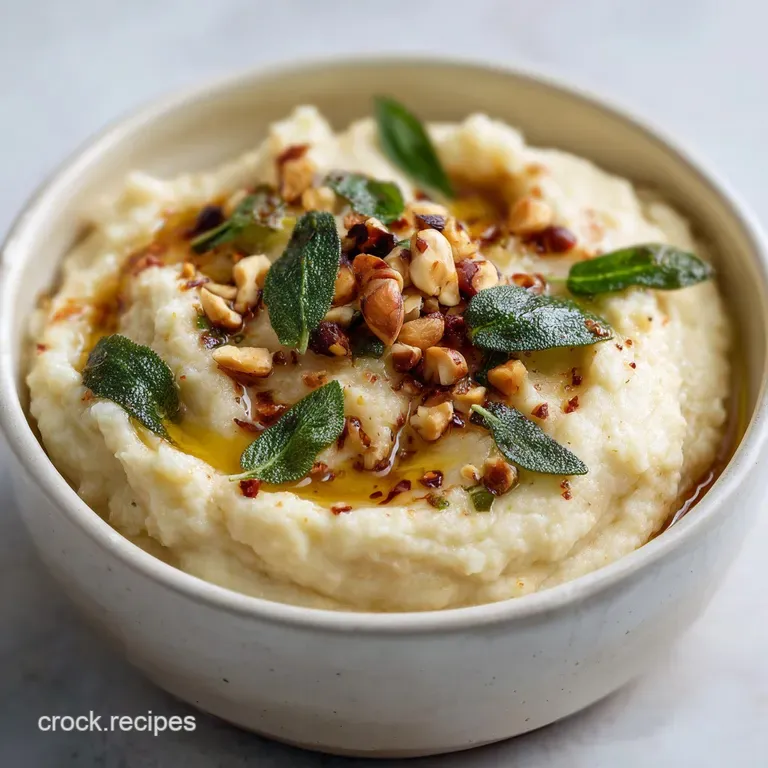
Choosing the Best Celeriac: Weight, Skin, and Freshness
Look for celeriac that feels heavy for its size. The knobs and bumps are unavoidable, but avoid roots with soft spots or deep gashes. The fresher the root, the less fibrous it will be. I always grab the smoothest ones I can find; it saves my hands during the peeling process later.
Dairy Decisions: Using Heavy Cream, Milk, or Crème Fraîche?
We use a combination of whole milk (for cooking) and heavy cream (for finishing). Cooking the root in the milk infuses the celeriac with flavour, rather than boiling it in water. The heavy cream adds richness at the end.
For an extra tang, swap the heavy cream for full fat crème fraîche or even Greek yogurt.
Nut Swaps: Replacing Hazelnuts with Walnuts or Pecans
While the hazelnut and sage pairing is classic, you have options. If hazelnuts aren't available, toasted walnuts are a fantastic substitute, offering a similar crunch and earthy depth.
Toasted pecans or even pine nuts work beautifully too, but keep the toast level light we don't want bitterness competing with the brown butter.
| Ingredient | Substitution Idea | Why it Works |
|---|---|---|
| Whole Milk/Cream | Full fat Coconut Milk | Adds richness and a slight sweetness; great for vegan Celery Root Recipes |
| Hazelnuts | Toasted Walnuts or Pecans | Provides necessary crunch and complementary earthy flavour |
| Unsalted Butter | Ghee or high-quality Olive Oil | Ghee is great for browning; Olive oil works well for a lighter, Mediterranean finish |
| Potato | Parsnip or Sweet Potato | Parsnip adds more sweetness; sweet potato changes the colour but offers great binding starch |
step-by-step: Crafting Your Velvet Celery Root Purée
Prepping Celeriac Safely: Peeling and Chopping Techniques
This is the hardest part, honestly. Use a sturdy, sharp chef’s knife. First, trim the top and bottom flat so the root can sit stably on your board. Then, treating it like a pineapple, slice downwards following the contour of the root, cutting off the thick, knobby skin.
Critical Safety Tip: Celeriac oxidizes quickly. As soon as it’s chopped into 1 inch cubes, drop them into a bowl of cold water with a splash of lemon juice until you are ready to cook.
The Infusion Phase: Cooking the Roots to Perfection
Combine the diced celeriac and potato in the pot. Add the milk, stock, and salt. The liquid should cover the roots just barely. Bring it to a boil, then immediately turn it down to a low, gentle simmer.
Cook uncovered for about 30 minutes until the cubes are falling apart easily when pressed with a fork.
Mastering the Brown Butter Sage Topping
Use a small, light coloured pan for this so you can clearly see the solids changing colour. Melt the 8 tablespoons of butter over medium heat. It will foam wildly. Keep swirling the pan. When the foam subsides, you’ll see the brown specks forming at the bottom this is your signal!
The minute the colour shifts to golden amber and smells intensely nutty, pull it off the heat immediately . Toss in the sage leaves; they'll crisp up instantly in the residual heat.
Assembly: Combining and Whipping for the Velvet Finish
Drain the cooked roots but remember to save that liquid . Pass the hot roots through a ricer or food mill. This is essential for preventing a gluey texture. Now, add the 4 tablespoons of cold butter and the heavy cream.
Use an immersion blender (or a hand whisk for a minute or two) to whip it vigorously. If it's too thick, add the reserved cooking liquid, one tablespoon at a time, until you hit that perfect, velvety, pourable consistency.
This technique works for all your delicate root based Celery Root Recipes .
Troubleshooting and Achieving Restaurant Quality Texture
Preventing Gluey Purée: The Secret to Light and Fluffy Results
The secret is simple: never, ever use a standard food processor or high speed blender on hot, starchy roots. The high speed breaks down the starches too much, turning your beautiful side dish into paste (we call it wallpaper glue in my kitchen).
Stick to a ricer or mill first, then a quick whip with the immersion blender to incorporate air and creaminess.
Common Mistakes When Browning Butter (Avoiding scorching)
The biggest mistake is walking away! Brown butter moves from perfect to burnt charcoal in about ten seconds flat. Keep a close eye on it and remove it from the heat as soon as you see that golden colour. If you scorch it, it will taste bitter and must be thrown out. Start over; butter is cheap, bitter food is not.
Flavor Boosting: Using Celery Root Cooking Liquid Instead of Water
Never thin out your purée with plain water. You cooked the celeriac in milk and stock for a reason the liquid is full of flavour! Using the retained cooking liquid to adjust consistency adds depth and richness that plain water would dilute.
This is a pro-tip for achieving truly excellent Celery Root Recipes .
Keeping Your Purée Fresh: Storage, Reheating, and Freezing
Best Practices for Refrigerating Leftovers
Once cooled, store the purée in an airtight container in the fridge for up to 4 days. When reheating, the key is moisture. You cannot simply microwave it or it will dry out. Reheat gently in a saucepan over low heat, stirring frequently, and add a splash of milk or stock until it returns to a creamy consistency.
Can You Freeze Celery Root Purée? (A Specific Guide)
You bet it freezes well, which is great news for batch cooking these awesome Celery Root Recipes . Allow the purée to cool completely, then place it in a freezer safe zip-top bag, pressing all the air out. It will keep for 2 3 months.
Thaw overnight in the fridge and reheat on the stovetop, adding a splash of heavy cream to bring back that velvet texture.
Ideal Main Course Complements
Because this purée is so rich and earthy, it stands up beautifully to bolder, fattier proteins. It is divine alongside duck breast, or if you prefer poultry, it works wonders with a complex dish like the High Protein Low Carb Recipes: Tuscan Stuffed Chicken Roulades (45 Min) I wrote about last month. For a fantastic vegetarian pairing, serve this purée as a base for my Broccoli and Cauliflower Recipes: Smoky Harissa Roast w Whipped Feta — the smoky spice and the velvet purée are magical together. These truly are some of the best Celery Root Recipes you can make.
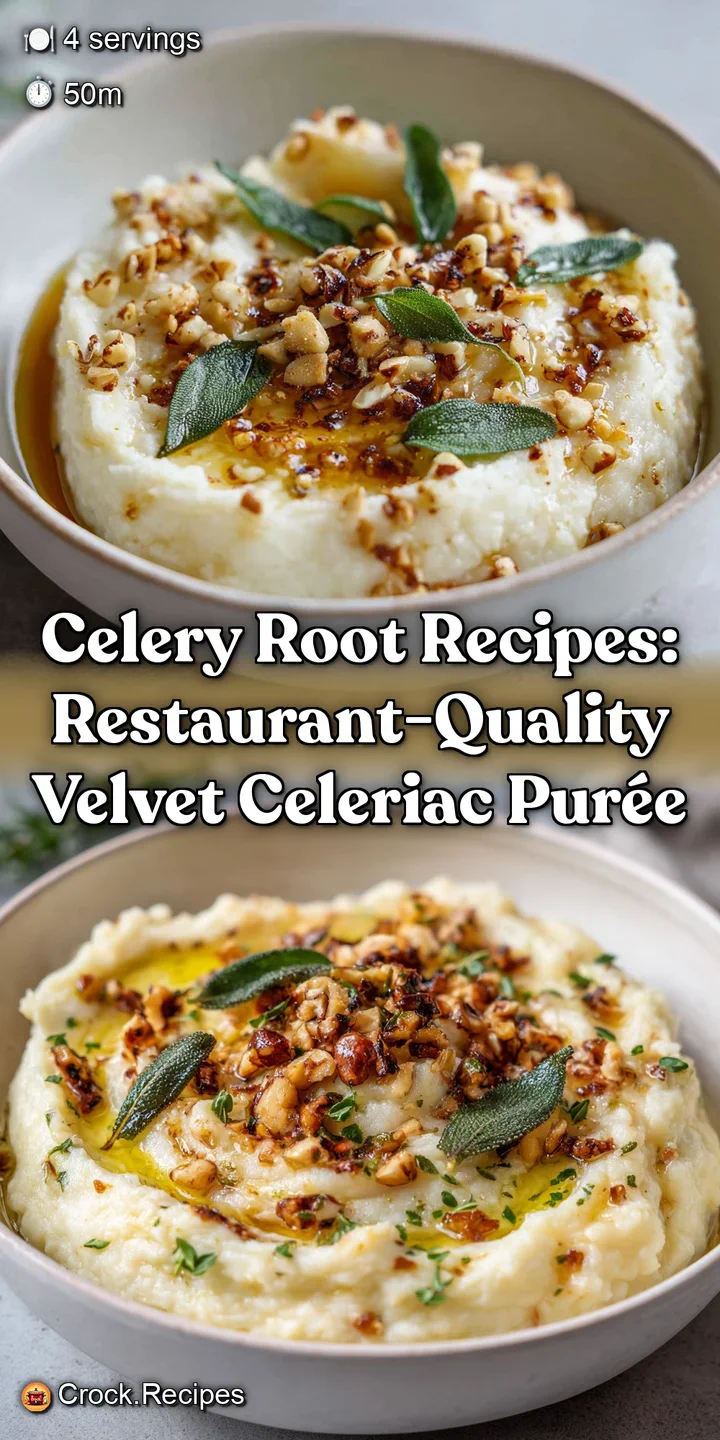
Recipe FAQs
How do I properly prepare and peel the tough celeriac (celery root)?
Celery root has a thick, knobby exterior that needs aggressive peeling. Use a sharp, heavy duty knife to first slice off the top and bottom, creating flat surfaces. Then, carve downwards, removing all the tough, brownish green skin until only the pale white interior remains.
Why did my purée turn out gluey or stringy instead of velvety smooth?
Celery root is relatively high in pectin and starch, making it susceptible to becoming gluey if overworked, especially in a food processor or high speed blender. For the best "velvet" texture, use a potato ricer, a food mill, or an immersion blender on the lowest speed, and blend only until smooth.
Can I make this purée ahead of time for entertaining?
Yes, the purée can be prepared up to two days in advance and stored in an airtight container in the refrigerator. To reheat, gently warm it on the stovetop over low heat, whisking in an extra splash of cream or milk to restore the velvety consistency and moisture.
I don't have hazelnuts. What is a good substitution for the topping?
Walnuts or pecans are excellent substitutes for hazelnuts, as they offer a similar earthy flavour and satisfying crunch when toasted. Ensure you lightly toast the chosen nuts before incorporating them into the brown butter mixture to deepen their inherent flavour profile.
How can I make this Celery Root Purée vegan or dairy-free?
Substitute the heavy cream with full fat coconut milk or a high-quality oat cream for richness. For the brown butter topping, use a reliable plant based butter alternative and brown it similarly, or simply finish the dish with high-quality, peppery olive oil.
Does this purée freeze well for later use?
Freezing is not recommended for this particular recipe, as the combination of starch and cream tends to separate upon thawing, resulting in a grainy or watery texture. If you have leftovers, they are best enjoyed within two to three days after refrigeration.
How can I intensify the inherent celeriac flavour in the dish?
To intensify the celeriac's earthy notes, cook the diced celery root primarily in rich vegetable or chicken stock instead of water until tender. This concentrates the flavour, and you can then add the cream and final seasonings during the mashing stage for moisture and silkiness.
Velvet Celeriac Puree Recipe
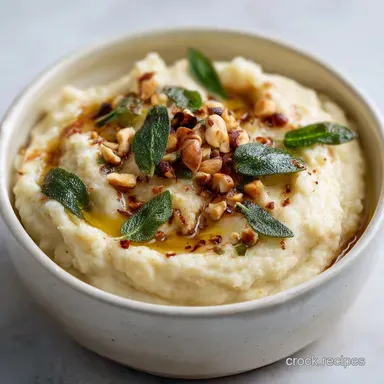
Ingredients:
Instructions:
Nutrition Facts:
| Calories | 621 kcal |
|---|---|
| Protein | 9.2 g |
| Fat | 59.4 g |
| Carbs | 16.3 g |
