Vietnamese Chicken Salad Recipe
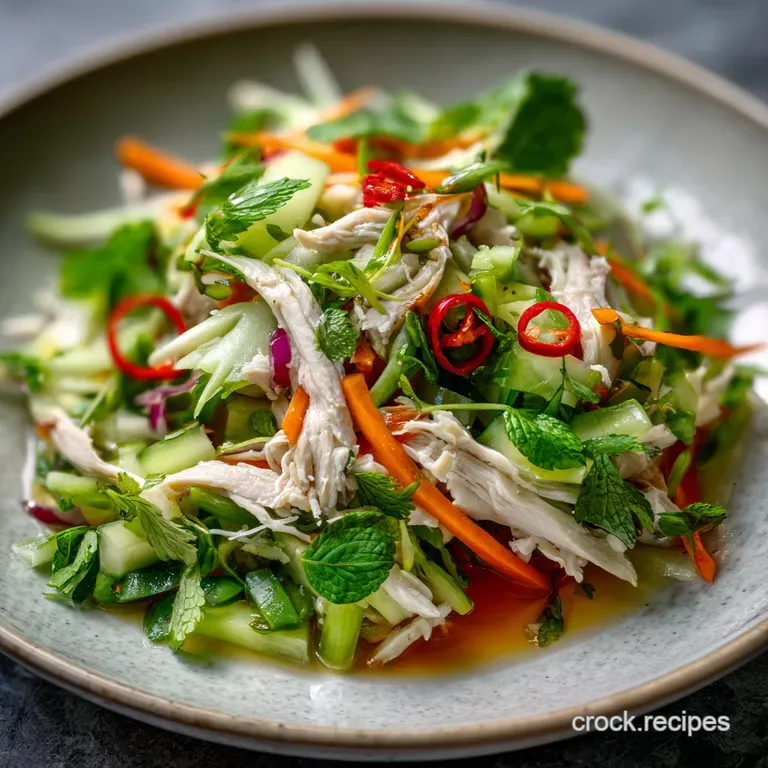
- Time: Active 15 minutes, Passive 5 minutes, Total 20 minutes
- Flavor/Texture Hook: A shatter crisp cabbage base met with velvety shredded chicken and a tangy lime punch.
- Perfect for: High energy summer lunches, global inspired dinner parties, or refreshing meal prep.
- Crafting an Irresistible Vietnamese Chicken Salad Recipe
- Balanced Dimensions for Goi Ga
- Sourcing Elements for Global Flavor
- Tools for Precision Texture Control
- Orchestrating Crunch and Garnish Balance
- Avoiding Sogginess and Mastering Flavor
- Creative Variations for Every Palate
- Preserving Vitality and Zero Waste
- Curating a Vibrant Street Food Spread
- Very High in Sodium
- Recipe FAQs
- 📝 Recipe Card
Crafting an Irresistible Vietnamese Chicken Salad Recipe
Picture this: a bowl where every single bite offers a literal shatter of crispy cabbage, followed by the sharp, electric hit of lime and the deep, funky umami of high-quality fish sauce. Most chicken salads feel heavy, like a mayo laden afterthought from a deli counter.
We’ve all been there, staring at a tub of greyish meat held together by questionable fats. But this? This is vibrant, bold global street food that breathes life back into your kitchen.
I’ll be honest, the first time I tried to make this at home, it was a watery mess. I didn’t understand the relationship between salt and water retention in vegetables. I ended up with a sad pile of limp greens and bland chicken.
I learned the hard way that you can’t just throw ingredients in a bowl and hope for the best. You need a strategy for the crunch.
What you're getting here is a refined approach to the classic Goi Ga. We are focusing on color balance, texture preservation, and a garnish strategy that makes the dish look like it walked out of a high end Saigon bistro. Right then, let’s get into the mechanics of why this works so well.
Balanced Dimensions for Goi Ga
The Science of Why it Works: Osmotic pressure draws moisture out of the aromatics to "flash pickle" them, while acid driven protein denaturation in the dressing keeps the palate refreshed between bites of fat rich peanuts.
Balancing Five Flavor Pillars
The brilliance of this recipe lies in its equilibrium. You have the salt from the fish sauce, the sour from the lime, the sweet from the granulated sugar, the heat from the Bird's eye chilies, and the bitter/earthy notes from the fresh mint and cilantro.
When these five pillars collide, they create a sensory experience that is far more complex than the sum of its parts.
Optimizing Surface Area for Dressing
We aren't just chopping; we are engineering texture. By shredding the 400g of green cabbage paper thin, we increase the surface area significantly. This allows the 60ml of lime juice and fish sauce dressing to coat every single strand without pooling at the bottom of the bowl.
Osmosis for Quick Pickled Aromatics
When you toss those 50g of paper thin red onions into the dressing, the 50g of sugar acts as a desiccant. It pulls the harsh, sulfurous liquid out of the onion cells. This transforms a sharp, biting raw onion into a mild, translucent, and vibrant accent that complements rather than overpowers.
| Method | Time | Texture | Best For |
|---|---|---|---|
| Fast Method | 5 minutes | Firm & Chewy | Using leftover rotisserie chicken for a quick lunch |
| Classic Method | 20 minutes | Velvety & Soft | Poaching fresh chicken breast to absorb the dressing |
It is a common mistake to think all chicken salads are created equal. The classic method of poaching the chicken ensures the meat remains porous and ready to soak up the lime juice, whereas the fast method relies on the topical coating of the dressing.
Sourcing Elements for Global Flavor
Choosing the right components is the difference between a "good" salad and an irresistible one. You want 450g of poached chicken breast that has been shredded by hand, never cubed. Shredding creates jagged edges that catch the herbs and peanuts. Speaking of prep, I often poach a double batch of chicken, similar to the technique I use for my Mums Magic Chicken recipe, just to have it ready in the fridge.
| Ingredient | Science Role | Pro Secret |
|---|---|---|
| Fish Sauce | Glutamate delivery | Use "First Press" bottles for a cleaner, less fishy aroma |
| Green Cabbage | Structural integrity | Core the cabbage first to ensure even, hair thin ribbons |
| Lime Juice | pH Balance | Microwave the lime for 10 seconds to yield 20% more juice |
Don't ignore the importance of the 60ml of warm water in the dressing. This isn't just a filler; it helps the 50g of granulated sugar dissolve completely, preventing a gritty texture. It also mellows the intensity of the 60ml of fish sauce, ensuring the dressing is bright rather than oppressive.
For the Crunchy Base
- 400g green cabbage, shredded thin Why this? Provides the structural crunch that defines the salad's character.
- 150g carrot, julienned Why this? Adds a necessary sweetness and a vibrant orange pop.
- 50g red onion, paper thinly sliced Why this? Offers a sharp counterpoint to the sweet dressing.
Vietnamese Salad Dressing Recipe
- 60ml fish sauce (Substitute: Soy sauce + 1 tsp salt for a saltier, less funky profile)
- 60ml fresh lime juice (Substitute: Rice vinegar for a milder, more consistent acidity)
- 50g granulated sugar (Substitute: Honey for a floral note and thicker viscosity)
- 60ml warm water (Substitute: Coconut water for a subtle tropical sweetness)
- 2 cloves garlic, finely minced
- 2 Bird's eye chilies, finely sliced
Bold Finishing Garnishes
- 30g fresh mint leaves, torn
- 30g fresh cilantro, roughly chopped
- 30g Thai basil or Vietnamese coriander, chopped
- 30g roasted peanuts, crushed
- 15g fried shallots
Tools for Precision Texture Control
You don't need a kitchen full of gadgets, but a few specific items make this recipe significantly easier. A mandoline slicer is your best friend for getting the 400g of cabbage and 50g of red onion consistently thin. If you don't have one, a very sharp chef's knife and a steady hand will do the trick.
Chef's Tip: Freeze your red onion for 5 minutes before slicing on the mandoline. The slight firming of the cells prevents the onion from tearing and ensures those paper thin, translucent rings every time.
A mortar and pestle is also highly recommended for the 30g of roasted peanuts. You don't want a peanut powder; you want varying sizes of "shatter" to create different levels of crunch in every bite. If you use a food processor, you'll likely over process them into a paste. Trust me, do it by hand.
Orchestrating Crunch and Garnish Balance
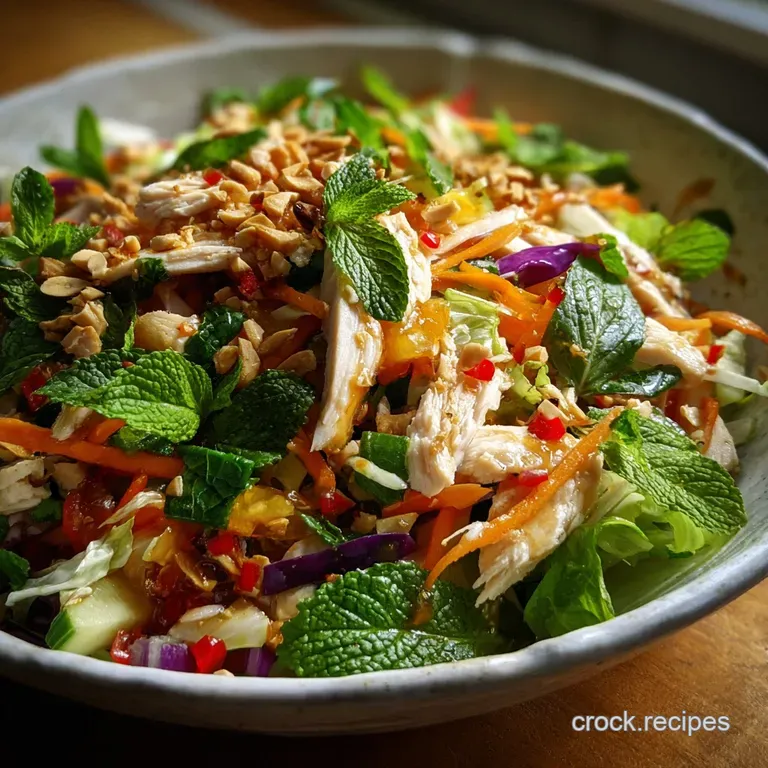
- Whisk the vibrant dressing. Combine 60ml fish sauce, 60ml lime juice, 50g sugar, and 60ml warm water in a bowl. Whisk until the sugar granules have completely disappeared. Note: Dissolving the sugar first prevents a gritty mouthfeel later.
- Infuse the aromatics. Add the 2 minced garlic cloves and 2 sliced Bird's eye chilies to the dressing. Let this sit for 5 minutes. Note: This allows the capsaicin to bloom into the liquid.
- Macerate the red onion. Toss the 50g of sliced red onion into the dressing. Let it sit while you prep the rest of the vegetables. Note: This softens the onion's bite through osmotic draw.
- Prepare the cabbage base. Shred 400g of green cabbage into a large mixing bowl. Pat it dry with a paper towel if it’s at all damp.
- Julienne the carrots. Add the 150g of carrot ribbons to the cabbage.
- Shred the chicken. Hand shred the 450g of poached chicken into long, irregular strips. Toss them in with the cabbage. Note: Irregular shreds hold the dressing better than uniform cubes.
- Combine the elements. Pour half of the dressing over the chicken and cabbage mixture. Toss gently with tongs. until every strand is glistening.
- Incorporate the herbs. Add 30g torn mint, 30g chopped cilantro, and 30g Thai basil. Add the remaining dressing. Note: Adding herbs late prevents them from bruising and turning black.
- Execute the garnish strategy. Transfer the salad to a wide serving platter. Sprinkle with 30g crushed peanuts and 15g fried shallots.
- Final Seasoning. Dust with 0.5 tsp black pepper. Serve immediately while the cabbage is still incredibly crisp.
Avoiding Sogginess and Mastering Flavor
The biggest enemy of this Vietnamese Chicken Salad Recipe is moisture. Vegetables like cabbage and carrots are mostly water. Once they hit the salt in the fish sauce, they start to "weep." If you dress the salad too early, you'll end up with a puddle at the bottom of the bowl and limp, sad vegetables.
Why Your Salad Is Watery
If you find your bowl filling with liquid, it’s usually because the vegetables weren't dry enough before dressing, or it sat too long.
| Problem | Root Cause | Solution |
|---|---|---|
| Limp Cabbage | Premature dressing | Only toss with liquid immediately before serving |
| Overpowering Fish Sauce | Low quality brand | Use a "First Press" sauce or dilute with 10ml extra water |
| Bland Chicken | Cubed meat | Hand shred chicken to increase surface area for absorption |
We want that "shatter" texture. To achieve it, follow this common mistakes checklist to ensure your Goi Ga stays vibrant and irresistible from the first bite to the last.
- ✓ Pat the shredded cabbage completely dry after washing to prevent dressing dilution.
- ✓ Shred the chicken while it's still slightly warm; it absorbs the dressing flavors more effectively.
- ✓ Tear the mint and basil by hand instead of chopping to prevent the leaves from oxidizing and turning bitter.
- ✓ Toast your own peanuts in a dry pan for 2 minutes to revive their oils and maximize the crunch.
- ✓ Never use bottled lime juice; the lack of volatile oils makes the salad taste flat and "chemical."
Taming the Garlic Breath
If you're worried about the raw garlic being too punchy, you can "blanch" the minced garlic in the lime juice for 10 minutes before adding the other dressing ingredients. The acid in the lime juice neutralizes the allicin, which is the compound responsible for that lingering garlic burn.
It keeps the flavor but removes the social consequences.
Creative Variations for Every Palate
This recipe is a canvas. While the core of cabbage and chicken is classic, you can easily adapt this to suit what you have in the fridge. For a more filling meal, I love serving this alongside a Basic Noodle Salad recipe or even tossing some chilled vermicelli directly into the bowl.
- If you want a tropical twist, swap half the cabbage for shredded green papaya or green mango.
- If you want more heat, add a tablespoon of Sambal Oelek or sriracha to the dressing.
- If you want a more substantial meal, serve the mixture over chilled rice vermicelli noodles.
Vietnamese Salad Roll Adaptation
You can actually turn this entire salad into fresh spring rolls (Goi Cuon). Instead of tossing everything in a bowl, keep the ingredients separate. Dip rice paper in warm water, lay down a leaf of lettuce, and fill it with the shredded chicken, cabbage, and herbs. Use the dressing as a dipping sauce instead.
It’s a fantastic way to repurpose leftovers for a portable lunch the next day.
The Vegan Swap
To make this entirely plant based, replace the 450g of chicken with pan seared oyster mushrooms or firm tofu. For the dressing, use a "vegan fish sauce" (usually made from fermented pineapple or seaweed) or a high-quality light soy sauce.
The mushrooms are particularly good because their ragged edges mimic the texture of shredded chicken perfectly.
Preserving Vitality and Zero Waste
This salad is at its absolute peak the moment it's tossed. However, life happens, and sometimes you have leftovers. If you know you won't finish it all, only dress the portion you are going to eat immediately.
- Fridge: Keep the shredded chicken, sliced vegetables, and dressing in three separate airtight containers. They will stay fresh for up to 2 days.
- Freezer: Do not freeze this salad. The cell walls of the cabbage and herbs will collapse upon thawing, resulting in a mushy disaster.
- Zero Waste Tip: Don't throw away those cabbage cores or carrot peels! Toss them into a freezer bag. When you have enough, boil them with some ginger and onion to create a light, fragrant vegetable stock for your next soup.
Curating a Vibrant Street Food Spread
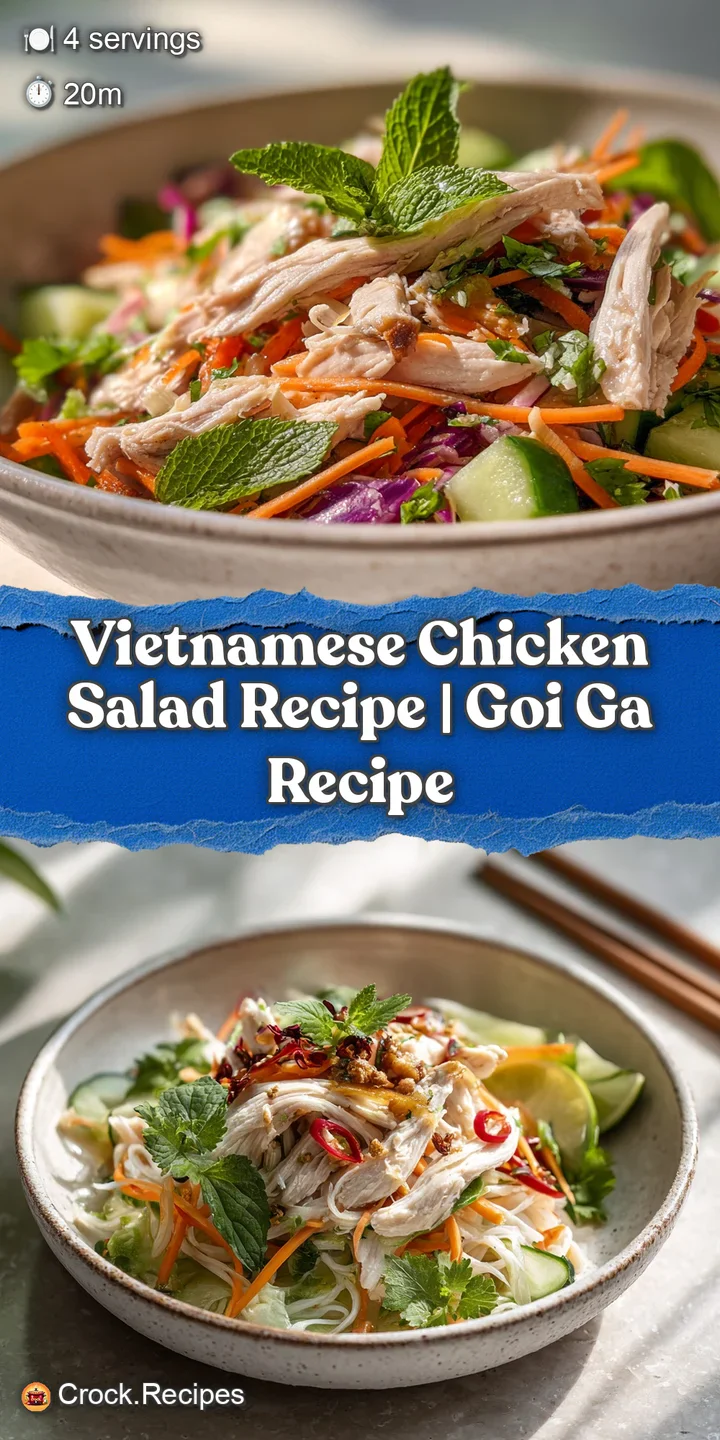
When it comes to presentation, think about the three color accents: the deep purple of the onions, the bright orange of the carrots, and the lush green of the herbs. I like to serve this on a large, flat platter rather than a deep bowl.
This allows the garnishes the peanuts and fried shallots to be distributed across the top so everyone gets a bit of that "shatter" in every forkful.
This salad pairs beautifully with other vibrant dishes. If you’re hosting a dinner, try serving it with some crispy shrimp crackers (prawn crackers) on the side. They act as the perfect edible spoon for the salad. For a complete feast, I often pair this with my Traditional Hungarian Cucumber recipe if I'm doing a "crunch themed" lunch, as the vinegar profiles complement each other surprisingly well despite the different origins.
The Myth of "Sealing" the Chicken A quick myth to debunk: Many people think you need to sear the chicken to "seal in the juices" before shredding. In reality, searing creates a hard crust that prevents the dressing from penetrating the meat.
Gentle poaching is the only way to achieve that velvety, sponge like texture that makes a Vietnamese Chicken Salad truly irresistible. Trust the process, keep it vibrant, and don't skimp on the herbs!
Very High in Sodium
1350 mg mg of sodium per serving (59% of daily value)
The American Heart Association recommends limiting sodium intake to about 2,300mg per day for overall cardiovascular health.
Tips to Reduce Sodium in Your Thai Chicken Salad
-
Reduce Fish Sauce-30%
Fish sauce is the primary source of sodium. Reduce the amount of fish sauce by half (to 30ml) and adjust the flavor with a splash more lime juice or a pinch of sugar to maintain the balance.
-
Lime Power!-10%
Increase the fresh lime juice. You can increase the lime juice by 15ml and use it to substitute the missing flavor from fish sauce.
-
Spice It Up-5%
Add more chili. The spiciness helps the palette to recognize the flavor better, while decreasing the desire for high levels of sodium.
-
Dilute Fish Sauce-5%
Dilute the fish sauce with a small amount of water (5-10ml). This will lessen the concentration of the flavor, and can reduce the sodium.
-
Unsalted Toppings-5%
Ensure that the roasted peanuts and fried shallots are unsalted or lightly salted. Using unsalted versions will significantly cut down on sodium without sacrificing flavor.
-
Fresh Herbs Boost
Experiment with a wider variety of fresh herbs like more mint, cilantro, or Thai basil. Herbs add complexity and can help to compensate for less sodium.
Recipe FAQs
What is the key to achieving the signature crisp texture in this Vietnamese Chicken Salad?
Pat the shredded cabbage completely dry. This is crucial to prevent any residual moisture from diluting the dressing and making the vegetables soggy.
Can I use pre-shredded cabbage for this recipe?
No, it's best to shred your own. Pre-shredded cabbage is often too thick and may have a higher moisture content, impacting the crispness you're aiming for.
How do I prevent the chicken from being bland?
Hand shred the chicken while it's still warm. This allows the meat to absorb more of the dressing's flavors compared to cubing or using cold chicken.
Is it necessary to add herbs at the very end?
Yes, adding herbs late prevents bruising. Tossing them in just before serving ensures their vibrant color and fresh flavor aren't lost.
What can I do if I'm worried about the raw garlic being too strong?
Blanch the minced garlic in the lime juice for 10 minutes. This acid treatment neutralizes the compound responsible for a harsh garlicky bite, mellowing its intensity.
Can I make this salad ahead of time?
Only partially, for best results. Keep the shredded chicken, vegetables, and dressing separate in airtight containers for up to 2 days. Toss only the portion you're serving immediately.
How can I adapt this recipe for a vegan diet?
Swap chicken for pan-seared oyster mushrooms or firm tofu. Use a vegan fish sauce or light soy sauce for the dressing to maintain a similar flavor profile.
Vietnamese Chicken Salad
Ingredients:
Instructions:
Nutrition Facts:
| Calories | 369 kcal |
|---|---|
| Protein | 38.5 g |
| Fat | 9.2 g |
| Carbs | 28.3 g |
| Fiber | 3.8 g |
| Sugar | 14.8 g |
| Sodium | 1350 mg |
