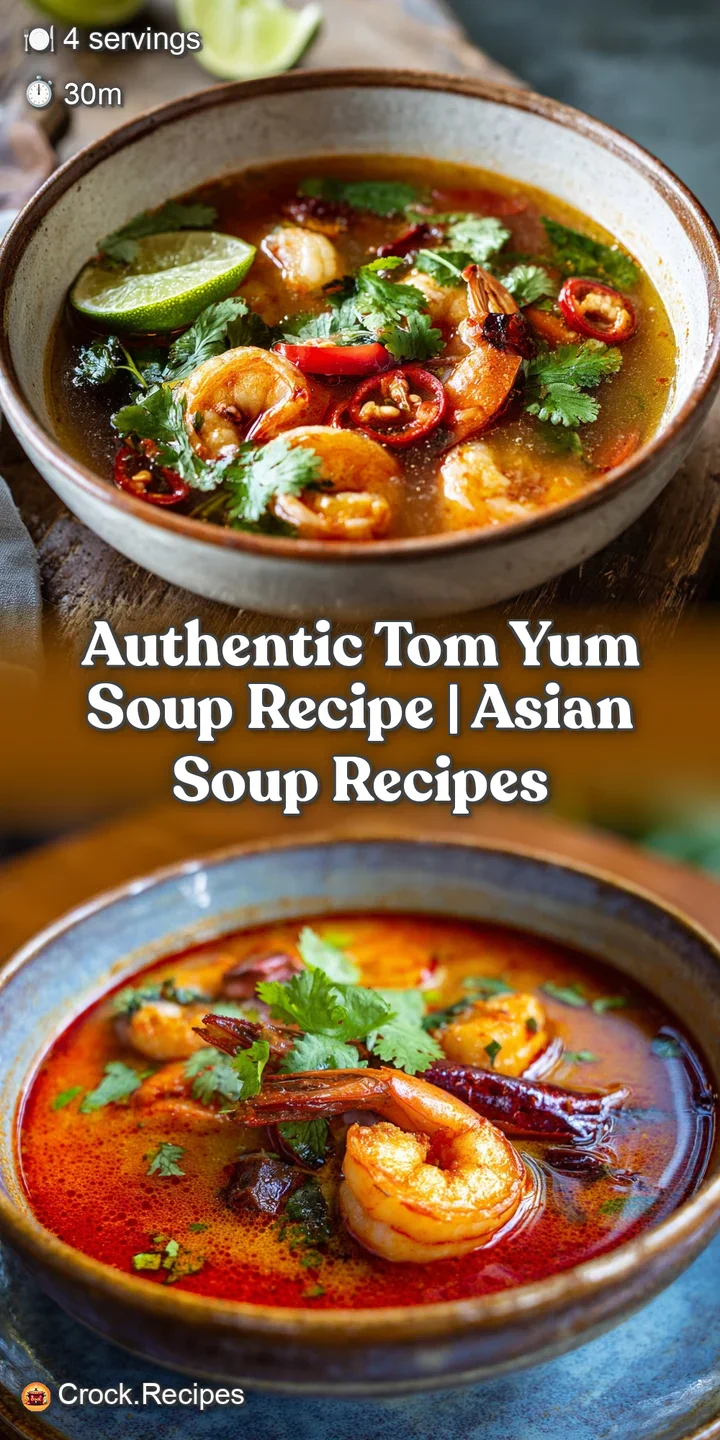
Authentic Tom Yum Soup Recipe: Zesty Broth
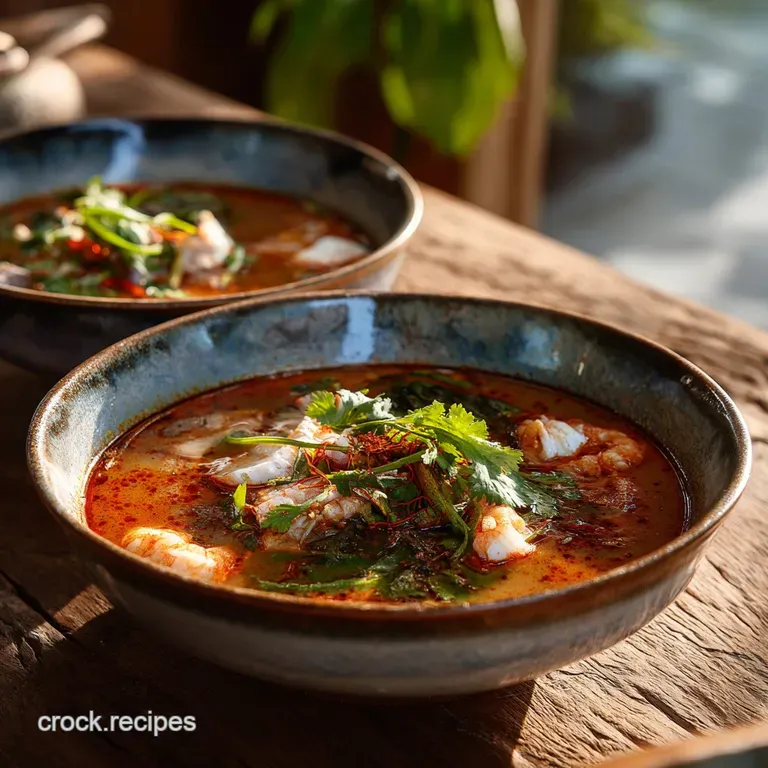
- Time: Active 15 minutes, Passive 15 minutes, Total 30 minutes
- Flavor/Texture Hook: Zesty, umami rich, and shimmering
- Perfect for: Impressive dinner parties or quick weeknight comfort
Can you smell that? The second those torn Makrut lime leaves hit the simmering stock, the whole kitchen transforms. It is a bright, citrusy perfume that cuts right through the steam.
I remember the first time I tried making Tom Yum Soup at home, I was so worried about getting the balance right, but honestly, once you hear that first splash of fish sauce hit the pot, you just know it's going to be irresistible.
The secret isn't in a long, slow simmer. It’s actually the opposite. This soup is all about speed and timing. If you boil it for an hour, you lose that vibrant, electric edge that makes Thai food so addictive. We are aiming for a broth that tastes like a lightning bolt, not a heavy stew.
Trust me, once you see how the Nam Prik Pao turns the liquid into a glowing orange gold, you'll never go back to the diluted takeout versions.
The Science of Zesty Infusion
Aromatic Extraction: Bruising the lemongrass and tearing the lime leaves ruptures the volatile oil glands, allowing citral and limonene to dissolve instantly into the hot stock.
The high acidity from the lime juice, added at the very end, prevents the shrimp's delicate proteins from over coagulating into a rubbery texture.
| Cooking Method | Total Time | Texture | Best For |
|---|---|---|---|
| Classic Stovetop | 30 minutes | Shimmering, clear broth | Maximum aromatic control |
| Instant Pot | 15 minutes | Deeply infused, unified flavor | Busy weeknights |
| Slow Cooker | 4 hours | Mellow, integrated spice | Large gatherings |
You might think that boiling everything together for ages is the way to go, but with Tom Yum Soup, it really is a game of two halves. We want the aromatics to give up their soul to the water, but we want the shrimp to just barely turn opaque so they stay succulent. It's similar to the precision needed in The Chefs Secret recipe where the broth is king.
Selecting Your Aromatic Elements
| Ingredient | Science Role | Pro Secret |
|---|---|---|
| Fresh Lemongrass | Provides citral for citrus high notes | Use only the pale inner bulb for the most concentrated oils |
| Galangal | Adds piney, earthy heat | Slice it paper thin to maximize surface area contact with stock |
| Fish Sauce | Delivers essential glutamates (umami) | Add it early to let the "fishy" scent cook off into pure savoriness |
I used to think ginger was a fine swap for galangal, but boy, was I wrong. Galangal has this almost medicinal, piney scent that ginger just can't replicate. If you absolutely can't find it, don't just reach for the ginger jar, maybe try a tiny bit of extra lime zest instead.
But really, hunt down the galangal, it's the heart of this dish.
Tools for Your Thai Kitchen
You don't need a professional setup to make an irresistible Tom Yum Soup. A heavy bottomed Dutch oven or a medium stockpot works best because it holds heat steadily when you drop in the cold shrimp. You will also want a good chef's knife to bruise that lemongrass properly.
I also highly recommend having a fine mesh strainer nearby. While some people love fishing around the aromatics in their bowl, I prefer a cleaner presentation. If you're serving this for an occasion, straining the broth before adding the mushrooms and shrimp makes it look incredibly high end.
step-by-step Culinary Mastery
To get that restaurant quality finish, you have to be intentional with your prep. Smash those chilies until they just pop open; don't mince them unless you want a soup that's too spicy to handle. We want the flavor of the chili, not just the burn.
- Prep the aromatics. Cut 3 stalks fresh lemongrass into 2 inch pieces and bruise them with the back of your knife. Note: This releases the oils without making the pieces too small to find later.
- Boil the base. Bring 6 cups high-quality chicken or shrimp stock to a rolling boil in a large pot.
- Infuse the flavor. Add the lemongrass, 1 inch piece sliced galangal, 8 torn kaffir lime leaves, and 5 smashed Thai bird’s eye chilies.
- Simmer gently. Reduce heat and let the aromatics steep for 10 minutes until the kitchen smells like a Thai garden.
- Add vegetables. Stir in 2 cups halved oyster mushrooms, 1 medium Roma tomato (wedges), and 1 small sliced white onion.
- Season the broth. Whisk in 3 tbsp Nam Prik Pao, 4 tbsp premium fish sauce, and 1 tsp coconut sugar until the liquid turns a vibrant orange.
- Poach the shrimp. Increase heat slightly and add 1 lb large shrimp. Cook for 2-3 minutes until the shrimp turn pink and curl into a C shape.
- The final touch. Turn off the heat completely and stir in 1/4 cup freshly squeezed lime juice.
- Garnish and serve. Top with 1/2 cup fresh cilantro and 2 sliced green onions until the surface is bright green.
Chef's Tip: Always add your lime juice after you turn off the burner. Boiling lime juice can actually turn it bitter, destroying that fresh, zesty smack we're looking for.
Solutions for Common Soup Mistakes
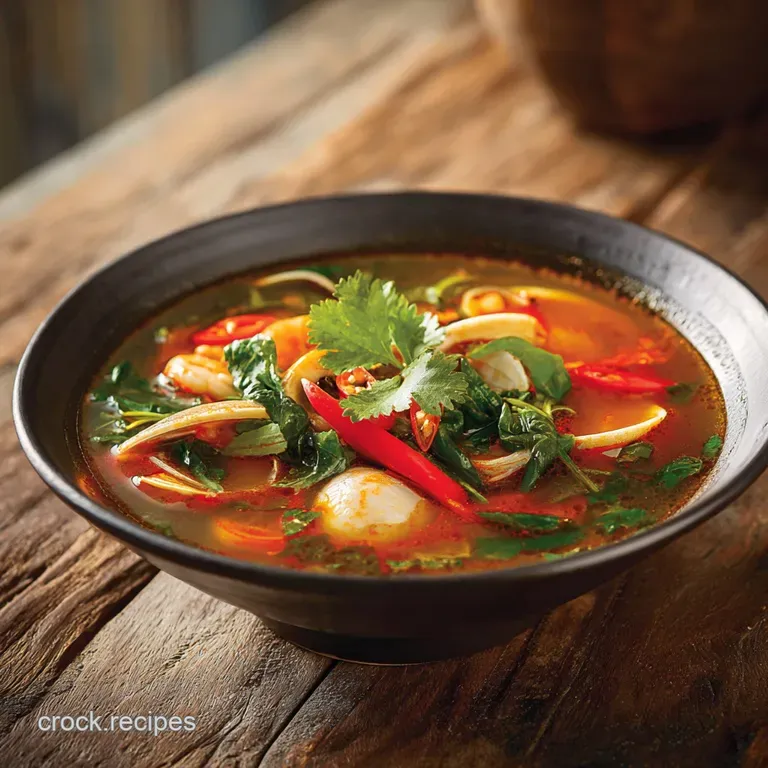
Too Spicy for Comfort
If you find the heat is overwhelming, it's usually because the chilies were left in too long or smashed too aggressively. You can mellow it out by adding a splash more coconut sugar or even a bit of coconut milk for a "Tom Yum Nam Khon" style.
Lacking That Authentic Depth
This usually happens if your stock is too watery or your fish sauce is old. A good fish sauce should smell salty and ocean like, not like old gym socks. Also, make sure you aren't skipping the Nam Prik Pao, as that's where the smoky, sweet complexity lives. Just like in The Umami Bomb recipe, the quality of your fermented base determines the soul of the soup.
| Problem | Root Cause | Solution |
|---|---|---|
| Rubbery Shrimp | Overcooked past 145°F | Add shrimp last; remove from heat immediately once pink |
| Bitter Aftertaste | Boiled lime juice | Only stir in citrus juice after the flame is extinguished |
| Weak Aromatics | Cold start infusion | Ensure stock is boiling before adding lemongrass and galangal |
- ✓ Use the lower 4 inches of the lemongrass only; the tops are too woody.
- ✓ Peel the shrimp but leave the tails on for better presentation and flavor.
- ✓ Do not substitute lemon juice for lime; the acidity profile is completely different.
- ✓ Taste the broth before adding lime; you want a balance of salty, sour, and spicy.
- ✓ If using frozen shrimp, defrost them completely and pat dry to avoid diluting the broth.
Adapting to Your Palate
If you're cooking for a crowd, scaling this recipe is actually quite simple. If you need to double it, use 1.5x the amount of chilies and fish sauce first, then taste. Spicy and salty flavors don't always scale linearly, and you can always add more, but you can't take it out.
For a smaller batch, you can easily halve the ingredients. If you're using a single egg for a different recipe and need half, just beat it and measure. For this soup, if you have half a can of coconut sugar left, just seal it tight. It's much more forgiving than baking.
| Original Ingredient | Substitute | Why It Works |
|---|---|---|
| Galangal | Ginger + 1 tsp Lime Zest | Ginger is spicier/sharper; lime zest mimics the floral notes of galangal |
| Oyster Mushrooms | Straw Mushrooms | Classic Thai choice; similar "sponge" texture for absorbing broth |
| Nam Prik Pao | Chili Flakes + Honey | Provides heat and sweetness. Note: Lacks the deep smoky shrimp paste flavor |
Keeping Your Soup Fresh
Storage: This soup stays fresh in the fridge for up to 2 days. However, the shrimp will continue to toughen slightly as they sit in the acidic broth. If you know you'll have leftovers, try to store the broth and the shrimp separately.
Freezing: You can freeze the strained aromatic broth for up to 3 months. Don't freeze the mushrooms, tomatoes, or shrimp, as their texture will turn to mush once thawed. Just freeze the liquid gold and add fresh ingredients when you're ready to eat.
Zero Waste: Don't throw away those shrimp shells! Sauté them in a little oil until they turn orange, cover with water, and simmer for 20 minutes. Strain it, and you have a massive flavor boost for your next batch of stock.
Vibrant Pairings for Your Meal
- Jasmine Rice: A bowl of fluffy rice is the perfect sponge for that spicy broth.
- Thai Omelet (Khai Jiao): The fatty, crispy edges of a Thai style omelet cut through the sharp acidity of the Tom Yum Soup perfectly.
- Green Papaya Salad: If you want to lean into the fresh, crunchy vibes, a Som Tum salad on the side makes for a legendary lunch.
Honestly, don't even bother with low quality stock here. Since the liquid is the star, use the best you can find. If you have any leftover cilantro stems, throw those into the pot while the aromatics simmer too. They have just as much flavor as the leaves but often get tossed out.
One big myth is that you have to eat the lemongrass and galangal. You definitely don't! They are there purely for the infusion. Think of them like bay leaves in a western stew. They've done their job once the soup hits the bowl, so feel free to push them to the side of your plate.
Now, go grab your pot and let's get that kitchen smelling like a vacation!
Critical Sodium Level
1625 mg mg of sodium per serving (71% % of daily value)
The American Heart Association recommends limiting sodium intake to no more than 2,300mg per day for optimal health.
Sodium Reduction Tips for Tom Yum Soup
-
Reduce Fish Sauce-25%
Fish sauce is a major contributor to the sodium content. Reduce the amount from 4 tbsp to 2 tbsp. You can add more lime juice for flavor.
-
Control Chili Paste-20%
Nam Prik Pao (Thai Roasted Chili Paste) can be high in sodium. Reduce the amount from 3 tbsp to 1.5 tbsp, or look for a lower sodium version if available. Consider adding fresh chilies for heat instead.
-
Boost Lime Flavor-10%
Enhance the sour and tangy flavor by increasing the lime juice from 1/4 cup to 1/3 cup. This helps compensate for the reduction in salty ingredients.
-
Add More Vegetables-5%
Increase the amount of oyster mushrooms, tomatoes, and onions in the soup. More vegetables can help balance the flavors and reduce the need for as much salt.
-
Enhance with Herbs
Use a generous amount of fresh herbs like cilantro, green onions, and kaffir lime leaves to boost the flavor of your Tom Yum soup. Herbs don't contain any sodium!
Tom Yum Soup FAQs
What are the core ingredients that define Tom Yum soup flavor?
Lemongrass, galangal, kaffir lime leaves, chili, and fish sauce. These aromatics create the signature complex profile of sourness, heat, and deep umami.
What are the two main varieties of Tom Yum soup?
Clear (Tom Yum Nam Sai) and creamy (Tom Yum Nam Khon). Nam Sai is the traditional, lighter, more purely sour spicy broth, while Nam Khon incorporates evaporated or coconut milk for a richer texture.
Is Tom Yum soup considered a healthy dish?
Yes, generally it is very healthy. It is naturally low in fat (unless Nam Khon is chosen) and high in immune boosting spices, though sodium content can be high depending on the fish sauce quantity.
What does the finished Tom Yum soup taste like?
It is intensely bright, sour, spicy, and deeply savory. The flavor profile balances zesty citrus notes against a lingering, savory heat from the chilies and fish sauce.
How do I ensure the shrimp in my Tom Yum Soup stays tender, not rubbery?
Add the shrimp only in the final two minutes of cooking. Turn off the heat immediately after they turn opaque to prevent the acidic broth from overcooking the delicate proteins.
Is it true that I must boil the lime juice with the broth to infuse flavor?
No, boiling lime juice is detrimental to the flavor. Always stir the fresh lime juice in after you turn off the heat, as boiling destroys the volatile oils and can cause the broth to taste bitter.
Can I substitute ginger for galangal in Tom Yum soup?
You can substitute ginger, but the authentic flavor profile will change. Ginger is sharper and hotter, whereas galangal provides a more distinct, piney, earthy background note. If you're focusing on flavor building, see how we handle similar delicate flavor extractions in our How to Make recipe.
Authentic Tom Yum Soup Recipe
Ingredients:
Instructions:
Nutrition Facts:
| Calories | 198 kcal |
|---|---|
| Protein | 26.8 g |
| Fat | 4.9 g |
| Carbs | 8.2 g |
| Fiber | 1.6 g |
| Sugar | 3.4 g |
| Sodium | 1625 mg |
