Caramelized Onion and Gruyere Dip Recipe
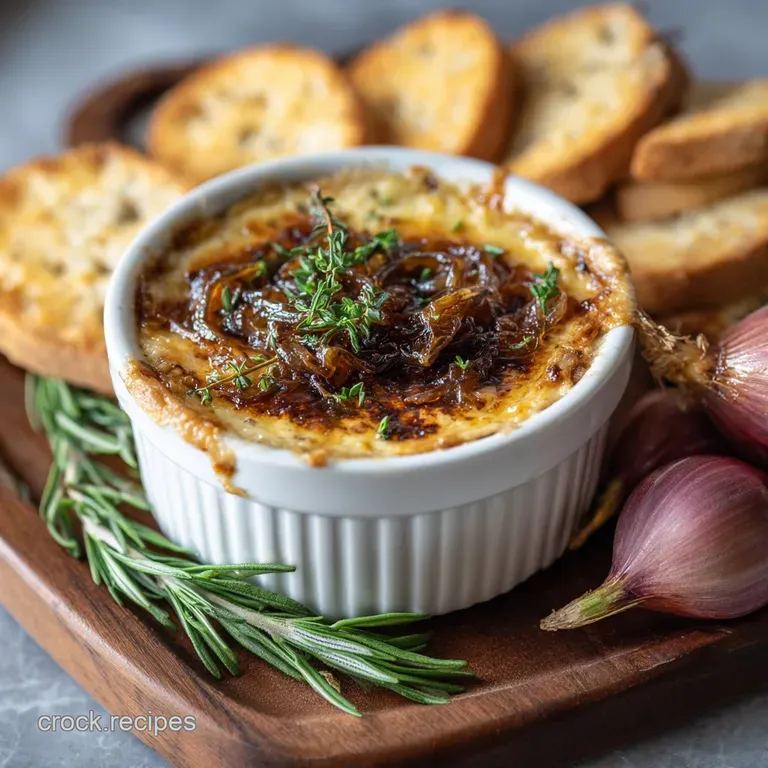
- Time: Active 25 minutes, Passive 45 minutes, Total 1 hours 10 mins
- Flavor/Texture Hook: Jammy, sweet onions meet melted, nutty Gruyère and a velvety cream base
- Perfect for: Game days, holiday hosting, or when you just need a serious comfort food win
- The Science of Deep Flavors
- The Components of Flavor
- Key Specs for Success
- Essential Ingredients and Swaps
- The Tools You'll Need
- Step-by-Step Cooking Guide
- Solving Common Dipping Disasters
- Flavor Twists and Substitutions
- Storing and Using Leftovers
- Garnish and Serving Ideas
- Recipe FAQs
- 📝 Recipe Card
The Science of Deep Flavors
To understand why this dip is so much better than others, we have to look at what's happening in the pan. We aren't just cooking the onions; we are chemically altering them to unlock hidden sugars.
- Maillard Reaction: Amino acids and reducing sugars react under heat to create hundreds of different flavor compounds and that characteristic mahogany color.
- Starch Gelatinization: While not a traditional baking recipe, the moisture in the onions must evaporate so the remaining solids can soften into a "jam" texture.
- Protein Denaturation: The cream cheese and Gruyère must be heated gently to prevent the proteins from tightening and squeezing out the fat, which causes greasiness.
The Maillard Reaction Mastery
When we cook the 2 lbs of yellow onions, we’re waiting for the Maillard reaction. This isn't just browning; it's a complex dance that happens when the water content of the onion drops. If you rush it, you get "pyrolysis" (burning), which tastes bitter.
By keeping the heat medium low and adding a splash of liquid, we keep the temperature in the sweet spot where the flavors become rich and satisfying.
Why Gruyere Wins Every Time
Gruyère is a Swiss style cheese that is aged specifically to develop a nutty, earthy profile. Scientifically, it has a high fat to water ratio and a lower melting point than sharp cheddar. This means it incorporates into the sour cream and cream cheese base without breaking. It’s the same reason it’s the star in a classic Au Gratin Potatoes recipe, providing that silky stretch we all crave.
Mastering the Deglazing Step
As the onions cook, they leave behind "fond" those brown, sticky bits on the bottom of the skillet. That’s pure flavor. When we add the 2 tbsp of dry sherry, the alcohol and acidity act as a solvent. They lift that fond off the pan and redistribute it back into the onions.
This is how you get that uniform, deep color throughout the entire batch.
| Method | Time | Texture | Best For |
|---|---|---|---|
| Traditional Skillet | 45 minutes | Jammy, silky, deeply sweet | Pure flavor purists |
| Fast Sauté | 15 minutes | Soft with a slight bite | Quick weeknight snacking |
| Slow Cooker | 8 hours | Very soft, almost like a purée | Huge batches for parties |
If you go the fast route, you’ll miss the depth, but the dip will still be tasty. If you have the time, the skillet method is king.
The Components of Flavor
Every ingredient in this caramelized onion and gruyere dip recipe has a specific job. If you swap one out without thinking, the texture or the "zip" might disappear. It’s all about balancing the heavy fats with a little bit of acidity and herbaceous notes.
| Ingredient | Science Role | Pro Secret |
|---|---|---|
| Yellow Onions | Provides bulk and natural sugars | Slice pole to pole to keep the fibers intact so they don't turn to mush. |
| Dry Sherry | Acidic deglazer | Use real dry sherry (like Fino), not "cooking sherry" which is loaded with salt. |
| Cream Cheese | Emulsifying base | Ensure it is completely room temperature to avoid tiny white lumps in your dip. |
| Gruyère | Primary flavor/fat | Shred it yourself from a block; pre shredded cheese is coated in starch that prevents melting. |
The onions are the star here. I usually grab a bag of standard yellow onions because they have a higher sulfur content than sweet onions (like Vidalias). That sulfur eventually converts into that savory, hearty "umami" flavor we want. Sweet onions can sometimes end up tasting a bit one dimensional in a long cook.
Key Specs for Success
Before you start chopping, let's look at the numbers. This helps you plan your afternoon so you aren't still at the stove when guests arrive.
- Checkpoint 1 (The Sizzle):5 minutes into cooking, the onions should be translucent and sweating, not browning yet.
- Checkpoint 2 (The Mahogany): At 40 minutes, the onions should be 1/4 of their original volume and the color of an old penny.
- Checkpoint 3 (The Bubble): The dip is done when the internal temp hits 160°F or when the edges are visibly bubbling and the top is golden.
Chef's Tip: If your onions look dry before they are brown, add a tablespoon of water instead of more oil. The steam will help soften the fibers and prevent the outer layers from scorching.
Essential Ingredients and Swaps
Here is exactly what you need to gather for this caramelized onion and gruyere dip recipe. Stick to the full fat versions of the dairy; this is a treat, and low-fat versions often contain stabilizers that can make the dip watery when heated.
- 2 lbs yellow onions: Thinly sliced pole to pole. Why this? They provide the classic savory sweet base once caramelized.
- 2 tbsp unsalted butter: To add richness to the onions.
- 1 tbsp extra virgin olive oil: Prevents the butter from burning too quickly.
- 0.5 tsp kosher salt: Draws out moisture from the onions.
- 2 tbsp dry sherry: To deglaze and add a nutty acidity.
- 8 oz full fat cream cheese: Softened. Why this? Acts as the binder for all other ingredients.
- 0.5 cup full fat sour cream: Adds tanginess and thins the base.
- 0.25 cup mayonnaise: Provides a velvety mouthfeel and stable fat.
- 2 cloves garlic: Minced fine.
- 1 tsp fresh thyme leaves: Chopped. Why this? Earthy notes that pair perfectly with onions.
- 0.5 tsp freshly ground black pepper: For a subtle back of-the throat heat.
- 6 oz Gruyère cheese: Freshly shredded.
- 2 oz Parmesan cheese: Freshly grated.
| Original Ingredient | Substitute | Why It Works |
|---|---|---|
| Dry Sherry | White Wine (Pinot Grigio) | Provides similar acidity. Note: Slightly less nutty than sherry. |
| Gruyère | Fontina or Emmental | Both have great melting properties and mild, earthy flavors. |
| Fresh Thyme | Dried Thyme (1/3 tsp) | Concentrated flavor. Note: Add earlier in the cooking process to rehydrate. |
One mistake I once made was using "sweet" onions and skipping the salt early on. The salt is crucial because it breaks down the cell walls of the onions through osmosis, letting the water out so the sugars can start to brown. Don't skip it!
The Tools You'll Need
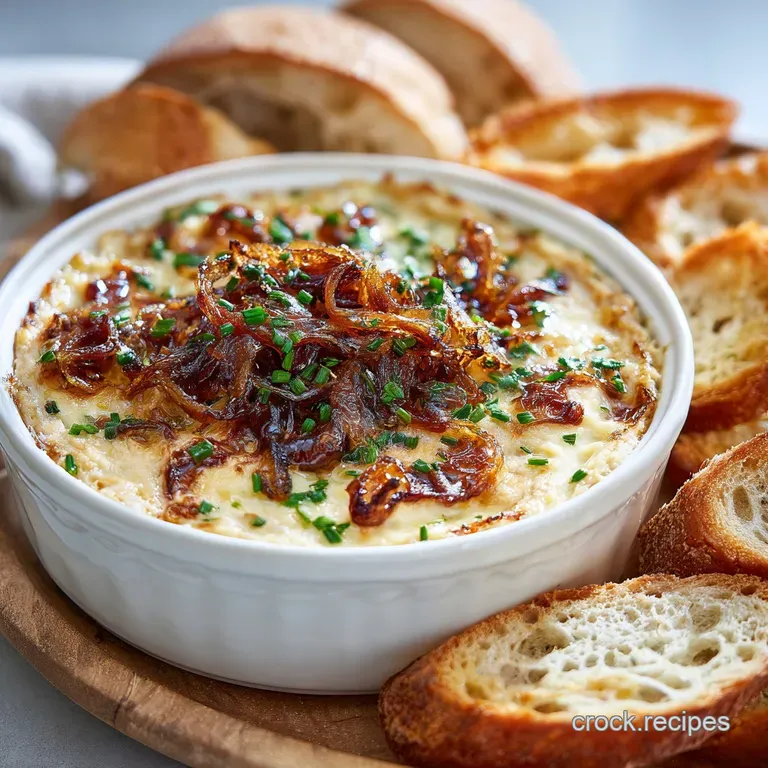
You don't need a lab, but the right pan makes a massive difference in how the onions develop.
Two Essential Cooking Vessels
First, you need a heavy bottomed skillet. Cast iron is great, but a heavy stainless steel pan (like an All Clad) is actually better for caramelizing onions because you can see the color of the "fond" developing on the bottom.
If the pan is too thin, you’ll get hot spots that burn the onions before they can soften.
Second, you’ll need a baking dish. A 1 quart ceramic gratin dish or a small 8 inch cast iron skillet works beautifully. The ceramic holds heat longer, keeping the dip warm on the table, while the cast iron gives you those crispy, almost burnt cheese edges that everyone fights over.
The Best Stirring Tool
Forget the whisk for the onions. You need a flat edged wooden spoon or a over high heat silicone spatula. The flat edge allows you to scrape the bottom of the pan efficiently during the deglazing phase. If you can't scrape the bottom, you're leaving the best flavor behind.
step-by-step Cooking Guide
Ready to get started? Let's build those layers. This process is rhythmic and satisfying, especially as the aroma begins to take over your house.
- Prep the onions. Slice the 2 lbs of yellow onions from pole to pole (root to stem) rather than into rings. Note: This cut helps the onions hold their shape during the long cook.
- Melt the fats. In your large skillet, melt 2 tbsp butter with 1 tbsp olive oil over medium heat until the butter stops foaming.
- Start the onions. Add the onions and 0.5 tsp salt. Toss to coat and cook for about 10 minutes until they are soft and translucent.
- Low and slow. Reduce heat to medium low. Cook for 35 to 45 minutes, stirring every 5 minutes until onions are deep mahogany and jammy.
- Deglaze the pan. Pour in 2 tbsp dry sherry. Scrape the bottom of the pan vigorously until all the brown bits are incorporated and the liquid has evaporated. Remove from heat to cool slightly.
- Mix the base. In a medium bowl, combine 8 oz softened cream cheese, 0.5 cup sour cream, 0.25 cup mayo, 2 cloves minced garlic, 1 tsp thyme, and 0.5 tsp pepper. Stir until the mixture is silky and uniform.
- Fold in the cheese. Stir in 4 oz of the shredded Gruyère (save 2 oz for the top) and the 2 oz of Parmesan.
- Combine everything. Fold the cooled caramelized onions into the cream mixture. Note: Cooling the onions slightly prevents them from melting the cream cheese too fast.
- Assemble the dish. Spread the mixture into your baking dish and sprinkle the remaining 2 oz of Gruyère over the top.
- Bake the dip. Bake at 375°F for 20 to 25 minutes until the top is golden brown and the edges are bubbling.
This process is very similar to the start of a French Onion Soup recipe, where the depth of the broth depends entirely on that initial onion patience.
Solving Common Dipping Disasters
Even with a solid recipe, things can go sideways. The most common issue with any warm cheese dip is oil separation.
Dealing with Excess Grease
If you see a pool of oil on top of your dip when it comes out of the oven, don't panic. This usually happens if the Gruyère or mayo gets too hot too fast, causing the emulsion to break. You can gently blot the surface with a paper towel.
To prevent this next time, make sure your cream cheese is full fat, as the stabilizers in "light" versions are weaker.
Fixing Crunchy Onion Pieces
There is nothing worse than biting into a "caramelized" onion only to find it's still crunchy. This means the onions didn't have enough moisture to break down the cellulose. If your onions are browning but still feel tough in the skillet, add a splash of water and cover the pan for 5 minutes.
The steam will finish the softening process.
| Problem | Root Cause | Solution |
|---|---|---|
| Dip is too thick | Cream cheese wasn't softened enough | Stir in an extra tablespoon of sour cream before baking. |
| Onions are bitter | Heat was too high; they scorched | Add a pinch of sugar to balance, but watch more closely next time. |
| Dip is watery | Onions weren't cooked long enough | Ensure onions are "jammy" and most moisture is evaporated before mixing. |
Common Mistakes Checklist
- ✓ Never use pre shredded cheese; the cellulose coating ruins the creamy texture.
- ✓ Don't skip the deglazing step - that's where the "French Onion" flavor lives.
- ✓ Avoid high heat for the onions; if you hear a loud sear, turn it down.
- ✓ Let the dip rest for 5 minutes after baking so the cheese can set slightly.
- ✓ Use a heavy skillet to ensure even heat distribution for the onions.
Flavor Twists and Substitutions
Once you've mastered the classic version, you can start playing with the profile. This base is incredibly sturdy and accepts a lot of different "add ins" without breaking.
The Smoky Bacon Twist
If you want a more "pub style" feel, fry up 4 slices of thick cut bacon until crispy. Crumble them and fold them into the mixture along with the onions. The smokiness of the bacon plays beautifully against the sweetness of the onions and the nuttiness of the Gruyère.
This makes for a very hearty, satisfying version that feels like a full meal.
Lighter Greek Yogurt Swap
If you're looking for a slightly tangier, lighter profile, you can swap the 0.5 cup of sour cream for an equal amount of plain, full fat Greek yogurt. The yogurt adds a nice punch that cuts through the richness of the cheese. Just be careful not to use non fat yogurt, as it can curdle under the high heat of the oven.
If you want a different vibe: If you want a spicy kick, add 1 tsp of red pepper flakes to the onions while they sauté. If you want it more herbaceous, swap the thyme for fresh rosemary (use half the amount). If you want it sweeter, add a teaspoon of balsamic glaze during the deglazing step.
Storing and Using Leftovers
This dip keeps surprisingly well, though it rarely lasts long enough to see the fridge. Store any leftovers in an airtight container for up to 4 days. When you're ready to eat it again, I recommend the oven over the microwave.
Reheating in a 350°F oven for 10-12 minutes will help the cheese regain its silky texture. The microwave tends to make the oils separate, leaving you with a bit of a mess.
Don't toss out the "scraps"! If you have just a little bit of dip left, it makes an incredible spread for a roast beef sandwich or a burger. You can also toss a spoonful into some hot pasta with a splash of pasta water for an instant creamy onion sauce.
As for zero waste, don't throw away those onion skins toss them in a freezer bag for the next time you make homemade beef or vegetable stock.
Garnish and Serving Ideas
Presentation is half the battle when you're serving a crowd. While a bowl of brown dip might not look like much, a few simple garnishes can make it look like it came from a high end bistro.
Visual Cues for Doneness
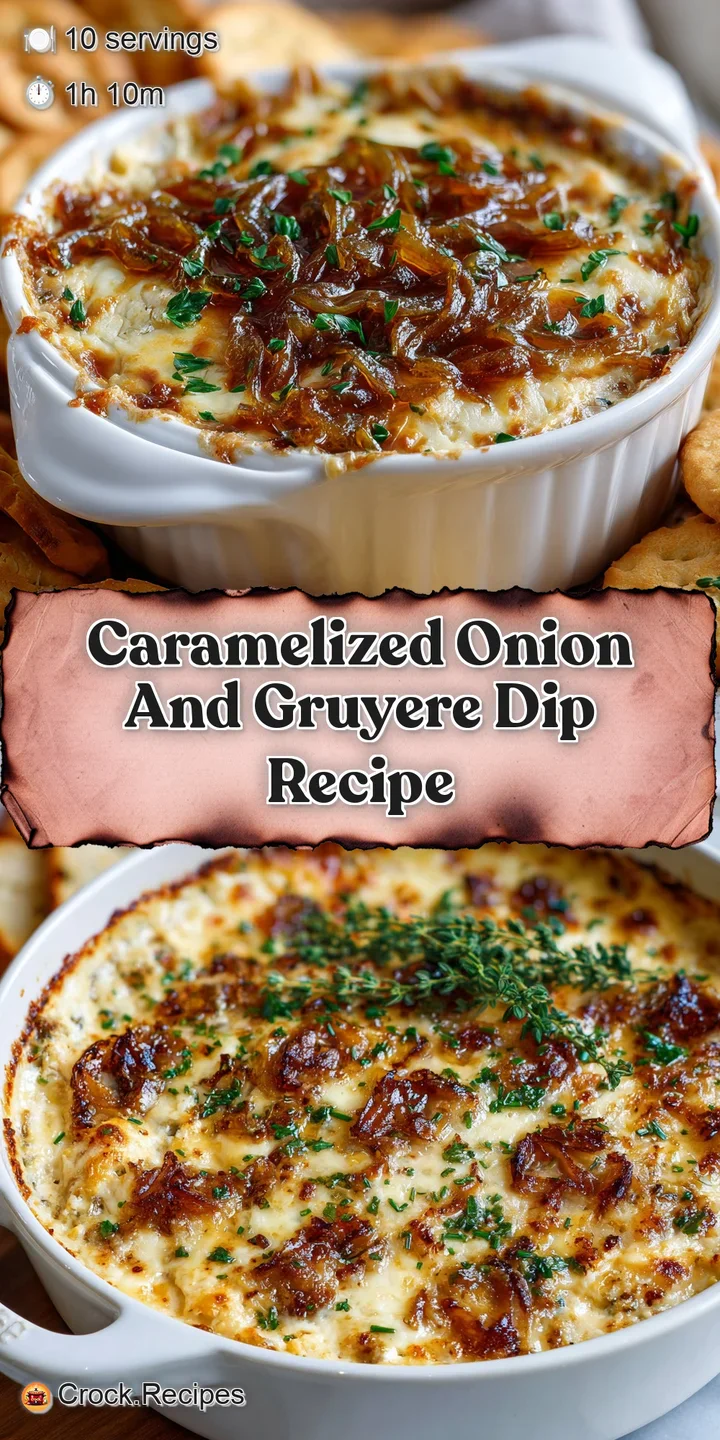
You're looking for the "GBD" rule: Golden, Brown, and Delicious. The edges should be pulling away from the sides of the dish slightly, and the cheese on top should have little toasted spots. A final sprinkle of fresh thyme or some finely chopped chives adds a pop of green that signals freshness.
Best Breads for Dipping
While standard potato chips are fine, this hearty dip deserves something with structure. A sliced baguette, toasted with a little olive oil, is the classic choice. For something a bit more interesting, try salty pretzel thins or even crisp apple slices (the sweetness of the apple is incredible with Gruyère).
If you're feeling fancy, make some homemade crostini by slicing a loaf of sourdough thin and baking until it shatters when you bite it.
Right then, you’ve got the science, the steps, and the tricks. Go get those onions in the pan and let them take their time. You’ll know you’ve nailed it when the whole house smells like a Parisian cafe. Happy dipping!
Recipe FAQs
What are the ingredients in good foods caramelized onion and Gruyère dip?
The essential ingredients include: yellow onions, butter, olive oil, salt, dry sherry, cream cheese, sour cream, mayonnaise, garlic, fresh thyme, black pepper, Gruyère cheese, and Parmesan cheese. These components work together to create the rich, savory flavor profile.
What dip is always a crowd pleaser?
Caramelized onion and Gruyère dip is a consistent crowd pleaser. Its deep, savory sweet flavor and creamy texture are universally loved, making it perfect for gatherings and game days.
Which cheese goes best with caramelized onions?
Gruyère cheese is an excellent pairing for caramelized onions. Its nutty, earthy flavor profile complements the sweetness of the onions beautifully, and it melts smoothly into creamy dips.
What are the ingredients in Panera caramelized onion and Gruyère spread?
Panera's spread typically features caramelized onions and Gruyère cheese. While specific recipes vary, expect a creamy base likely made with cream cheese, sour cream, and seasonings, similar to our own recipe.
How do I get my caramelized onions jammy?
Cook onions slowly over medium low heat for 45-60 minutes, stirring regularly. Patience is key; the Maillard reaction needs time to break down the onions' sugars into a sweet, jam-like consistency.
Can I make this dip ahead of time?
Yes, you can make the caramelized onions up to 3 days in advance. Store them in an airtight container in the refrigerator. Combine with the cheese and dairy base just before baking for best results.
How do I reheat leftover caramelized onion and Gruyère dip?
Reheat the dip in a 350°F oven for 10-12 minutes until warm and bubbly. This method helps the cheese regain its silky texture, whereas microwave reheating can sometimes cause the oils to separate.
Caramelized Onion Gruyere Dip 2
Ingredients:
Instructions:
Nutrition Facts:
| Calories | 304 calories |
|---|---|
| Protein | 9.4 g |
| Fat | 25.1 g |
| Carbs | 10.7 g |
| Fiber | 1.2 g |
| Sugar | 4.1 g |
| Sodium | 284 mg |
