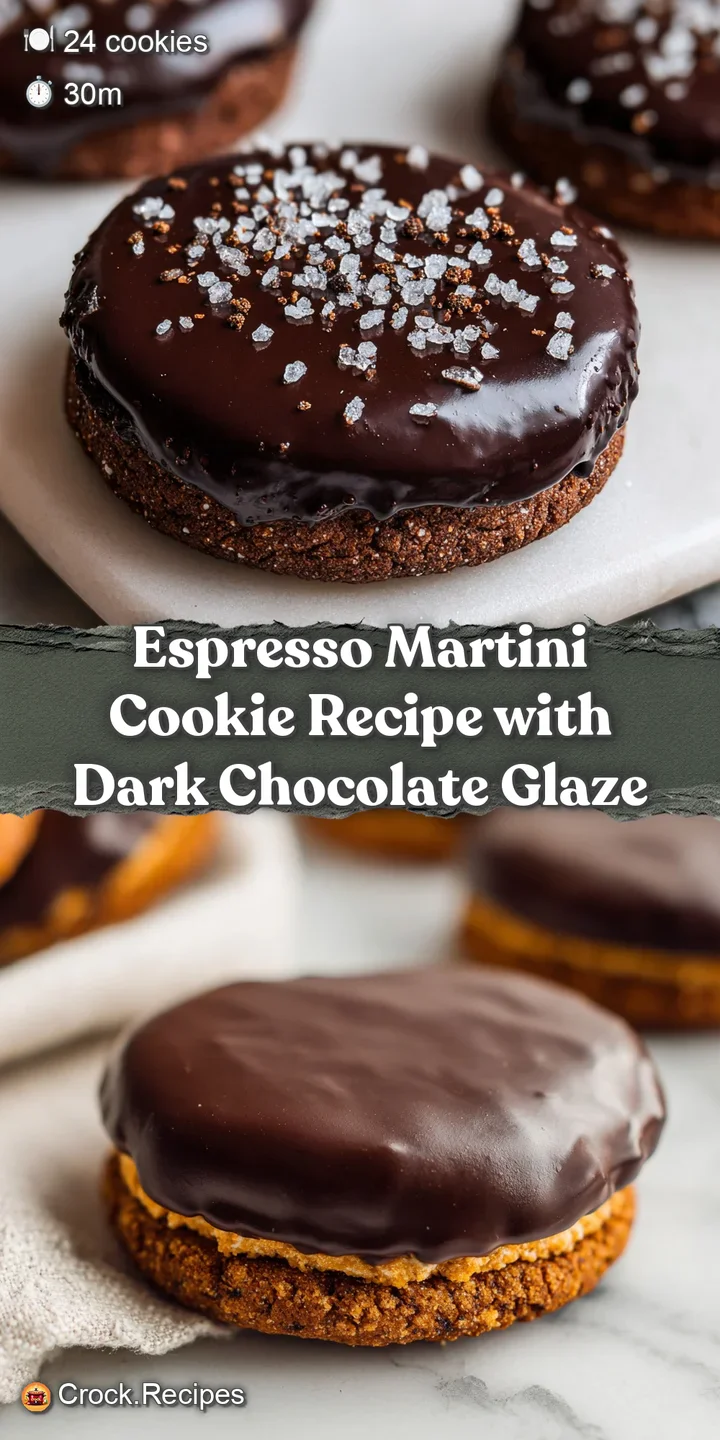
Espresso Martini Cookie Recipe with Dark Chocolate Glaze
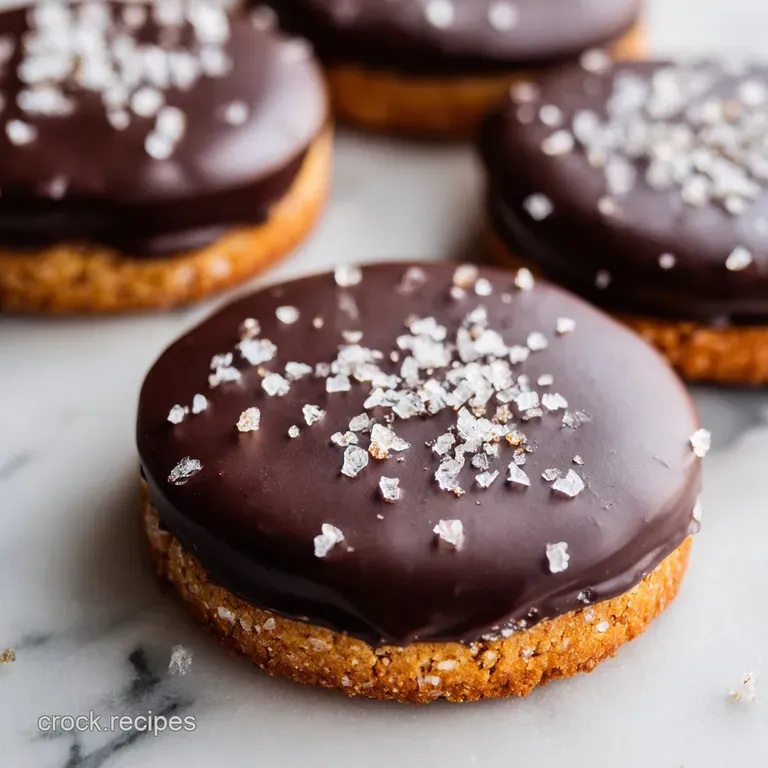
- Time: Active 20 minutes, Passive 10 minutes, Total 30 minutes
- Flavor/Texture Hook: Fudgy, espresso forward center with a velvety chocolate snap
- Perfect for: Holiday parties, adult dessert boards, or late night cravings
- Master the Espresso Martini Cookie Recipe with Dark Chocolate Glaze
- Why This Boozy Chocolate Fusion Actually Works
- The Science Behind Every Satisfying Bite
- The Elements for a Rich Mocha Profile
- Tools Required for the Ideal Bake
- Step-By-Step Guide to the Martini Cookie
- Solving Common Baking and Texture Issues
- Simple Substitutions for Every Dietary Need
- Keeping Your Cookies Fresh and Flavorful
- Creative Ways to Present Your Treats
- Debunking Common Cookie Baking Myths
- Recipe FAQs
- 📝 Recipe Card
Master the Espresso Martini Cookie Recipe with Dark Chocolate Glaze
The first time I tried to recreate the magic of an espresso martini in a solid form, I made the mistake of just dumping leftover cold coffee into a standard dough. It was a soggy disaster that lacked that signature "wake up" punch.
But then, I caught that incredible, roasty aroma of fresh espresso powder hitting warm, creamed butter, and everything shifted. The scent alone is enough to bring anyone into the kitchen before the timer even goes off.
Indulge in the ultimate treat with this Espresso Martini Cookie Recipe with Dark Chocolate Glaze, a sophisticated twist on a classic cocktail in cookie form. We've spent weeks tweaking the ratios to make sure the Kahlua doesn't ruin the structure and the chocolate doesn't overpower the bean.
What you get is a cookie that feels hearty, satisfying, and just a little bit dangerous.
We're going for a texture that sits right between a brownie and a traditional cookie. It's got that crackly top, a dense, dark interior, and a glaze that shatters slightly when you bite into it.
Trust me, once you smell the way the Dutch processed cocoa interacts with the coffee liqueur, you'll never look at a plain chocolate chip cookie the same way again.
Why This Boozy Chocolate Fusion Actually Works
- Ethanol Flavor Extraction: The alcohol in the coffee liqueur acts as a solvent, pulling out deep aromatic compounds from the cocoa and vanilla that water based liquids simply can't reach.
- Hygroscopic Tenderness: Dark brown sugar attracts more moisture than white sugar, which prevents the espresso powder from drying out the crumb, keeping it fudgy for days.
- Lipid Blooming: By mixing the espresso powder directly into the fat (butter), we "bloom" the coffee oils, ensuring the flavor is evenly distributed rather than patchy.
- Glaze Stability: Adding a touch of coconut oil to the dark chocolate creates a velvety finish that sets firmly but remains soft enough to bite without crumbling.
| Method | Time | Texture | Best For |
|---|---|---|---|
| Fast (No Chill) | 30 minutes | Thin, crispy edges | Instant cravings. Note: Cookies spread more. |
| Classic (Chilled) | 2 hours 30 mins | Thick, fudgy center | Dinner party dessert. Note: Deepest flavor. |
Chilling the dough isn't just a suggestion; it’s a strategy. When the fats solidify, the cookies spread slower in the heat, giving you that thick, satisfying bite that mimics a high end bakery treat. If you're looking for another rich, chocolatey experience, my Classic Chocolate Mousse recipe uses a similar high-quality cocoa base to achieve that same level of intensity.
The Science Behind Every Satisfying Bite
We need to treat our ingredients like a chemistry experiment to get that martini vibe just right. It isn't just about throwing things in a bowl; it's about how the fats and solids interact to create that specific "shatter" in the glaze and the "give" in the cookie.
| Ingredient | Science Role | Pro Secret |
|---|---|---|
| Dutch processed Cocoa | pH Neutralization | Sift it twice to avoid bitter lumps in the dough |
| Instant Espresso | Maillard Reaction Booster | Bloom it in the butter to release aromatic oils |
| Coffee Liqueur | Crumb Tenderizer | The alcohol inhibits gluten for a softer texture |
Getting the balance right between the liquid liqueur and the dry flour is the hardest part. Too much booze and you've got a pancake; too little and it's just a coffee cookie. That's why we use exactly 2 tablespoons (30ml) to hit that sweet spot of flavor without compromising the structural integrity of the bake.
The Elements for a Rich Mocha Profile
- 1 cup (225g) unsalted butter, softened: Why this? Provides the rich, creamy foundation for the espresso to bloom. (Sub: Salted butter, but reduce added salt)
- 1 1/4 cups (250g) dark brown sugar, packed: Why this? Adds molasses notes and essential moisture for chewiness. (Sub: Light brown sugar for a milder flavor)
- 1/2 cup (100g) granulated sugar: Why this? Helps create those sought after crisp, crackly edges. (Sub: Cane sugar)
- 1 large egg, room temperature: Why this? Emulsifies the fats and liquids for a consistent crumb. (Sub: Flax egg, but the texture will be denser)
- 2 tbsp (30ml) coffee liqueur (Kahlua): Why this? The "martini" heart of the recipe. (Sub: Strong cold brew coffee)
- 1 tsp vanilla extract: Why this? Rounds out the bitterness of the coffee and cocoa. (Sub: Vanilla bean paste)
- 2 1/4 cups (280g) all purpose flour: Why this? The structural backbone of the cookie. (Sub: 1:1 gluten-free flour blend)
- 1/2 cup (45g) Dutch processed cocoa powder: Why this? Offers a dark color and smooth, non acidic chocolate taste. (Sub: Natural cocoa powder, but the flavor will be sharper)
- 2 tbsp (15g) instant espresso powder: Why this? Delivers concentrated coffee flavor without adding extra liquid. (Sub: Finely ground instant coffee)
- 1 tsp baking soda: Why this? Reacts with the cocoa to provide lift. (Sub: 3 tsp baking powder)
- 1/2 tsp kosher salt: Why this? Cuts through the sugar and intensifies the chocolate. (Sub: Sea salt)
- 1 cup (175g) dark chocolate chips: Why this? Creates pockets of melting, velvety goodness. (Sub: Semi sweet chocolate chips)
- 1 tbsp coconut oil: Why this? Gives the glaze its signature shine and smooth texture. (Sub: Unsalted butter)
- 1 tsp vodka: Why this? Mimics the sharp finish of a real martini in the glaze. (Sub: Water or extra Kahlua)
- 24 chocolate covered espresso beans: Why this? The classic garnish for visual and textural contrast. (Sub: A sprinkle of flaky sea salt)
Tools Required for the Ideal Bake
You don't need a professional pastry kitchen to pull this off, but a few specific tools make the process much smoother. I personally love using a stand mixer such as a KitchenAid because it creams the butter and sugar into a pale, airy cloud much faster than I ever could by hand.
A heavy duty cookie scoop is also a lifesaver here. Since the dough is quite rich and sticky, using a scoop ensures every cookie is exactly the same size, which means they all finish baking at the exact same second. If you don't have one, two spoons will work, but your "specs" might vary.
Finally, a cooling rack is non negotiable if they sit on the hot pan, the bottoms will overcook and lose that soft, fudgy heart we're after.
step-by-step Guide to the Martini Cookie
Phase 1: Cream and Infuse
Cream the softened butter, dark brown sugar, and granulated sugar in a large bowl until the mixture looks pale and fluffy, which usually takes about 3 minutes on medium high speed. Note: This aeration is what gives the cookie its height.
Phase 2: Liquid Integration
Add the egg, coffee liqueur, and vanilla extract to the butter mixture, beating until fully incorporated and the aroma of coffee fills the air. Note: Room temperature eggs prevent the butter from curdling.
Phase 3: Sifting Dry Elements
Whisk together the flour, cocoa powder, espresso powder, baking soda, and salt in a separate bowl. Slowly add this to the wet ingredients, mixing until just a few streaks of white remain visible.
Phase 4: The Dark Chocolate Fold
Gently fold in the dark chocolate chips using a spatula. Keep folding until the chips are evenly distributed through the dark, sticky dough. If you're craving a different texture, these Chocolate Chip Cookie recipe bites use a similar folding technique for a more classic feel.
Phase 5: Chill and Set
Cover the dough and refrigerate for at least 30 minutes (or up to 24 hours). Note: This prevents the cookies from spreading into flat discs in the oven.
Phase 6: Scoop and Prep
Preheat your oven to 350°F (180°C) and line two baking sheets with parchment paper. Use a scoop to form 24 balls of dough, placing them 2 inches apart.
Phase 7: The Bake
Bake for 10 minutes until the edges feel set but the centers still look slightly soft and underdone. Note: They will continue to firm up as they cool on the pan.
Phase 8: Glaze Preparation
While the cookies cool, melt the remaining chocolate chips with coconut oil in 20 second bursts in the microwave. Stir in the vodka until the glaze is glossy and smooth.
Phase 9: The Dark Chocolate Finish
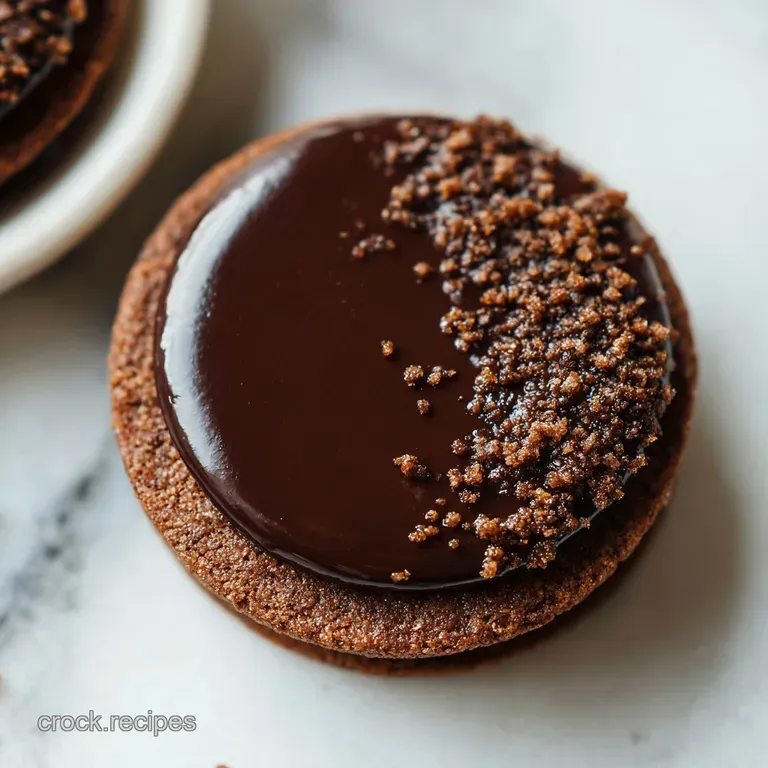
Drip a teaspoon of glaze over each cooled cookie. Watch for the glaze to settle into a smooth, dark pool on top of the crackled surface.
Phase 10: Final Garnish
Place one chocolate covered espresso bean in the center of the wet glaze. Let the cookies sit for 20 minutes until the chocolate has hardened into a firm, velvety shell.
Solving Common Baking and Texture Issues
Why Your Cookies Spread Too Much
This usually happens if the butter was too warm to begin with or if you skipped the chilling step. When the fat is already near its melting point, it can't hold the air bubbles created during creaming, and the whole structure collapses the second it hits the oven heat.
| Problem | Root Cause | Solution |
|---|---|---|
| Flat Cookies | Warm Dough | Chill dough for at least 60 minutes before baking |
| Dry/Crumbly | Too Much Flour | Measure by weight (280g) rather than packing the cup |
| Burnt Bottoms | Dark Baking Sheet | Use parchment paper or a silicone mat to insulate |
Restoring Soggy Cookie Texture
If your cookies come out feeling a bit too soft or "doughy" after they've cooled, it’s likely an under baking issue combined with the moisture from the liqueur. You can pop them back into a 300°F (150°C) oven for 3-4 minutes to crisp up the exterior without drying out the fudgy center.
Chef's Tip: To get that perfect "martini" bite, freeze your chocolate chips for 10 minutes before folding them into the dough. This prevents them from melting too quickly in the oven, leaving you with distinct, solid chunks of dark chocolate.
Common Mistakes Checklist
- ✓ Ensure the egg is truly at room temperature to maintain a smooth emulsion.
- ✓ Sift the cocoa powder to prevent tiny bitter pockets of dry powder in the bake.
- ✓ Don't overmix once the flour is added; stop as soon as it's incorporated.
- ✓ Allow the cookies to cool completely before glazing, or the chocolate will just run off.
- ✓ Use a fresh bag of baking soda for the best possible rise and crackle.
Simple Substitutions for Every Dietary Need
When scaling this recipe down for a solo treat, it's actually quite easy. To make a half batch (12 cookies), simply halve every ingredient. For the egg, beat it in a small cup first, then use exactly 2 tablespoons of the mixture.
Reduce your baking time by about 1 minute, as smaller batches often heat more efficiently in the oven.
If you're scaling up for a big party (48 cookies), you can double everything exactly, but I recommend working in two separate batches for the creaming process. Overloading a standard mixer can prevent the butter from getting enough air, leading to a denser, less satisfying cookie.
Also, keep the spices and salt at about 1.5x rather than a full double to avoid an overpowering "chemical" taste.
The Virgin Espresso Martini
To make these alcohol free, simply swap the 2 tablespoons of Kahlua for an equal amount of very strong, room temperature espresso or a high-quality coffee concentrate. In the glaze, replace the vodka with a teaspoon of water or a drop of maple syrup for shine.
The flavor remains roasty and intense without the boozy kick.
gluten-free Baking Variation
This recipe adapts beautifully to gluten-free needs. Use a high-quality 1:1 gluten-free flour blend that contains xanthan gum. Because GF flours can sometimes feel "gritty," I recommend letting the dough rest in the fridge for a full 2 hours.
This gives the rice based flours time to hydrate, resulting in a much smoother, velvety crumb that won't give away the secret.
Keeping Your Cookies Fresh and Flavorful
Proper storage is the difference between a gourmet treat and a dry puck. These cookies actually taste better on day two because the espresso and cocoa have had time to "meld" and deepen. Store them in an airtight container at room temperature for up to 5 days.
If you're in a humid environment, tuck a piece of white bread into the container it will absorb the moisture, keeping the cookies perfectly fudgy.
For long term storage, these freeze brilliantly. I suggest freezing them in a single layer on a tray first, then transferring them to a freezer bag for up to 3 months. When the craving hits, just let one sit on the counter for 15 minutes.
To use up any "zero waste" scraps, crush up any broken cookies and use them as a base for a cheesecake crust or as a topping for vanilla bean ice cream. The bitter espresso notes are a dream when paired with cold, sweet cream.
Creative Ways to Present Your Treats
If you really want to lean into the "martini" theme, serve these on a chilled silver platter or even inside large martini glasses for a dinner party. The dark chocolate glaze and the single espresso bean on top give them a very "high end lounge" aesthetic.
They look particularly striking next to a small bowl of coffee beans or a few curls of orange zest.
For a more relaxed setting, these are the ultimate companion to a glass of cold milk or, naturally, an actual espresso martini. The bitterness of the coffee in the cookie cuts through the sweetness of the drink, creating a flavor loop that is incredibly satisfying.
I’ve even seen people sandwich a scoop of coffee gelato between two of these for the world’s most sophisticated ice cream sandwich.
Debunking Common Cookie Baking Myths
One big myth is that "more espresso powder equals more flavor." In reality, too much espresso powder can make the dough acidic and grainy, which interferes with the baking soda and prevents a good rise. We use exactly 2 tablespoons to ensure the flavor is sturdy but the texture remains silky.
Another misconception is that the vodka in the glaze is just for show. While most of the "bite" is subtle, the alcohol actually helps the chocolate set faster and gives it a higher gloss. It changes the way the light hits the glaze, making it look much more professional.
Finally, don't believe that "soft butter" means "melted butter." If your butter is oily or melted, your cookies will greasy and thin. It should be soft enough to leave an indent when pressed, but still hold its shape.
Right then, you're all set to create the most roasty, dark, and decadent cookies in your repertoire. Just remember to watch that timer — 10 minutes is the magic number for that fudgy heart!
Recipe FAQs
Can I use instant coffee instead of espresso powder?
Yes, but reduce the amount slightly. Instant coffee is often less concentrated than true espresso powder, so start with 1.5 tablespoons instead of 2, and taste the dough before chilling.
How to ensure the dark chocolate glaze sets with a nice snap?
Incorporate the coconut oil and vodka, then cool the cookies completely before applying. The small amount of fat (coconut oil) helps lower the setting temperature, and the alcohol encourages rapid surface evaporation, creating that desired shatter.
Is chilling the dough mandatory for this recipe?
Yes, chilling is critical for texture control. Skipping the chill results in a much flatter cookie because the liqueur adds extra moisture, requiring the fats to solidify to maintain thickness.
Can I replace the coffee liqueur with a different spirit?
No, stick to coffee liqueur or a strong, brewed coffee concentrate. The specific sugar and flavor profile of Kahlua is necessary to balance the cocoa; other spirits like rum will drastically alter the structure and flavor profile.
How to achieve the fudgy center without underbaking?
Bake until the edges are firm but the center still looks slightly glossy and soft. This visual cue is key, as carryover heat finishes the center during the cooling phase on the hot baking sheet, yielding a perfect fudge consistency, similar to how we manage texture in our [Classic Oatmeal Chocolate
Chip Cookie Easy: Deliciously Chewy] recipe.
Is it true that Dutch processed cocoa makes the cookie less rich?
False. Dutch processed cocoa is alkalized, meaning it has a lower acid content, which results in a darker color and a smoother, less sharp chocolate flavor that pairs wonderfully with the coffee bitterness.
What is the best way to freeze the unbaked cookie dough?
Freeze the dough balls solid on a tray first, then transfer to an airtight bag. Flash freezing prevents clumping, and you can bake them straight from frozen; just add 2 to 3 minutes to the bake time.
Espresso Martini Cookies
Ingredients:
Instructions:
Nutrition Facts:
| Calories | 218 kcal |
|---|---|
| Protein | 2.2 g |
| Fat | 10.9 g |
| Carbs | 29.1 g |
| Fiber | 1.2 g |
| Sugar | 18.4 g |
| Sodium | 122 mg |
