Homemade Crispy Spring Rolls
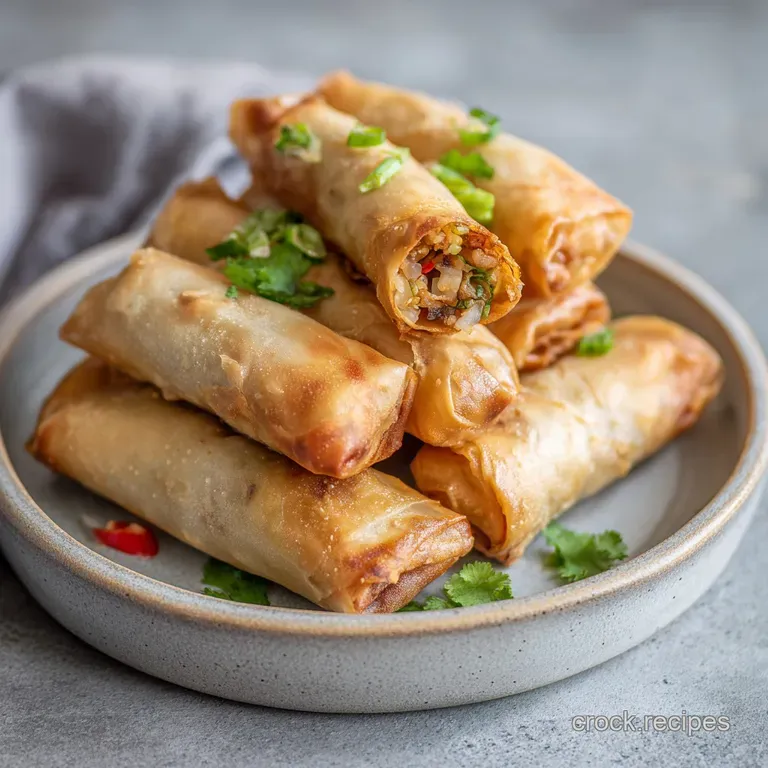
- Time:40 minutes prep + 10 minutes cook = 1 hour total
- Flavor/Texture Hook: Shatter crisp exterior with velvety chicken
- Perfect for: High energy parties or weekend meal prep
- Create a Crisp Homemade Spring Rolls Recipe
- Essential Specs and Timing
- Deep Dive Into Ingredients
- Required Tools for Crispy Results
- Step by Step Preparation Guide
- Fixing Common Rolling Mistakes
- Clever Ingredient Alternatives
- Reliable Storage Guidelines
- Irresistible Serving Suggestions
- Quick Scaling Advice
- Common Cooking Myths
- Recipe FAQs
- 📝 Recipe Card
Create a Crisp Homemade Spring Rolls Recipe
Listen, we've all been there. You're at a party, you grab a roll, and it's a soggy, oil logged disappointment that sags the moment you pick it up. I used to think that was just the "homemade tax" we had to pay. But then I realized the secret isn't in the frying it's in the moisture management of the filling.
This spring rolls recipe is the result of me finally getting fed up with limp wrappers and figuring out how to keep things vibrant and structural.
The payoff here is that incredible, sharp "crack" when you bite in. You're getting a filling that's savory, earthy from the mushrooms, and just a little bit peppery. It's the kind of dish that makes people stop talking and just start nodding at each other while they reach for another one.
We're going for that global street food vibe bold, irresistible, and totally addictive.
Right then, let's get into why this actually works. We aren't just tossing things in a pan and hoping for the best. We're treating each component with a little bit of respect to ensure they don't turn into a watery mess inside that delicate wheat wrapper.
Trust me, once you see how easy it is to manage the textures, you'll never go back to the frozen aisle again.
Essential Specs and Timing
Success with this dish depends on two things: temperature and drainage. If your filling is too wet, the steam will blow out the sides. if your oil is too cold, the wrapper will soak it up like a sponge. We're aiming for that sweet spot where the outside browns exactly as the inside finishes heating through.
- Moisture Control
- The fine mesh strainer step is non negotiable for a crisp result.
- Vibrant Aromatics
- Grating the ginger instead of slicing ensures it melts into the chicken fat for a better flavor distribution.
- The Structural Seal
- The cornstarch slurry acts as a heat stable glue that won't fail in hot oil.
| Method | Time | Texture | Best For |
|---|---|---|---|
| Deep Fry | 10 minutes | Shatter crisp and golden | Traditional party appetizer |
| Air Fry | 12 minutes | Crunchy but matte finish | Health conscious weeknight |
| Pan Sear | 15 minutes | Chewy with crispy spots | Small batch snacking |
Using the right method for your occasion is key. While air frying is convenient, nothing beats the vibrant, golden glow of a deep fried roll when you're looking to impress. If you're doubling the batch for a crowd, stick to the deep fry it’s actually faster because the heat recovery is better in a large pot of oil.
Deep Dive Into Ingredients
We need to talk about why these specific items are in your bag. This isn't just about filling space; it's about building layers of flavor. The chicken provides the protein base, but the wood ear mushrooms are the secret weapon for texture.
They don't have a strong taste on their own, but they provide a snappy, "crunchy soft" feel that is absolutely vital.
| Ingredient | Science Role | Pro Secret |
|---|---|---|
| Cabbage | Volume and sweetness | Shred as thin as possible to prevent "pockets" in the roll |
| Cornstarch | Binding agent | Always use cold water for the slurry to avoid lumps |
| Oyster Sauce | Umami depth | This provides the "glossy" finish to the filling interior |
| Sesame Oil | Aromatic fat | Add this last so the high heat doesn't burn off the scent |
The cabbage acts as a sponge for the soy and oyster sauces, but it also releases a lot of water. That's why we stir fry it just until it's "wilted but crisp tender." If you overcook it in the wok, it turns to mush. We want it to retain a bit of its cellular structure so it offers a slight resistance when you chew.
Required Tools for Crispy Results
You don't need a professional kitchen, but a few specific items make this a lot easier. A wok is your best friend here because the high, sloping sides allow you to move the chicken and vegetables quickly, preventing them from stewing in their own juices.
If you don't have one, a very large cast iron skillet is a decent backup.
A fine mesh strainer is your second most important tool. You’ll be surprised at how much liquid drains out of the filling even after a quick stir fry. Don't skip the 10 minute rest in the strainer. That liquid is the enemy of a crisp wrapper.
You also want a solid pair of tongs or a "spider" skimmer for the frying phase. Plastic tools will melt, and small forks are too fiddly for the delicate wrappers.
Finally,, grab a clean, damp kitchen towel. Spring roll wrappers are notorious for drying out and becoming brittle in seconds. Keep the stack covered while you work. It’s the difference between a smooth, beautiful roll and one that cracks and leaks filling everywhere. If you love these flavors, you might notice the sauce profile is quite similar to my Knockout homemade stir fry sauce.
step-by-step Preparation Guide
- Prepare the aromatics by mincing 3 cloves of garlic and grating 1 tablespoon of ginger. Note: Grating the ginger releases more juice for a punchier flavor.
- Sauté the garlic and ginger in a hot wok with a splash of oil until fragrant and just starting to turn golden.
- Add the 225g of ground chicken to the wok, using a spatula to break it into tiny crumbles. Note: Smaller crumbles ensure a more even distribution in the final roll.
- Cook the chicken until no longer pink and slightly browned.
- Toss in the 300g of shredded cabbage, 100g of julienned carrots, and 40g of sliced wood ear mushrooms.
- Stir fry the mixture for exactly 2 minutes until the cabbage is slightly translucent but still has a snap.
- Pour in the 2 tablespoons of soy sauce, 1 tablespoon of oyster sauce, 1 teaspoon of toasted sesame oil, and 0.5 teaspoons of white pepper.
- Transfer the entire mixture into a fine mesh strainer set over a bowl and let it drain for 10 minutes. Do not skip this step or your rolls will be soggy.
- Whisk 1 tablespoon of cornstarch with 2 tablespoons of water in a small ramekin to create your sealing glue.
- Place a wrapper in a diamond shape, add 2 tablespoons of filling to the bottom third, and roll tightly. Fold the sides in like an envelope, then seal the top point with the slurry.
- Heat 1 liter of oil to 175°C and fry the rolls in small batches until they are deep golden and the surface is bubbly.
- Remove and drain on a wire rack not paper towels to keep the air circulating around the crust.
Fixing Common Rolling Mistakes
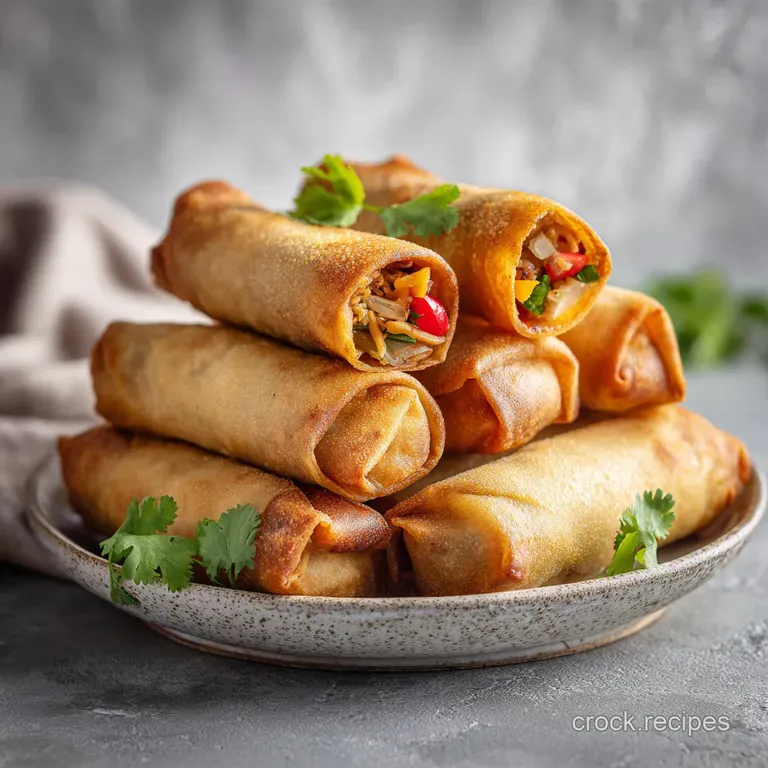
One of the biggest frustrations is the "Exploding Roll." This usually happens because there's an air pocket trapped inside. When that air heats up in the oil, it expands and rips through the wrapper. The fix is to keep your first fold very tight against the filling.
Think of it like rolling a cigar firm but not so tight that you tear the delicate paper.
Another issue is the "Greasy Sponge" effect. This is almost always caused by the oil temperature dropping too low. When you add cold rolls to the pot, the temperature can plummet 20 degrees. Work in small batches of three or four to keep that sizzle aggressive.
If the bubbles around the roll slow down, your oil is too cold.
The "Soggy Bottom" Syndrome
If your rolls are crisp on top but mushy where they touch the plate, it's a steam issue. Placing hot fried food directly on a flat surface traps the steam escaping from the filling.
The Exploding Filling Disaster
This happens when you have too much moisture in your vegetables. If you see the oil splattering violently, your filling wasn't drained well enough.
The Unraveling Wrap Fail
If your rolls are opening up in the oil, your cornstarch slurry was either too thin or you didn't apply enough. It should feel like a sticky paste, not just cloudy water.
| Problem | Root Cause | Solution |
|---|---|---|
| Wrapper tears during rolling | Wrapper is too dry | Keep the stack under a damp towel at all times |
| Rolls are dark brown but cold inside | Oil is way too hot | Lower heat to 175°C and use a thermometer |
| Filling tastes bland | Not enough drainage | Ensure the soy/oyster sauce isn't pooling in the wrap |
Common Mistakes Checklist
- ✓ Pat the julienned carrots dry with a paper towel before stir frying.
- ✓ Never use more than 2 tablespoons of filling per roll; overfilling leads to bursts.
- ✓ Ensure the oil reaches a full 175°C before the first roll hits the pan.
- ✓ Use a wire rack for cooling to prevent steam from softening the bottom crust.
- ✓ Double check that your cornstarch slurry has a "tacky" feel before sealing.
Clever Ingredient Alternatives
Sometimes you can't find wood ear mushrooms, or you want to keep things plant based. That's perfectly fine! The core of this spring rolls recipe is the technique, not just the specific ingredients. You can swap the protein or the veg as long as you maintain the same moisture to crunch ratio.
If you're making these for a big spread, they actually sit beautifully next to a Rainbow noodle salad. The cold, refreshing noodles contrast perfectly with the hot, fried rolls.
| Original Ingredient | Substitute | Why It Works |
|---|---|---|
| Ground Chicken | Firm Tofu (crumbled) | Similar texture; Note: Press tofu for 20 mins first to remove water. |
| Wood Ear Mushrooms | Shiitake Mushrooms | Great flavor; Note: Sauté longer to remove their higher water content. |
| Oyster Sauce | Vegetarian Mushroom Sauce | Provides the same salty umami and thick consistency. |
When you change the ingredients, just remember the golden rule: drain the filling. If you use mushrooms with high water content like button mushrooms, you might need to stir fry them for an extra minute or two until all their liquid has evaporated in the wok.
Reliable Storage Guidelines
If you have leftovers (which is rare, let's be honest), you need to store them correctly to keep that crust from turning into leather. Once they are completely cool, place them in an airtight container with a piece of parchment paper between the layers. They will stay good in the fridge for up to 3 days.
To reheat, avoid the microwave at all costs. It will turn the wrapper into a chewy, sad mess. Instead, pop them into a 200°C oven or an air fryer for 4-5 minutes. This will reactivate the oil in the wrapper and bring back that signature shatter.
They honestly taste about 90% as good as they did fresh out of the wok.
For zero waste, don't throw away the stems of the cabbage or the ends of the carrots. I usually toss these into a bag in the freezer to make a quick vegetable stock later. Even the leftover cornstarch slurry can be tossed into a soup as a thickener.
If you have extra wrappers, they can be sliced into strips, fried, and tossed with cinnamon sugar for a quick "cheat" dessert.
Irresistible Serving Suggestions
A spring roll is only as good as the dip you pair it with. While a simple sweet chili sauce is classic, I love something with a bit more punch. A mixture of soy sauce, rice vinegar, and a lot of fresh chili flakes creates a vibrant, acidic balance to the rich, fried wrapper.
It cuts through the oil and wakes up the palate.
If you want a Thai inspired vibe, a peanut dipping sauce is the way to go. The creamy texture of the peanut butter against the crisp roll is a match made in heaven. Just make sure the sauce isn't too thick you want it to coat the roll, not glob onto it. A little lime juice in the sauce goes a long way.
For a fresh twist, serve these the Vietnamese way: wrapped in a large leaf of butter lettuce with some fresh mint and cilantro. You take the hot roll, wrap it in the cold, crisp leaf, dip the whole thing, and eat it. It’s a global street food trick that balances the heat and the crunch beautifully.
It makes the whole experience feel a bit lighter and much more sophisticated for a dinner party.
Quick Scaling Advice
If you're cooking for a crowd and need to double or triple this recipe, there are a few things to keep in mind. You can double the filling ingredients safely, but work in batches when stir frying.
If you crowd the wok with 600g of cabbage at once, it will steam instead of searing, and you'll end up with a watery mess that won't drain properly.
When it comes to spices and liquids like the soy sauce and white pepper, don't just double them linearly. Start with 1.5x the amount and taste. Spices can sometimes become overwhelming when scaled up too aggressively.
However, you should definitely double the cornstarch slurry exactly, as you'll need that physical volume to seal the extra wrappers.
For the oil, you don't necessarily need more oil to fry more rolls, but you will need more time. The oil will collect more debris (little bits of flour and filling) the longer you use it. If you're frying 30 or 40 rolls, keep a small strainer handy to skim out the burnt bits between batches.
This keeps your oil clean and ensures every roll comes out looking vibrant and golden, rather than speckled with black burnt spots.
Common Cooking Myths
One of the biggest myths is that you need "special" oil to get the right flavor. Honestly, any neutral oil with a high smoke point like canola, vegetable, or peanut oil works perfectly.
Some people think they need to add sesame oil to the frying pot, but that’s a mistake sesame oil has a low smoke point and will burn, making your rolls taste bitter. Keep the sesame oil in the filling where it belongs.
Another myth is that "fresh is always better" when it comes to the wrappers. In reality, the frozen wheat based wrappers found in most Asian grocery stores are the gold standard for this style of roll.
They are manufactured to be incredibly thin and consistent, something that is nearly impossible to replicate by hand at home. Just make sure you thaw them slowly in the fridge overnight for the best texture.
Finally, don't believe the idea that you have to deep fry for a long time. These aren't raw potatoes; the filling is already cooked! The frying process is only there to crisp the wrapper and heat the center. If you fry them for too long, the wrapper will become tough and the filling will dry out.
Three to five minutes at the right temperature is all it takes to reach that vibrant, golden brown perfection.
The Truth About Searing
Many people believe that searing the chicken "seals in the juices." In reality, searing is about the Maillard reaction creating those complex, savory flavor compounds. The "juiciness" is actually managed by the cabbage and the oyster sauce, which provide the moisture.
The Myth of the "Air Tight" Seal
You'll often hear that the rolls must be vacuum tight. While you want them firm, if they are too tight with no room for the filling to expand slightly, they are actually more likely to burst. A snug roll is better than a strangulated one.
The "One Fry" Rule
Some people think you have to double fry spring rolls like French fries. You certainly can, but for this specific recipe, a single fry at 175°C is more than enough to get that shatter crisp texture. Double frying often makes these delicate wrappers too hard and brittle.
Stick to the single fry and focus on your oil temperature instead.
Recipe FAQs
What ingredients go in a spring roll?
This recipe uses a blend of ground chicken, aromatics, and vegetables. You will need 225g ground chicken, 3 cloves of minced garlic, 1 tablespoon of grated ginger, 300g shredded cabbage, 100g julienned carrots, 40g sliced wood ear mushrooms, soy sauce, oyster sauce, toasted sesame oil, white pepper,
wheat based pastry wrappers, cornstarch, water, and neutral oil.
What are some common mistakes when making spring rolls?
Overfilling and neglecting to drain the filling are the most frequent errors. Never use more than 2 tablespoons of filling per roll to prevent bursting, and always drain the cooked mixture in a fine mesh strainer for 10 minutes to remove excess moisture that makes the crust soggy.
Are rice paper rolls ok for diabetics?
No, this is a common misconception. Rice paper is primarily refined starch, which can lead to rapid blood sugar spikes; this recipe specifically uses wheat based pastry wrappers as listed in the ingredients.
What flour is used for spring rolls, hard or soft?
Standard wheat based wrappers are the requirement for this recipe. These are specifically designed to become shattered and crisp when deep fried at 350°F (175°C).
How to keep the spring rolls from becoming greasy?
Maintain your oil temperature strictly at 350°F (175°C) and drain on a wire rack. If you enjoyed balancing flavors with the aromatics here, apply that same precision to your frying oil heat to ensure the crust seals instantly rather than absorbing the oil.
How to fix filling that tastes too bland?
Taste the filling for seasoning balance before you begin rolling. Ensure you have properly incorporated the soy sauce, oyster sauce, toasted sesame oil, and white pepper, as these provide the necessary savory depth.
How to prevent the wrappers from tearing during assembly?
Work quickly and keep your unused wrappers covered with a damp towel. If the edges feel dry or brittle, they are more likely to crack, so maintain a slightly tacky seal using your cornstarch and water slurry.
Homemade Crispy Spring Rolls
Ingredients:
Instructions:
Nutrition Facts:
| Calories | 258 kcal |
|---|---|
| Protein | 8.4 g |
| Fat | 16.2 g |
| Carbs | 21.5 g |
| Fiber | 1.8 g |
| Sugar | 2.1 g |
| Sodium | 415 mg |
