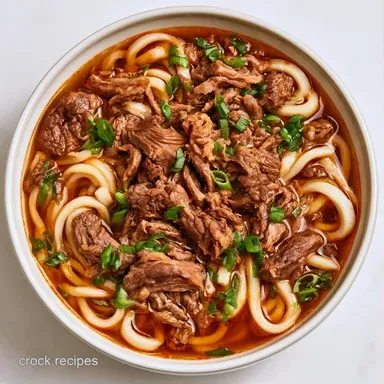
Tender Japanese Beef Udon Slow Cooker
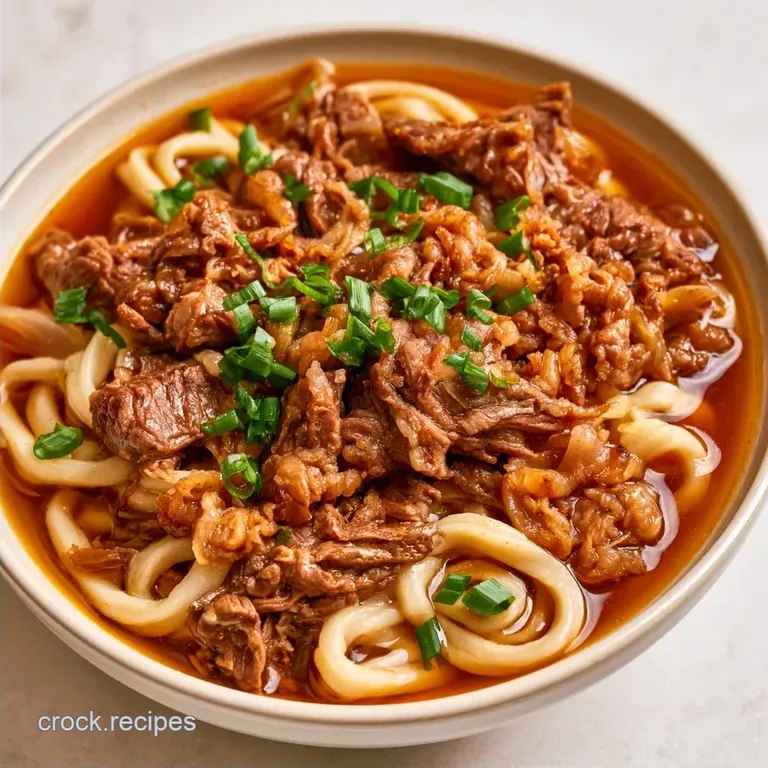
- Time: 15 min active + 8 hours cooking
- Flavor/Texture Hook: Chewy noodles and deep-brown beef
- Perfect for: Easy weeknight meals or prepping ahead
Everything begins with the sear of beef in a hot skillet. I once believed that achieving a professional grade broth required hours of constant monitoring and skimming fat. I even wasted money on ribeye, thinking luxury cuts were the only path to tenderness, but I was wrong.
The true secret lies in selecting a tougher cut and allowing the slow cooker to do the hard work. By using this Japanese Beef Udon method, you let the process unfold naturally. There's no need for a chef's kitchen or a multi day bone broth to achieve a complex, savory profile.
This approach relies on a few key ingredients and minimal equipment. You'll end up with beef that shreds effortlessly and a broth with incredible depth, all while spending only 15 minutes of actual effort.
Japanese Beef Udon Slow Cooker Guide
Collagen Breakdown: Using beef chuck allows the tough connective tissues to turn into gelatin over eight hours. This gives the beef a silky texture and makes the broth feel rich without adding heaps of butter or cream.
Passive Flavor Soak: In a closed slow cooker, the ginger and garlic don't just flavor the liquid, they penetrate deep into the meat. This creates a consistent taste from the crust of the beef to the center.
This rich broth pairs great with a light Miso Soup guide to start the meal. By letting the beef simmer slowly, we avoid the toughness that happens when you boil stew meat too quickly on a stove.
| Method | Time | Texture | Best For |
|---|---|---|---|
| Slow Cooker | 8 hours | Fall apart tender | Set and forget meals |
| Stovetop | 2-3 hours | Slightly firmer | When you're in a rush |
Right then, the real magic is in how the liquids interact with the beef over those long hours. Because the temperature stays low, the meat doesn't seize up, and the sugars in the mirin and brown sugar meld into the dashi.
The Ingredient Breakdown
Dashi Stock: The base of almost every Japanese soup. It provides that oceanic, savory depth that water or plain beef stock just can't match.
Mirin: A sweet rice wine that adds a glossy sheen to the beef and a subtle sweetness to balance the salty soy sauce.
Beef Chuck: The workhorse of slow cooking. It has enough fat to stay moist but enough collagen to thicken the broth.
| Ingredient | Role | If You Don't Have It |
|---|---|---|
| Dashi Stock | Umami base | Fish stock or veg broth + 1 tsp seaweed powder |
| Mirin | Sweetness/Gloss | 1 tbsp honey mixed with 1 tbsp white wine |
| Beef Chuck | Main protein | Stew meat or chuck roast |
| Soy Sauce | Salt/Color | Tamari (for gluten-free) or Coconut Aminos |
Most of these items are easy to find at any decent grocery store. If you're hunting for dashi, look for the instant powder packets, which are just as good as the liquid version for this recipe.
The Essential List
For your Japanese Beef Udon Slow Cooker, gather these ingredients. I recommend using a neutral oil like canola or grapeseed so the flavor of the beef stays front and center.
- 2 lbs beef chuck, cut into 1 inch cubes Why this? Best fat to collagen ratio for slow cooking
- 1 medium yellow onion, thinly sliced
- 2 tbsp neutral oil
- 3 cloves garlic, minced
- 1 tbsp fresh ginger, grated
- 4 cups dashi stock
- 1/2 cup soy sauce
- 1/2 cup mirin
- 2 tbsp brown sugar
- 1 tsp salt
- 4 packs frozen udon noodles Why this? Higher quality and better chew than dried
- 3 stalks green onions, thinly sliced
- 1 sheet nori, shredded
- 1 tbsp toasted sesame oil
| Goal | What to change |
|---|---|
| More Heat | Add 1 tbsp Sriracha or chili flakes |
| Thicker Broth | Simmer 1 hour on high at the end |
| Lighter Taste | Reduce soy sauce by 2 tbsp, add extra water |
Don't bother with low-fat beef here. You need that marbleization to ensure the cubes don't turn into dry pebbles after eight hours.
Equipment Needed
No special equipment is required. A 6 quart slow cooker is the primary tool, though I also suggest a heavy skillet for the initial sear to build a deeper flavor profile.
Alternatively, a Dutch oven placed in an oven at 275°F can be used, although it demands more attention. To keep your onion slices thin and uniform, use a sharp chef's knife.
Cooking step by step
Searing the Protein
Warm some neutral oil in a pan over medium high heat. Brown the beef cubes until a deep, rich crust develops on all sides. According to Serious Eats' tests, this initial sear creates a layer of flavor that simply isn't achievable if you add the meat raw. Move the seared beef into your slow cooker.
Slow Simmering the Base
Add the sliced onions, garlic, ginger, dashi, soy sauce, mirin, and brown sugar to the pot. Give it a light stir to combine. Cover and set to Low for 8 hours or High for 4 hours, until the beef is tender enough to shred easily with a fork.
Mastering the Noodle Timing
Roughly 10 minutes before serving, bring a pot of water to a boil. Add the frozen udon noodles and cook for 2-3 minutes until they become translucent and springy. Drain them right away. To avoid a mushy texture, be sure not to cook the noodles inside the slow cooker.
Assembling the Bowl
Divide the cooked noodles between four deep bowls. Spoon the beef and its rich, savory broth over them. Garnish each serving with a handful of sliced green onions, a pinch of shredded nori, and a light drizzle of toasted sesame oil.
Fixing Common Issues
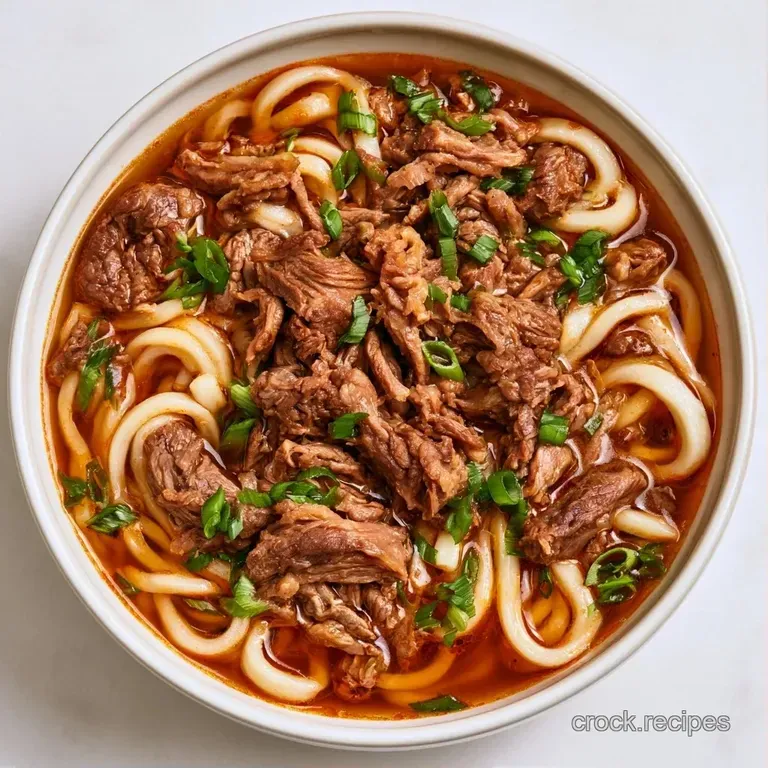
I learned the hard way not to toss the noodles into the slow cooker for that final hour. They soaked up all the liquid and turned into a gummy mess. It's much better to prepare them on their own.
If the broth seems too thin, you can stir in a small amount of cornstarch (mix 1 tsp cornstarch with 1 tbsp water) in the final 30 minutes. However, the natural collagen in beef chuck typically thickens the soup on its own.
Keep an eye on the saltiness. Since slow cookers trap steam, the soy sauce flavor can intensify. If it tastes too salty, simply mix in a bit of water or unsalted beef stock.
| Problem | Root Cause | Solution |
|---|---|---|
| Mushy Noodles | Overcooked or cooked in broth | Boil separately for 2-3 mins only |
| Too Salty | Broth reduction | Add 1/4 cup warm water or unsalted stock |
| Beef is Tough | Not cooked long enough | Simmer on Low for the full 8 hours |
Give the meat time to tenderize. If it's still firm at the six-hour mark, let it go for the full eight. The shift in tenderness is incredible.
Storage and Waste Tips
Store the beef and broth together in a sealed container in the fridge for up to 3 days. I recommend storing the cooked noodles in a separate container with a tiny bit of oil to keep them from sticking together. When you're ready to eat, heat the broth and beef in a pan, then drop the noodles in at the very end.
According to USDA guidance, leftovers should be refrigerated within two hours of cooking to stay safe. If you want to freeze this, freeze only the beef and broth for up to 2 months. Do not freeze the cooked udon, as the texture becomes grainy.
To avoid waste, save the leftover beef drippings from the searing pan. They are packed with flavor and make a great base for a quick stir fry. Also, use the white parts of the green onions in the slow cooker and save the green tops for the final garnish.
Plating for Impact
The look of this dish is half the appeal. Use deep, wide bowls that allow the noodles to sit at the bottom with the beef piled on top. The contrast between the dark mahogany beef and the bright green onions makes it look like it came from a high end izakaya.
If you have a soft boiled egg (Ajitsuke Tamago), slice it in half and place it on top. The jammy yolk adds a richness that complements the salty dashi. A sprinkle of toasted sesame seeds also adds a nice little crunch.
Easy Flavor Twists
If you want to add more earthiness, throw in some sliced shiitake mushrooms along with the onions. They soak up the broth and add a meaty texture that pairs well with the beef. For those who like a bit of heat, a sprinkle of Shichimi Togarashi (Japanese seven spice) is the way to go.
For a low sodium version, use low sodium soy sauce and reduce the added salt by half. The dashi and mirin still provide plenty of flavor. If you're in the mood for something even heavier, try a Tortellini Casserole for your next comfort night.
The Protein Pairing
You can swap the beef chuck for pork shoulder if you prefer. It takes roughly the same amount of time and results in a similar, tender texture. Just make sure to sear it first to get those browned bits.
Boosting the Umami
Adding a teaspoon of miso paste at the very end can deepen the flavor. Just whisk it with a bit of warm broth in a small bowl before stirring it into the slow cooker to avoid clumps.
Common Kitchen Myths
Searing meat does not "seal in juices." That's an old myth. Moisture loss happens regardless of whether you sear or not. The reason we sear the beef for this Japanese Beef Udon Slow Cooker dinner is for the flavor. Those browned bits create a complex, savory taste that simple boiling can't touch.
Some people think frozen udon is a "cheap" shortcut and tastes worse than fresh. Actually, many high-quality Japanese udon noodles are flash frozen to preserve their bouncy texture. They often hold up better in a hot broth than the dried variety, which can become mealy.
Right then, you've got everything you need. Just set it, forget it, and get ready for a bowl of pure comfort. Trust me on this the wait is worth it.
Critical Sodium Level
2100 mg 2100 mg of sodium per serving (91% 91% of daily value)
The American Heart Association recommends a daily sodium limit of no more than 2,300 mg, with an ideal limit of 1,500 mg for most adults.
Tips to Reduce Sodium
-
Swap the Soy Sauce-30%
Replace regular soy sauce with low-sodium soy sauce or coconut aminos to significantly reduce salt while maintaining the umami profile.
-
Low-Sodium Dashi-30%
Use a low-sodium dashi stock or prepare your own homemade version using kombu and bonito flakes without added salt.
-
Rinse Udon Noodles-15%
Switch to dried udon or rinse frozen noodles thoroughly under cold water to remove excess sodium used in processing.
-
Check Your Nori-5%
Ensure you are using unsalted nori sheets, as many pre-shredded or seasoned varieties contain hidden salt.
-
Enhance with Aromatics
Increase the amount of fresh ginger, garlic, and green onions to provide a flavor punch that compensates for less salt.
Recipe FAQs
What beef cut works best here?
Beef chuck is the ideal choice due to its high fat and connective tissue.
Tip: Cut the meat into consistent 1 inch cubes for even cooking.
How to prepare the meat before slow cooking?
Sear the beef cubes in a skillet over medium high heat until a mahogany crust forms.
Tip: Don't overcrowd the pan to ensure a proper brown instead of steaming.
Is it true that udon noodles should be cooked inside the slow cooker?
No, this is a common misconception. Boiling them separately for 2-3 minutes prevents them from becoming mushy.
Tip: Add the noodles to the bowl first, then ladle the hot beef and broth over them.
How to achieve the right beef consistency?
Cook on Low for 8 hours or High for 4 hours until the meat pulls apart effortlessly with a fork.
Tip: If you enjoy this low-and-slow tenderizing process, you'll see similar results in our simmered sauce.
Can I skip the searing step?
You can, but you will lose the deep flavor and mahogany color provided by the Maillard reaction.
Tip: Use a neutral oil with a high smoke point for the best sear.
How to cook frozen udon correctly?
Boil a separate pot of water and cook the noodles according to the package instructions.
Tip: Drain them well before adding to the bowls to avoid watering down the broth.
Is udon nutrition generally healthy?
Udon provides a good source of carbohydrates for energy but is low in protein on its own.
Tip: Adding the beef and green onions from this recipe creates a more balanced meal.
Should the beef be marinated overnight to ensure flavor?
False. The combination of dashi, soy sauce, and mirin in the slow cooker provides ample seasoning during the long cook.
Tip: Stir the ingredients gently to ensure every piece of beef is coated.
Japanese Beef Udon Slow Cooker