The Ultimate Indulgence Rich Double Chocolate Shortbread Biscuits

- Elevating the Classic: Why This Double Chocolate Shortbread is Pure Decadence
- Essential Components for Perfect Buttery Results
- Ingredient Deep Dive: Optimizing Your Double Chocolate Shortbread Dough
- Phase 1: Mastering the Dough and Shaping Technique
- Phase 2: Chilling and Baking for Ultimate Crumb
- Troubleshooting and Enhancements for Your Bake
- Expanding Your Repertoire: Customizing the Double Chocolate Shortbread Recipe
- Recipe FAQs
- 📝 Recipe Card
Elevating the Classic: Why This Double Chocolate Shortbread is Pure Decadence
The beauty of classic Scottish shortbread lies in its simplicity a harmonious trilogy of flour, butter, and sugar. However, even perfection can be elevated. Our approach to the traditional double chocolate shortbread recipe doesn't reinvent the wheel; it simply drenches the wheel in luxury.
We infuse the buttery foundation with rich Dutch process cocoa powder and generously fold in large, melt-in-your mouth chunks of high-quality dark chocolate (60 70% cocoa). This isn't just a chocolate cookie; it’s a profound Chocolate Dessert Recipe that delivers a sophisticated, intense flavour without sacrificing the hallmark delicate texture.
The result is a profoundly buttery and intensely chocolatey experience, making these Shortbread Bars an immediate favorite.
The Magic of Texture: Achieving the Signature Shortbread Crumb
What sets genuine shortbread apart from a standard cookie is its unique 'sandy' or 'sable' crumb. This essential characteristic is entirely dependent on fat content and minimal gluten development.
Unlike many baked goods that rely on chemical leaveners like baking powder, shortbread’s rise comes solely from air incorporated during the creaming stage, combined with the expansion of high fat butter.
By following a traditional method that heavily features icing sugar (powdered sugar) and a substantial 8-ounce measure of unsalted butter, we ensure a tender, melt-in-your mouth texture that immediately crumbles upon the first bite.
A Deep Dive into Cocoa: Choosing the Right Powder for Richness
When crafting a truly exceptional baked good, the quality of your cocoa is non-negotiable. For our double dark chocolate shortbread cookies , we specifically call for Dutch process cocoa powder. This cocoa has been treated with an alkaline solution, neutralizing its acidity.
This treatment results in a deeper, more mellow, and complex chocolate flavor, along with that signature dark color that makes these biscuits look as rich as they taste. Using natural cocoa powder would result in a lighter color and a slightly tangier flavor profile, which simply doesn't deliver the same decadent depth we're aiming for here.
The British Biscuit vs. The American Cookie: Settling the Debate
While American nomenclature often groups all small baked treats into the category of "cookies," it’s important to appreciate the distinction for this recipe. Traditional shortbread is inherently a biscuit a term referring to its crispness and snap, rather than the soft and chewy texture characteristic of a standard American drop cookie.
When you share this double chocolate shortbread cookies recipe , you are serving an elegant biscuit. Its firm, yet fragile structure ensures it holds up perfectly whether cut into classic double chocolate shortbread fingers or thick squares.
Essential Components for Perfect Buttery Results
Achieving stellar shortbread relies less on complicated technique and more on precise execution and ingredient quality. The foundational elements are deceptively simple, but they must be handled with care.
We start with 8 ounces of high-quality unsalted butter, softened to the perfect consistency, which ensures we get maximum volume during the initial mixing phase. The flour (2 1/4 cups all-purpose) must be measured accurately, and the incorporation of 1/2 teaspoon of fine sea salt creates a crucial counterpoint, giving us that fantastic salted double chocolate shortbread balance that prevents the richness from becoming overwhelming.
Ingredient Deep Dive: Optimizing Your Double Chocolate Shortbread Dough
Taking the time to understand the role of each component is the difference between an average biscuit and a legendary one. For this bake, we utilize only seven core ingredients, each pulling its weight to deliver complexity and texture.
The Core Four: Ingredient Ratios for Success
Our recipe adheres closely to the shortbread ideal of high fat and low liquid. We incorporate 8 ounces of butter alongside 1 cup of sifted icing sugar. The dry components 2 1/4 cups of all-purpose flour and 1/2 cup of Dutch process cocoa powder are whisked together to form the bulk.
Crucially, the final 5.3 ounces (150 grams) of dark chocolate, chopped into satisfying chunks, provides the final decadent flourish, ensuring every single bite of these double chocolate shortbread bars is intensely chocolatey.
Beyond the Pantry: Necessary Baking Tools and Equipment
While shortbread is unfussy, a few key tools make the process seamless. A stand mixer fitted with the paddle attachment is highly recommended for achieving that light, fluffy butter/sugar base, though a sturdy handheld electric mixer works perfectly well too.
Since we are creating Shortbread Bars , an 8x8 inch square baking pan is mandatory. Lining this pan with parchment paper, leaving an overhang, is essential for lifting the dense, tender block out after baking and cooling.
Butter Matters: Temperature and Quality Control
The success of shortbread hinges entirely on the state of your butter. It must be softened to true room temperature meaning it should yield easily to pressure but not look greasy or melted.
If the butter is too cold, you cannot achieve the necessary volume during creaming; if it's too warm, the dough will become oily and resist holding its shape when pressed and baked.
Use unsalted butter, as it gives you ultimate control over the salt content, especially since we are intentionally adding 1/2 teaspoon of fine sea salt for that desired balance.
Fine Tuning the Sweetness: Powdered vs. Granulated Sugar
Our use of 1 cup of powdered sugar (icing sugar) is a deliberate choice over granulated sugar. Granulated sugar crystals are coarser and require more mixing to dissolve, which increases the risk of overdeveloping gluten in the dough.
Powdered sugar, being ultra fine, blends seamlessly and rapidly with the butter, yielding that characteristic fragile, tender shortbread crumb we are striving for, rather than a chewy cookie texture.
Related Recipes Worth Trying
- How to Make Perfect Thick NY Style Chocolate Chip Cookies — Master the ultimate thick and chewy NY Style Chocolate Chip Cookies Our pro recipe uses a cold butter technique and long chill time for that perfect bakery...
- The Midnight Bloom Rich Chocolate Blackberry Gothic Halloween Cake — Bake the ultimate centerpiece a moist dark chocolate cake with tart blackberry filling Perfect for elegant Halloween desserts Get the foolproof recipe here
- Decadent Chocolate Peanut Butter Mini Cheesecakes — Forget slicing These mini chocolate peanut butter cheesecakes are rich creamy and perfect for dessert Get the foolproof recipe
Phase 1: Mastering the Dough and Shaping Technique
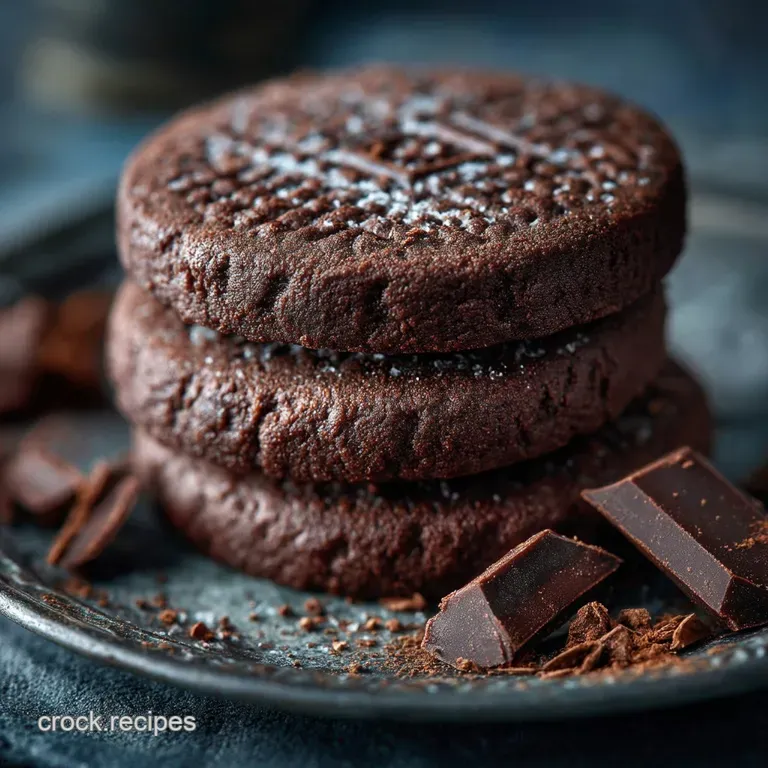
The preparation phase is quick, lasting only about 20 minutes, provided all ingredients are measured and ready. First, combine all dry ingredients the flour, cocoa, and salt in a separate bowl and sift them together.
In the mixer bowl, the softened butter and icing sugar are creamed until visibly lightened and fluffy. Once the 1 teaspoon of vanilla extract is briefly incorporated, the dry mixture is introduced.
Use the mixer on the lowest speed, adding the flour/cocoa gradually, stopping the moment the dough forms large, shaggy clumps. Avoid the temptation to let the mixer run until the dough forms a smooth ball; this overworking is the enemy of tender shortbread.
Once removed from the mixer, the 150g of chopped chocolate chunks are folded in by hand. Finally, the dough is firmly pressed into the parchment lined 8x8 inch pan, ensuring a dense, even layer.
Phase 2: Chilling and Baking for Ultimate Crumb
The second phase demands patience but guarantees the structural integrity and textural perfection of the final biscuit.
Creaming the Foundation: Achieving the Lightest Base
The initial step in the mixer beating the softened butter and powdered sugar for a full three to four minutes is vital because shortbread contains no chemical leavening.
This process incorporates microscopic air pockets into the fat, which expands when heated in the oven, giving the biscuit its light lift and airy crumble. Scrape the sides of the bowl frequently to ensure even mixing and a unified texture.
The Chocolate Folding Technique: Preventing Crumbly Breakage
After the dry ingredients are just incorporated, stop the mixer immediately. Now, carefully fold in the double chocolate chip shortbread pieces using a spatula. Adding the chocolate by hand prevents the mixer from further developing the gluten or breaking down the chocolate into dust.
This ensures that the dough remains coarse and tender, ready for shaping.
The Chill Factor: Why Rest Time is Non-Negotiable
Refrigerating the pressed dough for a minimum of 60 minutes is absolutely essential. Known as the chill factor, this time allows the butter to thoroughly re-solidify, setting the structure and flavour. Without this rest, the shortbread dough will spread and lose its shape during baking.
It also allows the moisture from the butter to fully hydrate the cocoa powder and flour, yielding a superior texture.
Score, Pierce, and Bake: Preparing the Shortbread for the Oven
Before baking, prick the surface of the dough all over with a fork. This step allows steam to escape evenly and prevents the biscuit from puffing up in unpredictable ways. Preheat your oven to 325°F (160°C).
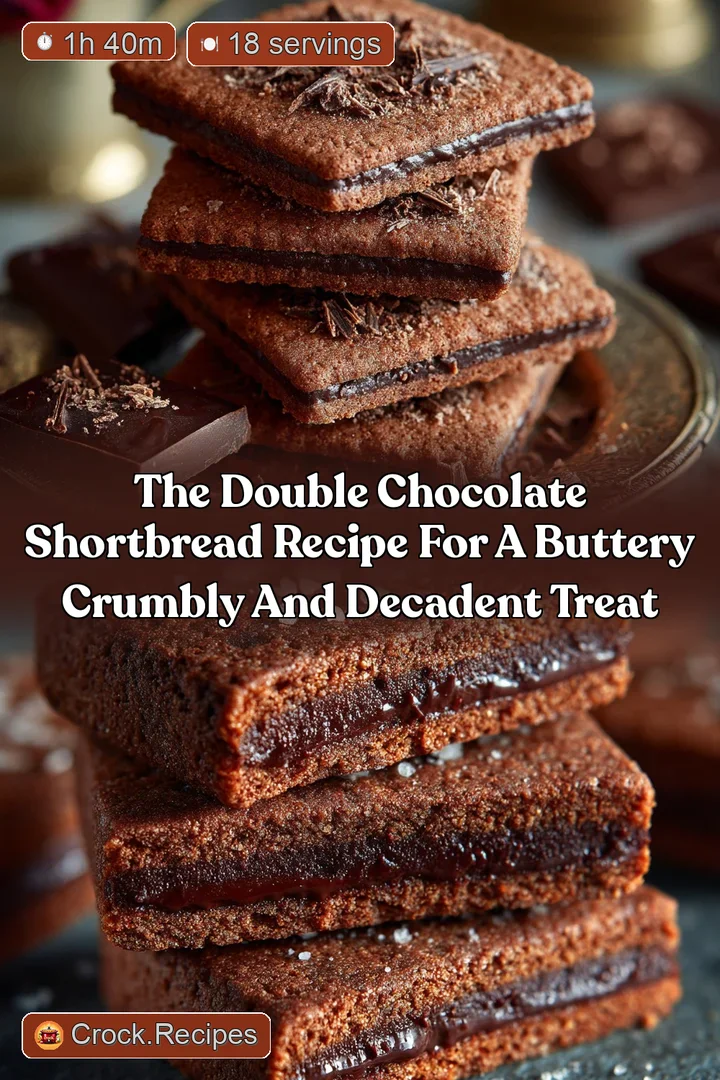
The shortbread bakes for 18 to 22 minutes until the edges appear set and the surface looks dry. Crucially, as soon as the shortbread leaves the oven, use a sharp knife or pizza cutter to score the warm block into your desired shapes we recommend 18 generous double chocolate shortbread fingers or squares.
If you wait until the chocolate cools and the biscuit sets, attempts to cut it will result in dramatic cracking and crumbling. Let it cool completely in the pan before lifting out and separating the pieces.
Troubleshooting and Enhancements for Your Bake
Common Shortbread Errors and Quick Fixes
The most frequent mistake in shortbread production is overmixing the flour, leading to a tough, chewy biscuit instead of a tender one. The solution is vigilance: stop mixing the moment you no longer see streaks of dry flour.
If your shortbread spread too much, your butter was either too warm when you started or you skipped the crucial chilling step. If your edges are burning before the center is set, move your oven rack to the center position and consider covering the edges loosely with foil for the last five minutes of baking time.
Storage Solutions: Maximizing Freshness and Shelf Life
Once completely cooled, this double chocolate shortbread recipe can be stored in an airtight container at room temperature for up to one week. Because of the high butter content, the flavour actually deepens slightly over the first couple of days.
For longer storage, the baked shortbread can be frozen for up to three months. Layer the biscuits between pieces of parchment paper in a freezer safe container. Thaw them completely at room temperature before serving.
Expanding Your Repertoire: Customizing the Double Chocolate Shortbread Recipe
This already decadent shortbread serves as a fantastic blank canvas for experimentation.
Flavor Twists: Adding Nuts, Spices, or Extracts
To introduce another layer of complexity to your double chocolate chip shortbread , consider adding spices or extracts during the creaming stage. For a warming, subtle kick, fold 1/2 teaspoon of cayenne pepper into the dry ingredients this creates a Mexican hot chocolate vibe.
Alternatively, incorporate 1 teaspoon of espresso powder with the cocoa and flour; coffee dramatically intensifies the depth of the chocolate flavour. The finely grated zest of one large orange, creamed in with the butter, also provides a delightful and traditional pairing.
Dietary Adjustments: Making Shortbread Vegan or gluten-free
This recipe is easily adapted for those with dietary restrictions. To make them gluten-free, substitute the all-purpose flour with a high-quality measure for-measure gluten-free baking blend. The texture will be slightly less fragile but still highly successful.
For a vegan shortbread option, replace the 8 ounces of unsalted butter with an equivalent weight of firm, block style vegan butter. Avoid tub spreads, as their higher water content will compromise the necessary structural integrity of the biscuit.
Nutritional Snapshot: Understanding the Macros
It's important to remember that traditional shortbread, by definition, is a high fat confection, largely due to the necessity of butter for its texture. Based on the yield of 18 generous portions, each biscuit provides an estimated 210 230 calories, with a high proportion of that coming from the healthy fats in the butter and dark chocolate.
While this is an indulgent treat, knowing this snapshot helps balance enjoyment with consumption, especially when enjoying these rich Shortbread Bars as a dessert.
Recipe FAQs
My last batch of shortbread was a bit tough. How do I guarantee that lovely sandy crumbly texture?
The secret to classic shortbread is minimum fuss and maximum butter! Firstly, ensure your butter is soft but not melted this allows for proper creaming. Crucially, stop mixing the dough the very second the flour disappears; overworking develops gluten, which is the nemesis of a tender biscuit.
If you treat the dough delicately, you’ll achieve that perfect buttery break every time.
I’ve baked a massive batch for the week. How should I store this amazing Double Chocolate Shortbread?
Once completely cooled and we mean properly cooled, don't rush it! store the biscuits in an airtight container at room temperature. They will happily keep their flavour and crisp texture for up to a week, perfect for grabbing with your afternoon cuppa.
If you want to plan further ahead, the baked biscuits also freeze brilliantly for up to two months; just thaw them at room temperature before serving.
Do I really have to wait an hour? Why is chilling the dough so important for shortbread?
I know, waiting feels like torture, but chilling is absolutely non-negotiable for shortbread! This crucial step gives the butter a chance to firm up again after mixing, locking in the fat structure.
If you skip the chill, your biscuits will spread out into flat puddles rather than holding that lovely thick shape, leading to a thin, greasy result instead of a proper crumbly shortbread.
Can I use regular cocoa powder instead of the Dutch process specified in the recipe?
You can substitute it in a pinch, but the results won't be quite as rich or dark. Dutch process cocoa is alkalised, meaning it has a deeper, smoother chocolate flavour and provides that intense, almost black colour we’re after. Natural cocoa is acidic and lighter in colour, offering a slightly sharper flavour.
Stick to Dutch process if you can for the ultimate decadent flavour profile!
I want to jazz these up a bit! Any brilliant ideas for adding extra flavour?
Oh, splendid idea! A fantastic addition is a teaspoon of espresso powder mixed into your dry ingredients; coffee acts like magic, amplifying the chocolate flavour without tasting distinctly of coffee.
Alternatively, sprinkle a generous pinch of flaky sea salt (like Maldon) over the top just before baking the contrast between the deep chocolate and the salty crunch is simply divine.
Rich Double Chocolate Shortbread Biscuits
Ingredients:
Instructions:
Nutrition Facts:
| Calories | 161 kcal |
|---|---|
| Protein | 1.8 g |
| Fat | 6.2 g |
| Carbs | 17.9 g |
| Fiber | 1.9 g |
| Sodium | 2272 mg |
