Spicy Korean Bbq: Charred, Tender Pork Ribbons
- Effort/Time: Moderate effort; 2 hours 30 mins total.
- Flavor Hook: Deeply caramelized umami with a slow-burn finish.
- Perfect for: High-energy weekend dinners or meal-prep-friendly protein.
- The Culinary Physics of Flavor Penetration and Heat
- Precision Calibration: Yield and Timing Logistics
- The Alchemy of Umami: Selecting Your Elements
- Essential Hardware for over High heat Thermal Conductivity
- Execution Protocol: From Marinade to Maillard Reaction
- Common Pitfalls and Troubleshooting Your Meat Prep
- Flavor Architecture: Creative Substitutions and Variations
- ⚗️ The Scaling Lab: Physics of Quantity
- Common Myths
- Preservation Protocols and Structural Integrity Retention
- Sensory Orchestration: Plating and Pairing Your Meal
- Recipe FAQs
- 📝 Recipe Card
There is nothing worse than investing in 680 g of pork shoulder only to have it emerge from the pan as gray, rubbery strips swimming in a watery, pale sauce. This technical failure usually stems from overcrowding the pan or failing to manage the sugar-to-heat ratio, resulting in a soggy mess rather than the charred, mahogany colored beauty you see in Seoul.
Wasted ingredients and a lack of texture are the ultimate kitchen heartbreak.
I once destroyed a batch of this Spicy Korean BBQ by assuming all fruit based marinades were the same. I swapped the Asian pear for an overripe Bosc and let it sit overnight; by morning, the enzymes had completely denatured the protein fibers, leaving me with a texture more akin to wet paper than meat.
It was a humbling lesson in the aggressive power of proteolytic enzymes and the necessity of precision timing.
The secret to a shattering, caramelized exterior lies in the Maillard reaction a chemical dance between amino acids and reducing sugars that occurs above 300°F.
By using 30 ml of grated Asian pear, we trigger calpain activation to soften the muscle tissue while the 22 g of honey provides the fuel for rapid browning. The result is a velvety mouthfeel contrasted by crispy, singed edges that release a nutty, complex aroma the moment they hit the hot surface.
The Culinary Physics of Flavor Penetration and Heat
Achieving the ultimate Spicy Korean BBQ requires more than just mixing ingredients; it requires managing molecular interactions.
- Enzymatic Tenderization: Calpain enzymes in the 30 ml grated Asian pear break down structural proteins, specifically collagen and elastin, without the mushiness associated with citrus acids.
- Emulsified Adhesion: The 15 ml toasted sesame oil acts as a lipid bridge, binding the water soluble soy sauce to the fat-rich pork shoulder for even flavor distribution.
- Capsaicin Saturation: Gochugaru flakes provide a slow release heat that penetrates the fat layers of the pork, ensuring the spice isn't just a surface coating.
- Hygroscopic Glazing: The 22 g of honey attracts moisture to the meat's surface during the initial cook, then rapidly dehydrates to form a sticky, lacquered crust.
Precision Calibration: Yield and Timing Logistics
When preparing this Spicy Korean BBQ recipe, sticking to the measured timing is non-negotiable for protein integrity.
- Yield: 4 servings
- Prep Time: 2 hours 20 mins (includes marination)
- Cook Time: 10 minutes
- Total Time: 2 hours 30 mins
The 2 hour marination window is the "sweet spot" where the 4 cloves of minced garlic and 5 g of grated ginger can penetrate the top 2mm of the meat fibers without the 30 ml of mirin causing premature acid cooking.
The Alchemy of Umami: Selecting Your Elements
Selecting the right components for your Spicy Korean BBQ sauce dictates the final depth of the dish.
| Ingredient | Chemical/Physical Role (Science) | The Pro Secret (Why This Matters) |
|---|---|---|
| Pork Shoulder | High intramuscular fat for lipid mediated flavor | Fat carries the fat-soluble compounds in the Gochugaru. |
| Gochujang | Fermented starch/chili paste provides base umami | Complex sugars caramelize faster than refined white sugar. |
| Asian Pear | Source of the proteolytic enzyme 'calpain' | Essential for tenderizing tough shoulder cuts in 2 hours. |
| Toasted Sesame Oil | Non-polar solvent for aromatic compounds | Carries the scent of garlic and ginger into the meat. |
The Marinade Base
- 60 ml Chung Jung One GochujangWhy this? Fermented base provides foundational umami and thick viscosity.
- 30 ml Kikkoman Soy SauceWhy this? Provides the salt needed for osmotic brine penetration.
- 30 ml Mizkan MirinWhy this? Acid content balances the heavy fats of the pork.
- 22 g Nature Nate’s HoneyWhy this? Low-moisture sugar ensures a rapid, glossy glaze formation.
- 15 ml Kadoya Toasted Sesame Oil
- 15 g Mother-in-Law's Gochugaru
- 4 cloves garlic, minced
- 5 g fresh ginger, grated
- 30 ml grated Asian pear
The Protein and Garnish
- 680 g pork shoulder, sliced paper thin Why this? Increased surface area maximizes the Maillard reaction sites.
- 2 stalks green onions, thinly sliced
- 1 tbsp toasted sesame seeds
- 1 head red leaf lettuce
Essential Hardware for over High heat Thermal Conductivity
To prevent the dreaded "steaming effect," you need tools that retain heat when the cold meat hits the surface.
- Lodge 12 inch Cast Iron Skillet: The high thermal mass prevents the temperature from dropping below 300°F when adding the 680 g of pork.
- Microplane Zester: Essential for achieving the 5 g of ginger and 30 ml of Asian pear in a paste like consistency for maximum surface contact.
- Global G-2 8 inch Chef's Knife: Required for the paper thin slicing of the pork shoulder; freeze the meat for 30 minutes first to make this easier.
- Stainless Steel Mixing Bowl: Non-reactive surface ensures the mirin and soy sauce don't pick up metallic off-flavors.
Execution Protocol: From Marinade to Maillard Reaction
Follow these atomic steps to ensure your Spicy Korean BBQ pork achieves the perfect balance of char and tenderness.
- Freeze the 680 g pork shoulder for 30 minutes until firm but not solid. Note: Improves slicing precision for paper thin ribbons.
- Slice the pork across the grain into 2mm thick pieces. Note: Shortens muscle fibers for a "melt-in-mouth" texture.
- Whisk the 60 ml gochujang, 30 ml soy sauce, 30 ml mirin, 22 g honey, and 15 ml sesame oil in a bowl until viscous and streak free.
- Incorporate the 15 g gochugaru, 4 cloves minced garlic, 5 g grated ginger, and 30 ml grated Asian pear. Note: Creates the enzymatic slurry.
- Massage the marinade into the pork for 2 minutes until every fiber is coated and no dry spots remain.
- Refrigerate for 2 hours. Do not exceed 4 hours until the meat begins to lose structural integrity.
- Preheat your Lodge Cast Iron Skillet over high heat for 5 minutes until a drop of water dances and evaporates instantly.
- Sear the pork in three separate batches for 3 minutes per batch until edges are charred mahogany and the sizzle reaches a high pitch.
- Toss with sliced green onions and 1 tbsp sesame seeds until the residual heat wilts the onions slightly.
- Rest the meat for 3 minutes until juices redistribute and the glaze sets into a tacky lacquer.
Common Pitfalls and Troubleshooting Your Meat Prep
If your Korean BBQ recipe isn't hitting the mark, it’s usually a matter of thermodynamics or enzyme timing.
Why Your Meat is Gray and Watery
When you crowd the pan with all 680 g of meat at once, the moisture release overwhelms the heat capacity of the skillet. The temperature drops, and instead of searing, the meat boils in its own juices. This prevents the Maillard reaction and results in a rubbery texture.
| Problem | Root Cause | The Fix | Pro Protocol |
|---|---|---|---|
| Meat is Tough | Insufficient marination or thick slices | Slice thinner; ensure Asian pear is fresh for active enzymes. | Use a meat slicer if available. |
| Sauce is Burnt | Too much honey or heat too high | Lower heat slightly; move meat constantly to prevent sugar scorch. | Use a heavy bottomed carbon steel pan. |
| Watery Sauce | Pan crowding/Low temp | Cook in small batches; ensure pan is smoking hot before adding meat. | Pat meat dry if marinade is too thin. |
The Marinade is Burning Too Quickly
If the 22 g of honey and 60 ml of gochujang are turning black before the pork is cooked, your pan's "hot spots" are likely poorly managed. This is common when using thin stainless steel pans. Similar to perfecting a BBQ Sauce recipe, you must balance the sugar caramelization with the internal temperature of the protein.
Flavor Architecture: Creative Substitutions and Variations
While the Spicy Korean BBQ style pork recipe is a classic, you can adapt it based on what's in your pantry.
| Original Ingredient | Substitute | Why It Works |
|---|---|---|
| Asian Pear | Grated Fuji Apple | Similar sugar profile and contains enough malic acid for mild tenderizing. |
| Gochugaru | Chipotle Powder | Provides heat and smoke, though it lacks the specific fruitiness of Korean chili. |
| Honey | Brown Sugar | Adds a deep molasses note; caramelizes at a slightly higher temperature. |
Spicy Korean BBQ Chicken
If you prefer poultry, use the same marinade for Spicy Korean BBQ chicken. Swap the pork for 680 g of boneless, skinless chicken thighs. Increase the marination time to 4 hours, as chicken lacks the dense connective tissue of pork shoulder. For a different profile, you might enjoy the heat level in this Dill Pickle Hot recipe.
Plant Based Swap
For a vegetarian version, use 680 g of extra firm tofu or king oyster mushrooms. Transform: Press the tofu for 30 minutes to remove moisture. Science: Removing water allows the soy-based proteins to absorb the marinade via osmotic pressure more effectively.
⚗️ The Scaling Lab: Physics of Quantity
When you decide to double this Spicy Korean BBQ recipe for a crowd, the rules of the kitchen change.
- The Evaporation Paradox: If you double the marinade in the same size bowl, the surface area doesn't change, but the volume does. Reduce the mirin by 10% when doubling to ensure the sauce remains thick and doesn't become a soup.
- Thermal Mass Recovery: Adding 1.36 kg of cold meat to a pan will kill the heat instantly. You must cook in 4 5 batches, allowing the skillet to return to a "shimmering" heat state between each round.
- Flavor Saturation: Capsaicin (heat) and salt scale non-linearly. When doubling, use 1.5x the Gochugaru first, then taste. You can always add more, but you can't subtract the fire.
- Carry Over Cooking: A larger pile of cooked meat retains more internal energy. Pull the meat off the heat when it looks 90% done; the residual heat will finish the job without drying out the pork.
Common Myths
Myth: You must marinate the pork overnight for the best flavor. Truth: No. Because the pork is sliced paper thin, a 2 hour soak is the limit. Overnight marination with Asian pear will turn the meat into a grainy, unappealing mush due to over proteolysis.
Myth: You need a specialized charcoal grill for authentic flavor. Truth: A well seasoned cast iron skillet mimics the infrared heat of charcoal. The key is the "smoker's char" achieved by over high heat contact with the honey based marinade.
Preservation Protocols and Structural Integrity Retention
This Spicy Korean BBQ stores exceptionally well, but reheating requires care to avoid a rubbery texture.
- Fridge: Store in an airtight Glasslock container for up to 3 days. The flavors will actually deepen as the garlic and ginger continue to mellow.
- Freeze: You can freeze the raw marinated pork for up to 2 months. Science: The sugar in the honey acts as a cryoprotectant, preventing large ice crystals from damaging the meat fibers.
- Reheat: Avoid the microwave. Re-sear in a hot pan with a teaspoon of water for 2 minutes to loosen the glaze and restore the "sizzle."
💡 ZERO WASTE PHILOSOPHY Don't discard the green onion roots. Transform: Place them in a jar of water on your windowsill. Science: The meristematic tissue at the base will regrow the stalks in 7 10 days, providing a perpetual garnish for your next Korean BBQ recipe.
If you have leftover ginger peels, simmer them with a bit of honey for a digestive tea.
Sensory Orchestration: Plating and Pairing Your Meal
The best way to enjoy Spicy Korean BBQ pork is "Ssam" style. Place a piece of the charred meat inside a red leaf lettuce leaf, add a dollop of rice, and a slice of raw garlic.
The contrast between the cold, crisp lettuce and the searing, spicy pork creates a sensory "pop" that is central to the experience.
For a different texture, try serving this over a bowl of steamed grains, similar to how you would plate a How to Make recipe. The rice absorbs the spicy, rendered fat from the pork shoulder, ensuring no flavor is lost. If you're looking for another grilled classic, my Smoky Chicken Satay recipe offers a great peanut based alternative to the chili heavy profile of this BBQ.
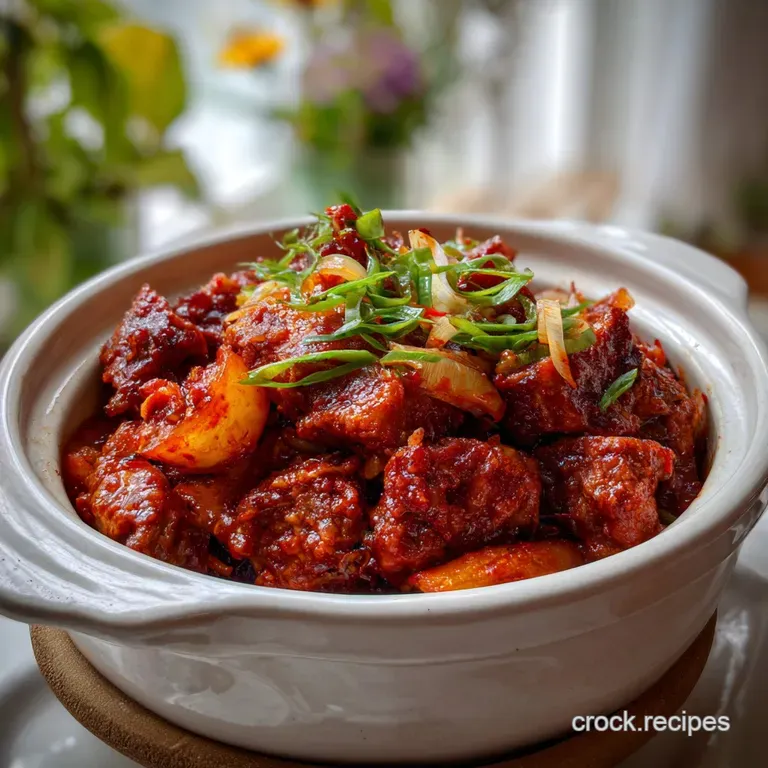
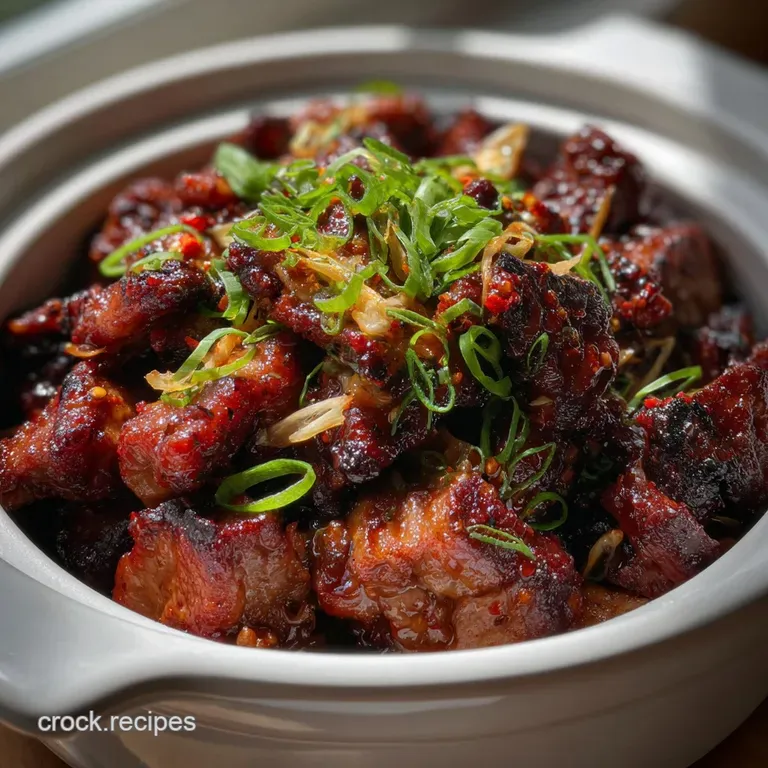
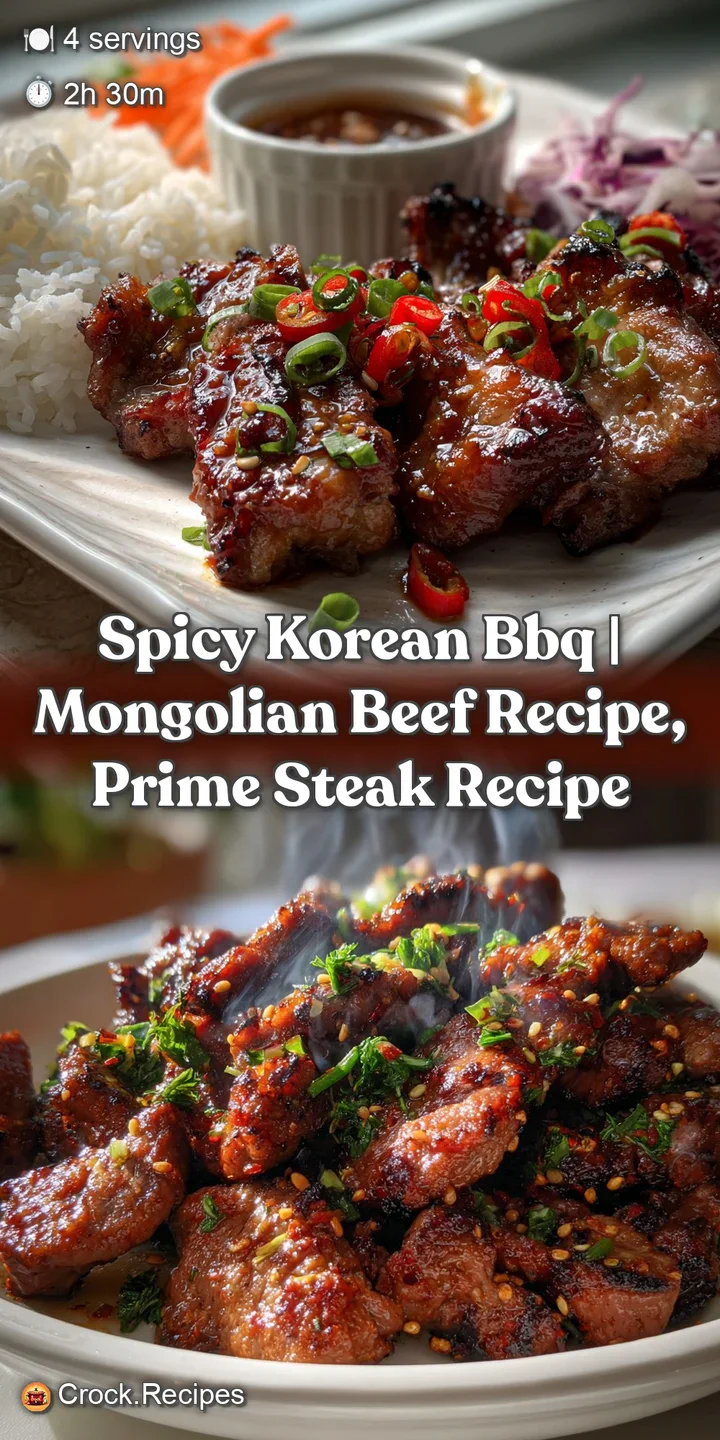
The final result of this Spicy Korean BBQ should be a plate of glistening, deep red meat with jagged, blackened edges that shatter when bitten. It’s a testament to the power of heat, enzymes, and the right fermented chili paste.
Trust the science, watch your pan temperature, and let the Maillard reaction do the heavy lifting.
Recipe FAQs
how to make spicy korean bbq sauce?
Mix gochujang, soy sauce, mirin, honey, gochugaru, sesame oil, grated pear, ginger, and garlic. The viscosity comes from the fermented base and the honey acting as a hygroscopic agent.
For flavor depth, ensure your gochujang is fermented quality, providing complex sugars that accelerate the Maillard reaction.
how to make spicy korean bbq chicken?
Use boneless, skinless chicken thighs; increase marinade time to four hours. Chicken lacks the connective tissue of pork, requiring less enzymatic breakdown time. If you enjoyed controlling the heat level here, see how the same acid balance principle works in our How to Cook Chilli Chicken with Spicy Flavor: My Ultimate Family Recipe.
how to make spicy korean bbq wings?
Bake wings first, then toss in the heated sauce vigorously. Baking dries the skin surface, creating texture that adheres better to the glaze. High heat on the sauce will burn the honey before the connective tissue breaks down enough for true adhesion.
how to make spicy korean bbq?
Sear paper thin, well marinated pork slices over very high heat until charred. The Maillard reaction requires temperatures above 300°F to caramelize the sugars in the marinade. Master this high heat searing by practicing the technique in our BBQ Chicken Skewer Salad: Smoky Charred Protein Perfection.
how to make spicy korean bbq sauce from wingstop?
Mimic the flavor profile using thick gochujang, brown sugar, garlic, and heavy sesame oil. Wingstop's proprietary sauce relies on aggressive sugar content for stickiness; compensate by reducing liquid soy sauce slightly. This flavor balance is different than dishes relying on mild heat, like our How to Make Quick Chorizo Chickpeas: Spicy & Delicious Comfort Food.
Can I substitute the Asian pear?
Yes, use grated Fuji or small amounts of crushed pineapple. Pineapple contains bromelain, a powerful enzyme that breaks down protein rapidly. Temperature shock denatures casein proteins, creating grainy texture instead of smooth emulsion.
- Limit pineapple soak time to 90 minutes
- Use Fuji apple for mildest effect
- Ensure all fruit pulp is strained before searing
Myth Buster: Can I skip marinating?
Myth: Skipping the 2-hour marination has no effect. Reality: Without adequate time, the proteolytic enzymes from the pear cannot penetrate the muscle fibers, resulting in tough meat despite a flavorful exterior glaze.
Spicy Korean Bbq Ribbons
Ingredients:
Instructions:
Nutrition Facts:
| Calories | 542 kcal |
|---|---|
| Protein | 31 g |
| Fat | 26 g |
| Carbs | 17 g |
| Fiber | 2 g |
| Sugar | 12 g |
| Sodium | 940 mg |
