Spicy Pork Ribs: Masterclass in Heat and Sweetness

- Time: Active 20 minutes, Passive 2 hours 30 mins, Total 2 hours 50 mins
- Flavor/Texture Hook: Shatter-crisp charred edges with a velvety, melt-in-your-mouth interior.
- Perfect for: High-impact weekend hosting or a satisfying, hearty Sunday family feast featuring these amazing Spicy Pork Ribs.
- Engineering the Ultimate Spicy Pork Ribs
- Metric Performance: Time, Temp, and Texture Checkpoints
- The Functional Breakdown of Flavor Elements
- Essential Tools for Structural Integrity and Heat Control
- Precision Heat Protocol: From Membrane Removal to Glaze Caramelization
- Why Your Ribs Underperform: Solving Dryness and Lack of Heat
- Customizing the Burn: Smoked and Sweet Adaptation Profiles
- Preserving the Sizzle: Storage and Culinary Upcycling
- Strategic Sideboards: Balancing the Heat with Texture
- Setting the Record Straight on Rib Rituals
- Common Questions
- 📝 Recipe Card
Engineering the Ultimate Spicy Pork Ribs
Ever wondered why some ribs possess a translucent, mahogany lacquer that clings to the bone, while others emerge as gray, leathery disappointments? The difference isn't just the sauce; it’s a fundamental understanding of thermodynamics and collagen hydrolysis.
We are moving beyond the surface level "low and slow" trope to explore how moisture control and sugar caramelization dictate the final texture of your Spicy Pork Ribs.
This recipe is built on the architecture of contrast. We pair the aggressive, sharp sting of Cayenne pepper (2g) and Red pepper flakes against the deep, mellow warmth of Brown sugar (30g) and Honey (21g).
This isn't just about heat; it's about building layers of flavor that resonate throughout the entire palate. You will experience a bright acidity from the Heinz Apple Cider Vinegar (120ml) that cuts right through the heavy fat of the St.
Louis style racks, making these Spicy Pork Ribs perfectly balanced.
By the time you pull these from the oven or grill, the kitchen will be filled with the scent of toasted spices and rendered pork fat. We are aiming for a specific "bite" the meat should pull cleanly away from the bone with minimal effort, yet retain enough structural integrity to avoid being "mushy." This balance is the hallmark of a true pitmaster, and today, we’re bringing that expertise into your home kitchen to master these Spicy Pork Ribs.
Metric Performance: Time, Temp, and Texture Checkpoints
Precision is the enemy of failure. When preparing Spicy Pork Ribs, guessing leads to dry meat or rubbery fat. Follow these three exact numeric checkpoints to guarantee professional results for your Spicy Pork Ribs.
- Checkpoint 1 (Internal Temperature):195°F to 205°F. This is the "sweet spot" where collagen has fully converted into gelatin, providing that signature satisfying mouthfeel in every bite of Spicy Pork Ribs.
- Checkpoint 2 (The Braise):2 hours at 300°F. While higher temps are faster, this specific thermal window allows for even heat penetration without boiling the meat's internal juices out.
- Checkpoint 3 (The Pull): 1/4 inch of bone exposure. When the meat retracts from the tips of the bones by exactly this much, your ribs have reached peak tenderness.
| Feature | Stovetop (Dutch Oven Braise) | Oven (Foil Wrap Method) |
|---|---|---|
| Heat Distribution | Bottom-up; requires flipping every 45 mins. | 360 degree radiant heat; set and forget. |
| Texture Outcome | More "pot-roast" like; very soft. | Traditional BBQ bite; better bark formation for your Spicy Pork Ribs. |
| Moisture Retention | Highest; ribs sit partially in liquid. | Moderate; relies on steam trapped in foil. |
The Functional Breakdown of Flavor Elements
Understanding the chemistry of your pantry is the first step toward flavor mastery. Each component in this Spicy Pork Ribs recipe serves a structural or chemical purpose.
| Ingredient | Chemical/Physical Role (Science) | The Pro Secret (Why This Matters) |
|---|---|---|
| St. Louis Style Ribs | High collagen/fat ratio | Fat renders slowly to baste the meat from within. |
| Kosher Salt | Osmotic pressure regulator | Denatures proteins to allow moisture to re-enter the muscle fibers. |
| Brown Sugar | Hygroscopic sweetener | Lowers the evaporation rate while facilitating the Maillard reaction. |
| Apple Cider Vinegar | Acidic pH adjuster | Weakens tough muscle fibers and balances the heavy lipophilic fats. |
The Science of Collagen Hydrolysis
Pork ribs are naturally high in Type I collagen. At temperatures above 160°F, this tough triple helix protein structure begins to unwind and dissolve into gelatin. Gelatin can hold up to ten times its weight in water, which is why "well done" ribs actually feel moister than "medium" steaks.
Osmotic Pressure and the Dry Rub
When you apply Diamond Crystal Kosher Salt and sugar to the meat, it initially draws moisture out. However, if left for at least 20 minutes, that liquid dissolves the salt and creates a concentrated brine that is reabsorbed into the meat.
This seasons the ribs deeply rather than just on the surface, crucial for deep flavor in great Spicy Pork Ribs.
Maillard Reaction vs. Caramelization
The "bark" on your Spicy Pork Ribs is a result of two processes. The Maillard reaction occurs between amino acids and reducing sugars (like those in the pork and rub), creating savory complexity.
Caramelization is the oxidation of the Brown sugar (30g) and Honey (21g), providing the dark color and bittersweet notes.
Essential Tools for Structural Integrity and Heat Control
Using the right equipment ensures that heat is conducted efficiently and moisture is managed correctly. Don't settle for thin baking sheets that warp under pressure when making these Spicy Pork Ribs.
- Lodge Enameled Cast Iron Dutch Oven: Perfect for the stovetop braise method, providing superior heat retention.
- Reynolds Kitchens Heavy Duty Foil: Non-negotiable for the oven method. Standard foil tears easily, allowing steam to escape and drying out the meat.
- ThermoPro Digital Meat Thermometer: The only way to verify the 195°F–205°F target.
- 12 cup Non-stick Muffin Tin: (Used as a rack stabilizer if you are cooking multiple racks upright in a large smoker).
Chef's Tip: Freeze your butter for 10 minutes then grate it over the top of the ribs before sealing the foil. This adds a velvety sheen to the final glaze that oil simply cannot replicate on the finished Spicy Pork Ribs.
Precision Heat Protocol: From Membrane Removal to Glaze Caramelization
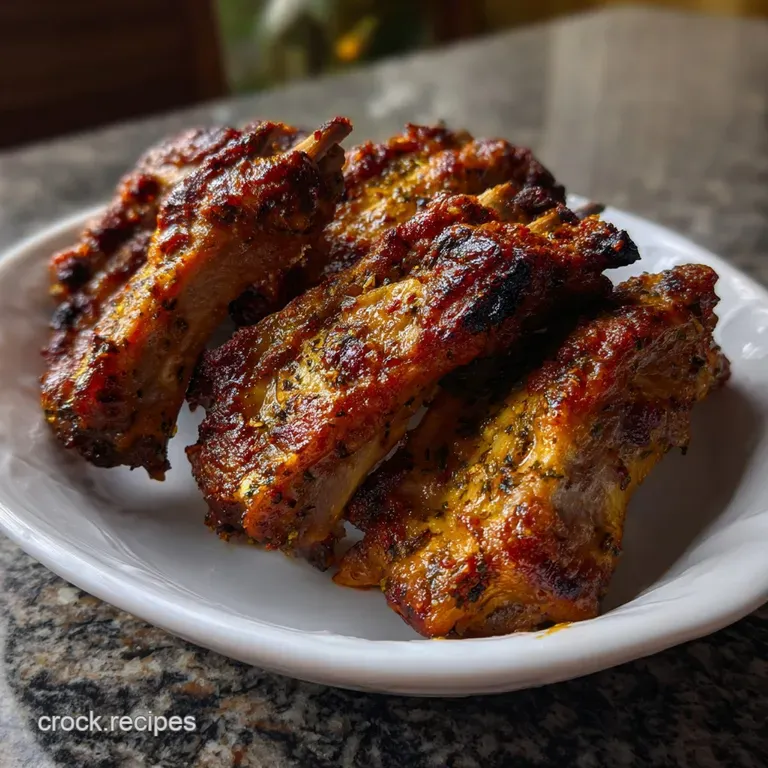
Success with Spicy Pork Ribs requires a sequence of atomic steps. Do not skip the membrane removal; it is an impermeable barrier that prevents spice penetration.
- Remove the silverskin membrane from the back of the 2 Racks St. Louis Style Pork Ribs (5.5 lbs total). Why this? This elastin layer never softens and blocks flavor.
- Pat the meat completely dry with paper towels until the surface is matte. Note: Moisture on the surface prevents the rub from adhering.
- Combine the Brown sugar (30g), Smoked paprika (7g), Cayenne pepper (2g), Chili powder (2g), Garlic powder (3g), Onion powder (3g), Kosher salt (6g), and Black pepper (1g) in a small bowl.
- Massage the rub into every crevice of the ribs until no pink meat is visible.
- Let sit for 30 minutes at room temperature until the rub looks damp and "tacky" to the touch.
- Lay two large sheets of Reynolds Kitchens Heavy Duty Foil on a flat surface and place ribs in the center.
- Whisk the Apple cider vinegar (120ml), Water (60ml), and Hot sauce (30ml) together.
- Pour the liquid carefully around the ribs, then fold the foil edges upward to create a hermetic seal.
- Bake at 300°F for 2 hours 15 mins until the meat has pulled back from the bone ends by 1/4 inch.
- Mix the BBQ sauce (240ml), Sriracha (30ml), Honey (21g), and Red pepper flakes in a bowl.
- Remove ribs from the oven, open the foil carefully (watch for steam!), and brush the glaze generously over the top.
- Broil on the top rack for 3 5 minutes until the glaze is bubbling, dark mahogany in color, and scorched in small patches. The final caramelization is what sells these Spicy Pork Ribs.
Why Your Ribs Underperform: Solving Dryness and Lack of Heat
Even experienced cooks hit snags. Understanding the "why" behind the failure is the only way to ensure the next batch of Spicy Pork Ribs is superior.
Why are my ribs still tough?
If your ribs are "bouncy" or difficult to pull apart, the collagen has not yet hydrolyzed. This usually happens because the internal temperature stayed below 190°F. Protein denaturation happens quickly, but collagen breakdown is a function of time plus temperature.
If they are tough, reseal the foil and give them another 30 minutes.
How to fix a "one-note" spicy burn?
Heat should be a journey, not a wall. If the ribs are just "hot" without depth, you likely lacked acidity or sweetness. The Honey (21g) and Apple cider vinegar (120ml) are essential because they provide "palate relief," allowing your taste buds to reset between bites of heat.
| Problem | Root Cause | The Fix | Pro Protocol |
|---|---|---|---|
| Dry Meat | Steam escaped foil | Use double layer heavy duty foil | Add 1 tbsp of lard/butter inside the foil |
| Burnt Rub | Sugar scorched too early | Apply glaze ONLY in the last 5 mins | Keep broiler rack 6 inches from heat |
| Bland Interior | No rest time after rub | Let rub sit for 30+ mins | Dry-brine the ribs overnight in the fridge |
Customizing the Burn: Smoked and Sweet Adaptation Profiles
While the oven method is bulletproof, you can adapt this recipe for different equipment or dietary needs. The fundamental structure of great Spicy Pork Ribs remains the same.
- Traeger Spicy Ribs (Smoked Version): Smoke at 225°F for 3 hours, wrap in foil for 2 hours with the braising liquid, then unwrap and glaze for the final 1 hour. This creates a deep smoke ring and intense wood fired flavor.
- Honey Habanero Twist: Replace the Sriracha with 1 tsp of habanero mash. The fruity notes of habanero pair perfectly with the Honey (21g), though the heat level will increase significantly on this variation of Spicy Pork Ribs.
- Low-Carb/Keto Swap: Use a monk fruit based brown sugar substitute and a sugar-free BBQ sauce. The texture will be slightly less sticky due to the lack of real sugar caramelization.
Proportional Adjustments for Batch Success
Scaling Down (1 Rack): Reduce braising liquid by 50%. Keep the cooking time the same; the thickness of the rack determines the time, not the quantity of racks.
- Flavor (Salt/Spices)
- Scale rub to 1.5x for every 2 racks added (flavor compounds concentrate in large batches).
- Oven Temps
- Drop the temperature to 275°F and increase time by 45 minutes to account for the cold mass of meat entering the oven.
- Pan Crowding
- Ensure at least 2 inches of space between foil packets to allow for proper air circulation.
Preserving the Sizzle: Storage and Culinary Upcycling
Pork ribs are a goldmine for leftovers because the high fat and gelatin content keep the meat moist even after reheating.
- Storage: Store in an airtight container in the fridge for up to 4 days. You can freeze glazed ribs for up to 3 months, though the texture of the glaze may become slightly tacky upon thawing.
- Reheating: Avoid the microwave; it turns the fat rubbery. Instead, wrap leftovers in foil with a splash of water and heat at 300°F until sizzling.
- Zero Waste: Never toss the bones. Simmer them with onion skins and celery scraps for 4 hours to create a spicy, collagen rich pork stock. This stock is the perfect base for a spicy ramen or a Smothered Pork Chops Recipe.
- Transform: Shred leftover meat and toss it with extra BBQ Sauce recipe to make high protein tacos or "Spicy Rib Sliders" for lunch the next day.
Strategic Sideboards: Balancing the Heat with Texture
To truly enjoy Spicy Pork Ribs, you need side dishes that provide a cooling contrast or a structural crunch.
- Creamy Coleslaw: The cabbage provides a necessary crunch, while the mayo based dressing neutralizes the capsaicin on your tongue.
- Cornbread with Honey Butter: This reinforces the sweet savory contrast we established in the rub for your Spicy Pork Ribs.
- Quick Pickled Red Onions: The bright pink color adds visual pop, and the sharp vinegar tang cuts through the heavy rib fat.
- Decision Shortcut:
- If you want a Southern vibe, serve with collard greens and mac and cheese.
- If you want an Asian fusion profile, serve with steamed bao buns and quick pickled cucumbers.
- If you want maximum comfort, pair with a heavy Broccoli Casserole recipe.
Setting the Record Straight on Rib Rituals
Kitchen folklore often gets in the way of scientific success. Let's clear up the most common misconceptions about cooking ribs.
Myth: Boiling ribs before grilling makes them tender.Truth: Boiling leaches all the flavor and fat into the water, leaving the meat dry and flavorless.
Tenderness comes from the slow conversion of collagen at 190°F+, which can be achieved perfectly in the oven or smoker without losing a drop of flavor.
Myth: You should only flip ribs once.Truth: If you are braising on the stovetop or using a gas grill, flipping helps distribute the rendering fat evenly. In a closed oven or smoker with radiant heat, flipping is unnecessary, but it certainly doesn't "ruin" the meat.
Myth: The "Fall off-the-bone" is the only sign of a good rib.Truth: In the competition BBQ world, "fall off-the-bone" is actually considered overcooked.
A perfect rib should have a "clean bite" you see your tooth marks in the meat, and it pulls away from the bone without the entire rack disintegrating. However, for home style comfort, many prefer the softer "fall off" texture.
Both are valid; it’s simply a matter of an extra 20 minutes in the foil.
These Spicy Pork Ribs represent the pinnacle of home cooked comfort. By respecting the science of the meat and the power of a well balanced rub, you’re not just making dinner; you’re mastering a craft.
Let's get that oven preheated and start the sizzle with your perfect Spicy Pork Ribs.
Common Questions
What is the required internal temperature for tenderness?
195°F to 205°F. This range ensures complete collagen hydrolysis into lubricating gelatin, which keeps the meat moist. If you struggle with precise temperature control during the final stages, see how the same principle of thermal control is used in our How to Sear Country Style Beef Ribs in 3 Hours: Ultimate Comfort!.
Can I substitute St. Louis cut ribs for baby backs?
Yes, but reduce cook time by 30 minutes. Baby backs are leaner and thinner than St. Louis style, meaning they require less time to convert their connective tissue. They will yield a slightly less fatty, though still tender, result.
Why do my ribs taste only "hot" and not complex?
Heat must be balanced by acid and sugar. Capsaicin intensity overwhelms the palate without contrasting elements to provide necessary relief. The Apple Cider Vinegar and Honey are crucial for rounding out the aggressive spice profile in these ribs.
Is it necessary to remove the membrane?
No, but it's highly recommended for flavor. The membrane is an impermeable barrier of elastin that prevents the rub from penetrating the meat effectively. Removing it allows for superior flavor absorption and results in a far more tender final product.
What is the difference between dry-brining and rubbing?
Rubbing coats the surface while dry-brining seasons deeply. Initial rubbing provides external flavor, but the salt draws moisture out, creating a surface brine that is reabsorbed over time. If you master this flavor penetration technique here, you can apply similar principles when seasoning poultry, like in our How to Make the Ultimate Stir Fry Chicken with Spicy Ginger Kick.
What happens if I use low-fat milk in the glaze?
Cold cheese added to hot liquid causes protein clumping. Temperature shock denatures casein proteins, creating grainy texture instead of smooth emulsion.
- Remove pan from heat first
- Add cheese in small handfuls
- Use fresh grated Gruyère (pre-shredded has cellulose coating)
Myth: High heat shortens the cooking time for pork ribs.
Myth: Boiling chicken removes bacteria. USDA confirms this spreads Salmonella via splash. Cooking to 165°F kills all pathogens. High heat over sears the exterior before the internal collagen has time to dissolve, resulting in tough meat.
Spicy Pork Ribs Recipe
Ingredients:
Instructions:
Nutrition Facts:
| Calories | 1318 kcal |
|---|---|
| Protein | 64 g |
| Fat | 84 g |
| Carbs | 46 g |
| Fiber | 2 g |
| Sugar | 39 g |
| Sodium | 1420 mg |
