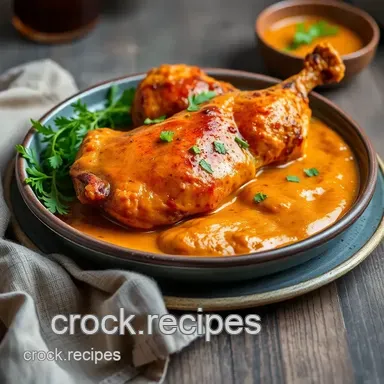
Tandoori Chicken with Creamy Curry Sauce
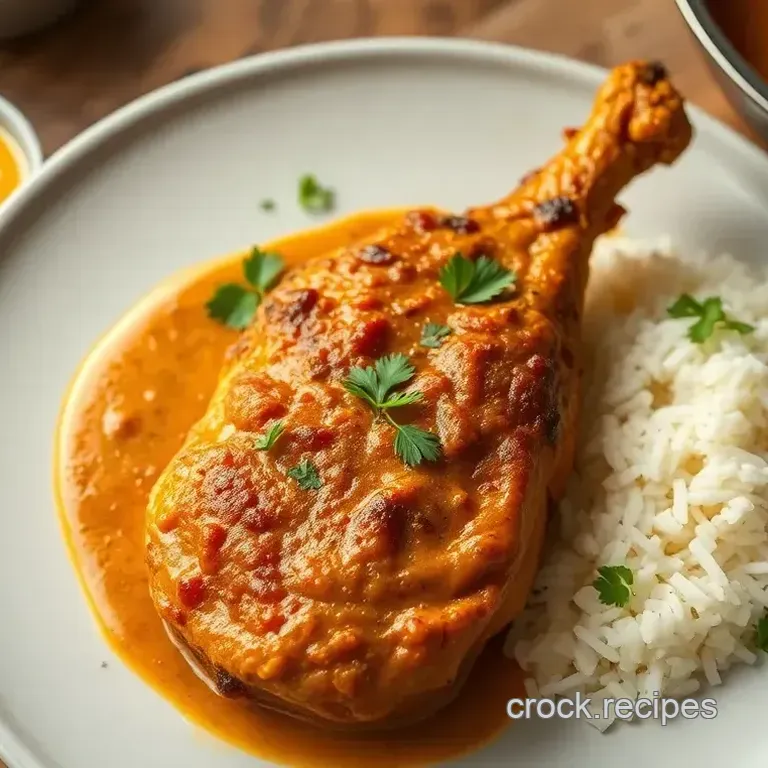
- Time: 20 min active + 30 min cooking + 1 hr chilling
- Flavor & Texture: Charred, smoky, and rich
- Perfect for: A vibrant weeknight dinner
Tandoori Chicken with Creamy Curry Sauce
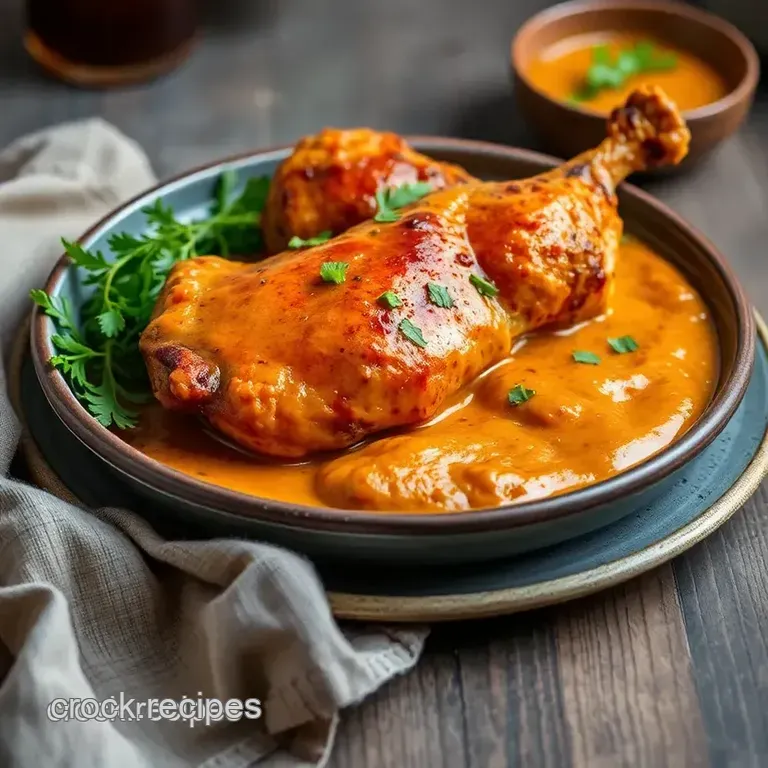
Imagine the smell of toasted cumin and garlic filling your kitchen, paired with chicken that has those irresistible, blackened charred spots. The meat stays juicy, resting in a sauce that is a vibrant, deep orange.
It's a global street food classic brought into the home kitchen. You get that heavy hit of spice and acidity from the lemon, balanced by a smooth, glossy finish from the heavy cream.
This recipe focuses on color and contrast. The bright red of the roasted meat against the pale cream and pops of green cilantro makes the plate look as bold as it tastes.
Why This Version Works
Yogurt Acid: The lactic acid in Greek yogurt breaks down tough proteins, making the chicken tender without making it mushy.
High heat Roasting: Cooking at 450°F mimics a tandoor oven, which blisters the outside of the meat in about 20 minutes.
| Method | Time | Texture | Best For |
|---|---|---|---|
| oven-roasted | 1 hr 50 min | Charred & Juicy | Deep flavor and color |
| Stovetop | 45 min | Soft & Simmered | Quick weeknight meals |
The Ingredient Breakdown
The colors here do a lot of the heavy lifting. The red chili powder gives the chicken its signature look, while the tomato puree provides the base for the sauce's warm hue.
| Ingredient | Role | If You Don't Have It |
|---|---|---|
| Greek Yogurt | Tenderizes and thickens | Plain yogurt (add 1 tsp cornstarch) |
| Tomato Puree | Adds body and tang | Canned crushed tomatoes (blend first) |
| Kashmiri Chili | Provides red color and mild heat | Paprika (less heat, same color) |
| Heavy Cream | Softens the spice | Full-fat coconut milk (adds nuttiness) |
What You'll Need
For the Marinated Chicken
- 2 lb (900 g) boneless, skinless chicken thighs Why this? These remain tender at high temperatures
- 1 cup (245 g) plain full-fat Greek yogurt
- 2 tbsp (30 ml) fresh lemon juice Why this? Balances the richness of the cream
- 1 tbsp (15 ml) neutral oil, such as canola
- 1 tbsp (9 g) fresh ginger, grated
- 4 cloves garlic, minced (about 12 g)
- 2 tsp (4 g) ground cumin
- 2 tsp (5 g) ground coriander
- 1 1/2 tsp (3 g) Kashmiri red chili powder (or mild paprika)
- 1 tsp (2 g) garam masala
- 1/2 tsp (1.5 g) ground turmeric
- 1 tsp (6 g) kosher salt
For the Creamy Curry Sauce
- 2 tbsp (28 g) unsalted butter
- 1 small yellow onion, finely diced (about 1/2 cup / 80 g)
- 2 tsp (5 g) mild curry powder
- 1 tsp (2 g) garam masala
- 3/4 cup (180 ml) passata or tomato puree
- 1/2 cup (120 ml) low-sodium chicken broth
- 3/4 cup (180 ml) heavy cream
- 1/2 tsp (3 g) salt, adjusted to taste
- 1/4 cup (10 g) fresh cilantro, chopped for garnish
Cooking step by step
Phase 1: Prep and Marinate
- Remove any extra fat from the chicken thighs and chop them into 2 inch (5 cm) chunks. Dry them thoroughly using paper towels.
- In a large bowl, whisk the yogurt, lemon juice, oil, ginger, garlic, cumin, coriander, chili powder, garam masala, turmeric, and kosher salt until the mixture is aromatic and smooth.
- Stir in the chicken until every piece is well-coated. Cover and chill in the refrigerator for at least 1 hour, allowing the marinade to thicken and adhere to the meat.
Phase 2: Roast the Chicken
- Preheat the oven to 450°F (230°C), positioning the rack in the upper third. Line a rimmed baking sheet with parchment or foil.
- Gently shake off any excess marinade without rinsing. Arrange the chicken on the pan, leaving space between the pieces; use two pans if necessary.
- Roast for 18 to 22 minutes until the edges blister with dark charred spots and a meat thermometer shows the largest piece has reached 165°F (74°C). Note: The USDA recommends a safe internal temperature of 165°F.
Phase 3: Build the Sauce
- Over medium heat, melt the butter in a medium skillet. Sauté the onion for 6 to 8 minutes, stirring frequently, until softened and golden around the edges.
- Mix in the curry powder and garam masala, cooking for 30 seconds until fragrant and toasted.
- Stir in the tomato puree and simmer for roughly 5 minutes until the sauce darkens to a brick red color and the raw tomato scent disappears.
- Pour in the broth and simmer for 3 to 4 minutes. Stir in the cream and simmer lightly for another 2 minutes until the sauce coats the back of a spoon.
- Add salt to taste to finish the sauce.
Phase 4: Finish and Serve
- Fold the roasted chicken and any browned pan drippings into the sauce. Simmer for 2 minutes to let the meat absorb the flavors.
- Garnish with cilantro and serve immediately.
Chef: To maintain the best color contrast, stir in the cilantro at the very last second. The vibrant green against the orange sauce creates an irresistible look.
Fixing Common Issues
When the chicken looks pale, it's usually because the pan was too crowded. The meat releases moisture and steams instead of searing, which kills those charred spots.
If the sauce tastes raw or acidic, you likely didn't cook the tomato puree long enough. You need that "brick red" color to signal that the sugars have caramelized.
Dry chicken usually happens when the pieces are too small or left in the oven past 22 minutes. Use a thermometer to be sure.
| Problem | Root Cause | Solution |
|---|---|---|
| Pale Chicken | Pan too crowded | Use two sheet pans for more space |
| Raw Tomato Taste | Short cooking time | Simmer puree until it darkens |
| Dry Meat | Overcooked | Pull chicken at exactly 165°F |
Storage and Reheating
Store any remaining portions in an airtight dish in the refrigerator for a maximum of 3 days. This recipe isn't suitable for freezing, as the heavy cream can separate and become grainy once thawed.
To reheat, place the chicken and sauce in a skillet over medium-low heat until the thickest piece of chicken reaches 165°F (74°C) inside. Stir in a small amount of water or chicken broth to loosen the sauce while warming. For a smooth texture, steer clear of the microwave.
When reheating cooked leftovers, check with a food thermometer that the centre reaches 165°F (74°C); the appliance temperature and time alone do not confirm this.
Best Side Pairings
For the most vibrant meal, serve this with fluffy basmati rice and warm garlic naan. The rice absorbs the sauce, while the naan is great for scooping up the last bits.
I like adding a side of cucumber raita (yogurt, cucumber, and mint) to cool down the heat. If you want something green and charred, try some roasted broccoli to match the smoky vibe of the chicken.
Twists to Try
- Coconut Curry Cream: Use full-fat coconut milk instead of heavy cream. This imparts a tropical flavor while maintaining the same creamy consistency.
- Smoky Heat: Stir in 1/2 tsp of smoked paprika into the marinade for enhanced complexity.
- gluten-free Version: This dish is inherently gluten-free, provided the curry powder and chicken broth you use are certified. For this gluten-free version, also use products labelled gluten-free for the broth or stock.
Critical Sodium Level
1160 mg(50% of daily value)
To support cardiovascular health, the American Heart Association suggests that most adults limit their daily sodium intake to 2,300 mg or less.
Tips to Reduce Sodium in This Recipe
-
Reduce Added Salt
Significantly lower the amount of kosher salt and the salt to taste used in the final sauce.
-
Swap the Broth
Use unsalted chicken stock or water instead of low-sodium chicken broth to eliminate hidden sodium.
-
Use No-Salt-Added Puree
Select a 'no-salt-added' tomato puree or passata to avoid extra sodium from the canning process.
-
Increase Citrus
Add a bit of fresh lemon juice right before serving to brighten the taste and minimize the need for salt.
-
Amplify Fresh Aromatics
Increase the amount of fresh ginger, garlic, and cilantro to create a bolder flavor profile without adding salt.
Recipe FAQs
How to prepare the creamy curry sauce?
Sauté the diced onion in butter, stir in garam masala and curry powder, then simmer with chicken broth, heavy cream, and tomato puree.
Tip: Cook the tomato puree until its color deepens to get rid of the raw scent.
Should the chicken be marinated in the curry sauce?
No, the chicken requires a separate yogurt-based marinade to tenderize and flavor the meat before roasting.
Tip: Ensure the marinade is thick and clings to the meat for the best results.
Can I freeze the leftovers?
No, the heavy cream in the sauce may split and become grainy after thawing.
Tip: Reheat leftovers in a skillet with a splash of chicken broth to keep the texture smooth.
Where should I store this dish?
Keep leftovers in a sealed container in the refrigerator for 3 days.
Tip: Avoid using the microwave when reheating to preserve the sauce's creamy consistency.
Why roast the chicken at 450°F?
High heat creates the characteristic charred spots and blistered edges associated with tandoori cooking.
Tip: Use a rimmed sheet pan with foil or parchment for easier cleanup.
Tandoori Chicken Curry for 4 Servings