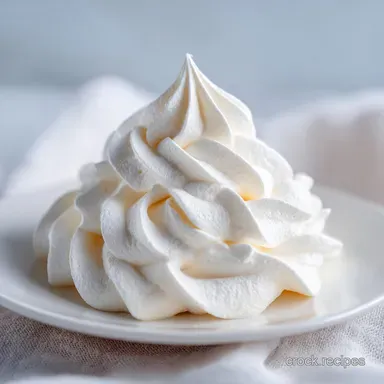
Foolproof Stabilized Whipped Cream: Silky and Sturdy
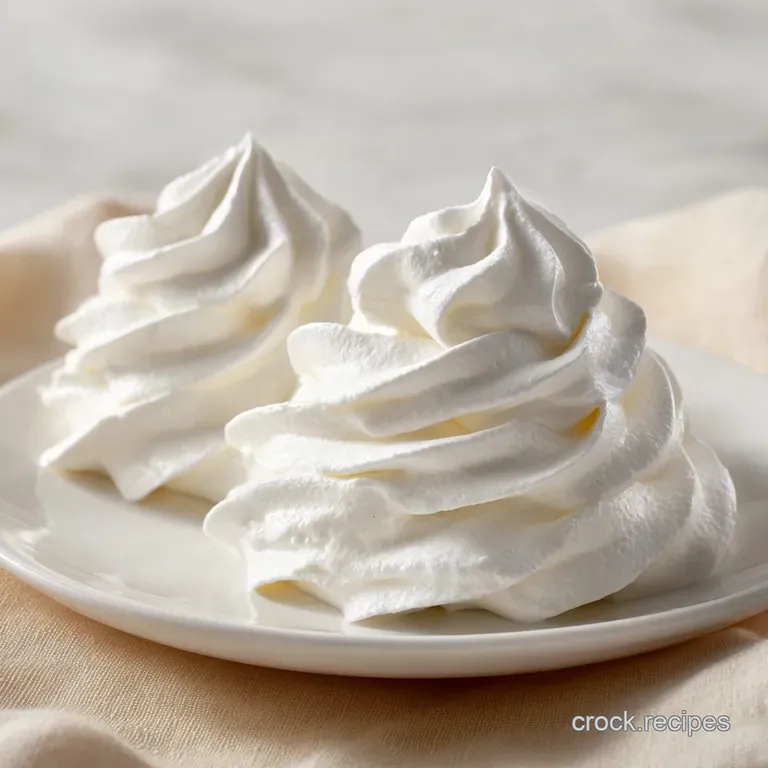
- Time:10 minutes active + 1 minute heat = Total 11 minutes
- Flavor/Texture Hook: Silky, sturdy, and cloud like
- Perfect for: Layer cakes, pies, and outdoor summer parties
- Stabilized Whipped Cream
- Why it Stays Firm
- Component Analysis
- The Ingredient List
- Tools You'll Need
- Simple Step-by-Step
- Fixing Common Mistakes
- Troubleshooting Common Issues
- Swaps and Flavor Ideas
- Adjusting Batch Sizes
- Common Misconceptions
- Storage and Waste Tips
- Best Dessert Pairings
- Recipe FAQs
- 📝 Recipe Card
Stabilized Whipped Cream
That sudden, wet plop of a whipped cream topping sliding right off a cake is a sound I'll never forget. I once spent three hours on a raspberry layer cake for my cousin's birthday, only to have the cream turn into a sugary puddle the moment it hit the humid July air.
It was a total disaster, and I spent the rest of the party trying to scoop the frosting back on with a spoon.
But then I found the fix. Instead of just hoping for the best, I started using a stabilizer. Now, the contrast between the tart berries and a rich, sturdy cream is exactly what I aim for. You get that lush, satisfying mouthfeel without the anxiety of your dessert collapsing.
This recipe is a quick win because it takes almost no extra time. You're basically making a standard topping but adding a tiny bit of structural insurance. It's the difference between a topping that lasts an hour and one that holds its shape for days.
Why it Stays Firm
- Protein Matrix: Gelatin creates a microscopic web that traps fat droplets and air bubbles in place.
- Water Binding: The stabilizer absorbs excess moisture, which prevents the cream from "weeping" or leaking liquid.
- Air Suspension: By strengthening the bubble walls, the cream doesn't collapse under its own weight.
- Fat Stabilization: It helps keep the butterfat from separating, even when the temperature rises slightly.
| Fresh Cream | Stabilized Version | Texture | Best For |
|---|---|---|---|
| Collapses quickly | Holds shape days | Soft/Airy | Short-term eating |
| Weeps liquid | Stays dry | Velvety/Firm | Layer cakes/Pipes |
| Melts in heat | Heat resistant | Dense/Smooth | Outdoor events |
Component Analysis
| Ingredient | Science Role | Pro Secret |
|---|---|---|
| Heavy Cream | Primary Fat Base | Must be ice cold for maximum volume |
| Powdered Sugar | Sweetener/Stabilizer | Cornstarch in the sugar adds extra grip |
| Gelatin | Structural Agent | Bloomed first to avoid grainy lumps |
| Vanilla Extract | Flavor Balance | Adds a floral note to cut the richness |
The Ingredient List
- 2 cups heavy whipping cream, cold Why this? High fat content is required for air bubbles (Substitute: heavy cream substitute)
- 1/4 cup powdered sugar Why this? Dissolves instantly and contains cornstarch (Substitute: superfine caster sugar)
- 1 tsp pure vanilla extract Why this? Natural aroma (Substitute: maple extract)
- 1 tsp unflavored powdered gelatin Why this? Provides the structural "skeleton" (Substitute: agar agar powder)
- 1 tbsp cold water Why this? Used to bloom the gelatin (Substitute: cold milk)
Tools You'll Need
I usually use a stand mixer such as KitchenAid for this, but a handheld mixer works just as well. The most important thing is a chilled bowl.
Chef's Note: Put your mixing bowl and whisk attachment in the freezer for 10 minutes before starting. Cold equipment keeps the fat crystals stable, giving you a more velvety finish.
Simple step-by-step
- Combine the cold water and powdered gelatin in a small bowl. Let it sit for 5 minutes until it looks like a thick sponge.
- Microwave the gelatin mixture for 5-10 seconds until completely liquid and clear; do not let it boil.
- Pour the cold heavy cream, powdered sugar, and vanilla into a chilled mixing bowl.
- Beat on medium high speed until the cream begins to thicken and forms soft peaks.
- With the mixer running on low, slowly drizzle in the liquid gelatin.
- Immediately increase the speed to medium high and whip until stiff peaks form.
- Stop immediately to avoid over whipping the mixture into butter.
Fixing Common Mistakes
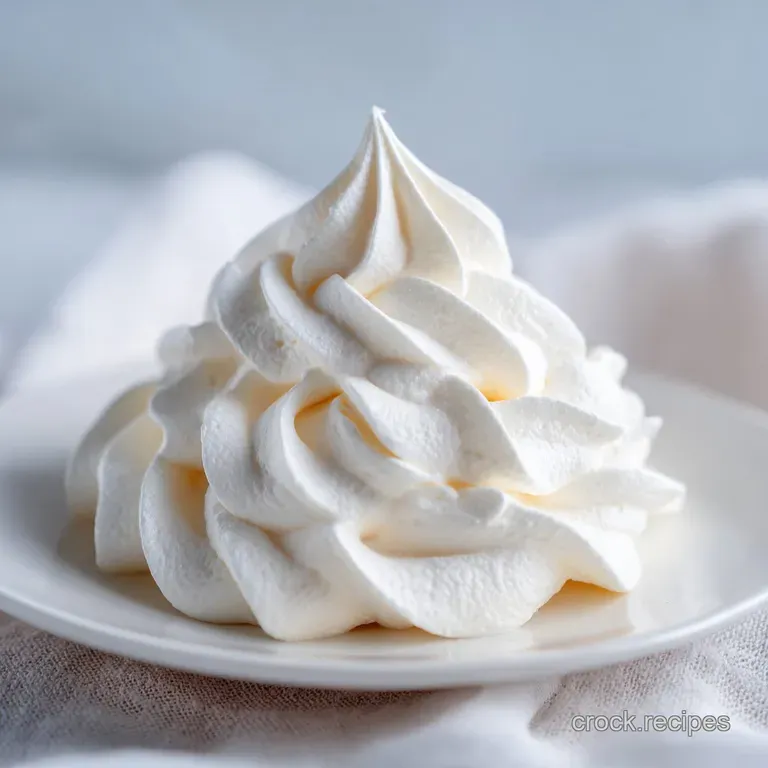
Troubleshooting Common Issues
| Issue | Solution | ||||||||||
|---|---|---|---|---|---|---|---|---|---|---|---|
| Why Your Cream Is Grainy | This usually happens if the gelatin wasn't fully melted or if you over whipped the cream. If the gelatin is lumpy, it creates little rubbery beads in your topping. | ||||||||||
| Why Your Cream Deflates | If the cream was too warm or the gelatin wasn't drizzled in slowly, the air bubbles won't lock. It'll look fine at first but will sag within an hour. | ||||||||||
| Why Your Cream Is Butter | Over whipping is a common trap. Once you see stiff peaks, stop. If it looks curdled, you've gone too far. | Problem | Root Cause | Solution | --------- | ------------ | ----------- | Lumpy texture | Gel |
Swaps and Flavor Ideas
If you want a different vibe, you can change the stabilizer. Using a stabilized whipped cream recipe with instant pudding is a classic shortcut, though it's sweeter. For those who want a stabilized whipped cream without gelatin, cream cheese is a great alternative for a thicker, tangier result.
| Original Ingredient | Substitute | Why It Works |
|---|---|---|
| Gelatin (1 tsp) | Instant Pudding Mix (1 tbsp) | Starch stabilizes. Note: Adds artificial flavor and more sugar |
| Gelatin (1 tsp) | Mascarpone (2 tbsp) | High fat content firms up. Note: Heavier, less airy texture |
| Heavy Cream (2 cups) | Coconut Cream (chilled, 2 cups) | Same fat content. Note: Adds coconut flavor |
If you're looking for something a bit more structured, these are great inside Cream Wafer Cookie Sandwiches.
Adjusting Batch Sizes
Scaling Down (Half Batch): Use 1 cup cream and 1/2 tsp gelatin. Be careful with the microwave time for the gelatin, as a smaller amount can boil in just 3 seconds.
Scaling Up (Double Batch): Double all ingredients, but work in batches if your bowl is small. If the bowl is too full, you won't incorporate enough air, and the result will be dense rather than cloud like.
Common Misconceptions
"Gelatin makes it taste like Jell O." Not at all. In this small amount, the gelatin is completely tasteless. It only provides structure, not flavor.
"Stabilized cream can't be piped." Actually, it's the only kind of cream you should pipe if you want those sharp, clean edges to last for more than ten minutes.
Storage and Waste Tips
Store this in an airtight container in the fridge for up to 5 days. It doesn't freeze well because the air bubbles collapse and the gelatin can change texture, so I'd avoid the freezer.
To avoid waste, use any leftover cream to top a bowl of fresh berries or fold it into a chocolate mousse. If you have a tiny bit of gelatin left in the bowl, just rinse it out with hot water to make cleanup a breeze.
Best Dessert Pairings
This sturdy cream is a dream for heavy desserts. I love pairing it with a rich chocolate torte or a zesty lemon tart. The richness of the cream cuts through the acidity of the fruit perfectly.
For a simple treat, try it on top of a warm apple crisp. Because it's stabilized, it won't melt instantly upon contact with the heat, giving you a velvety layer that lasts through the whole dessert.
Recipe FAQs
How to make stabilized whipped cream?
Bloom gelatin in cold water for 5 minutes, then microwave for 5–10 seconds until liquid. Whip cold heavy cream, powdered sugar, and vanilla to soft peaks, drizzle in the gelatin on low speed, and whip until stiff peaks form.
What whipped cream is good for diabetics?
This specific recipe is not suitable for diabetics due to the powdered sugar. Those managing blood sugar should look for versions using sugar-free substitutes.
What do professional bakers use to stabilize whipped cream?
Unflavored powdered gelatin is a professional standard. It creates a stable network that prevents the cream from weeping or collapsing under the weight of a cake.
Is whipping cream bad for cholesterol?
Yes, heavy cream is high in saturated fats. These fats can raise LDL cholesterol levels, so it is best enjoyed in moderation.
Why is my stabilized whipped cream grainy?
This occurs if the gelatin was not fully melted or the cream was over-whipped. Lumpy gelatin creates rubbery beads, while over-whipping begins to turn the cream into butter.
Can I freeze stabilized whipped cream?
No, do not freeze it. Freezing causes the air bubbles to collapse and alters the gelatin's texture, leaving the cream flat and grainy.
What can I use leftover stabilized whipped cream for?
Top fresh berries or fold it into a rich dessert. If you enjoyed the smooth texture here, see how a similar creamy consistency is achieved in our chocolate pudding.
Stabilized Whipped Cream in 11 Minutes