Easy Crock Pot Recipe with Beef Stew
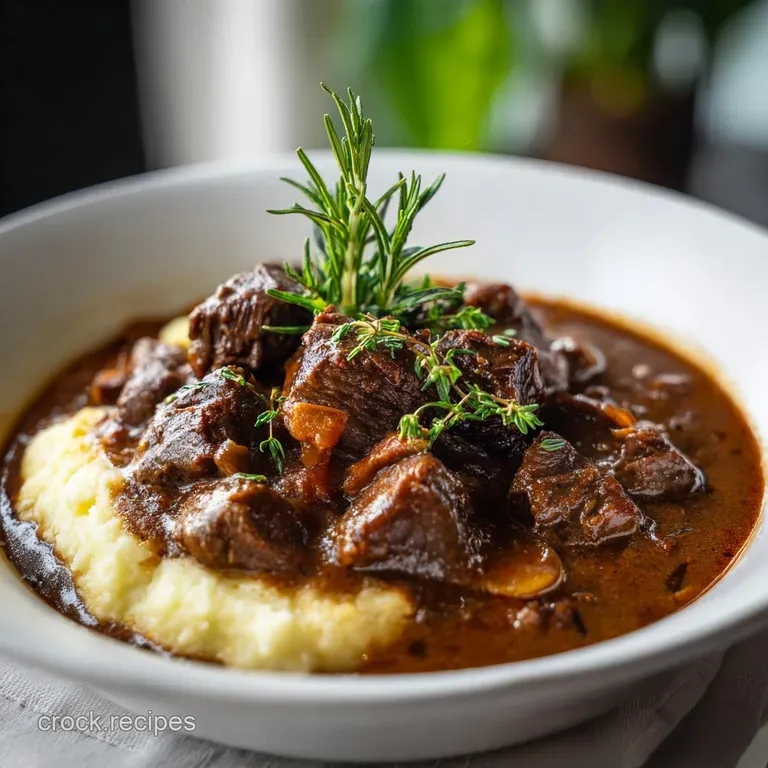
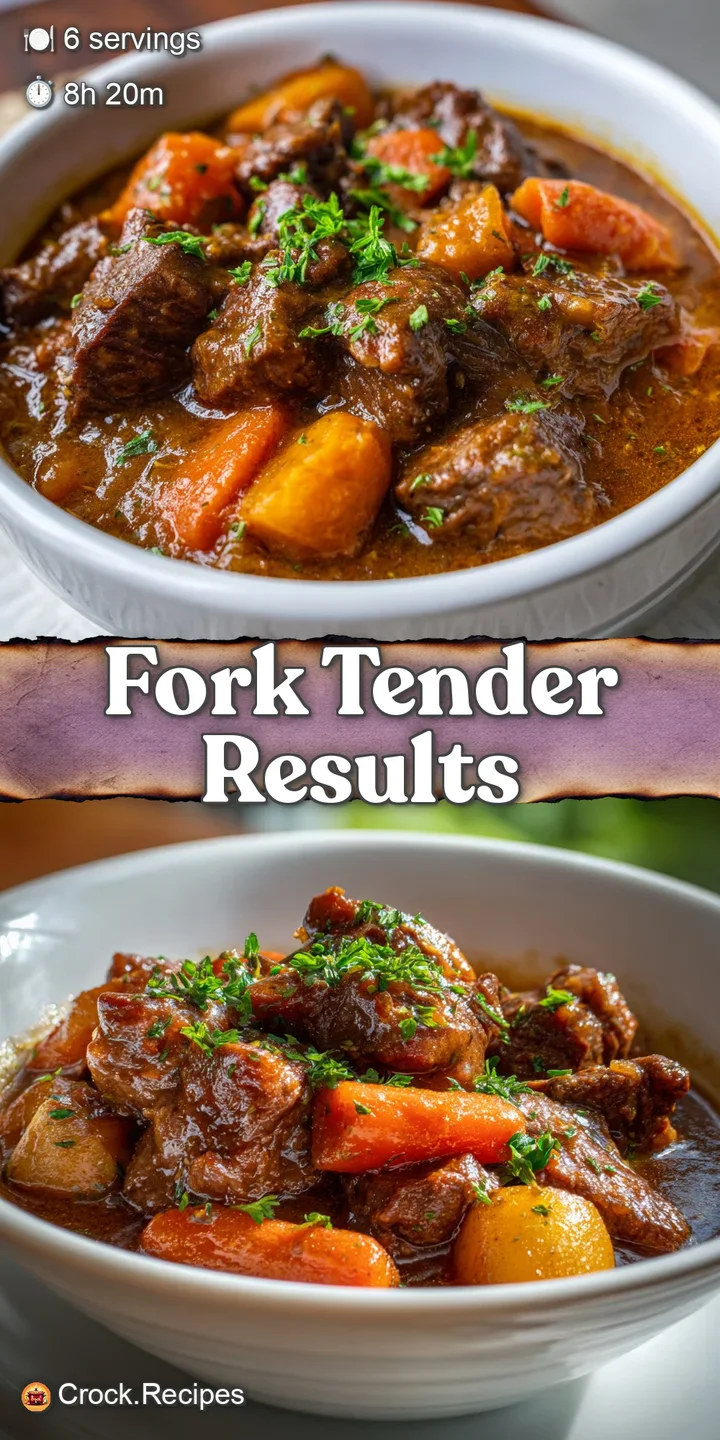
- Time: Active 20 minutes, Passive 8 hours, Total 8 hours 20 minutes
- Flavor/Texture Hook: Velvety gravy with fork tender beef
- Perfect for: Lazy Sundays or busy weeknight meal prep
- Why This Slow Cooking Works
- Recipe Specs and Critical Timing
- The Fresh Pantry Building Blocks
- Essential Tools for Beef Stew
- The Low and Slow Process
- Avoiding Common Crockpot Kitchen Disasters
- Smart Variations and Thrifty Substitutions
- Scaling for a Crowd
- Preservation and Zero Waste Secrets
- Perfect Complements for Your Stew
- Recipe FAQs
- 📝 Recipe Card
Why This Slow Cooking Works
- The Collagen Conversion Equation: When you cook beef chuck at low heat for 8 hours, the tough collagen melts into gelatin, creating a silky mouthfeel.
- Hydrolytic Breakdown: The acidity from the balsamic vinegar and Worcestershire sauce helps weaken the protein fibers, ensuring the meat doesn't just get cooked, but becomes tender.
- Starch Gelatinization: The Yukon Gold potatoes release just enough starch during the long simmer to naturally thicken the broth before you even add the slurry.
| Cooking Method | Active Time | Resulting Texture | Best For |
|---|---|---|---|
| Crockpot (Classic) | 20 mins | Fork tender, deep flavor | Set and forget convenience |
| Instant Pot (Fast) | 15 mins | Soft meat, lighter broth | Last minute dinner needs |
| Stovetop (Dutch Oven) | 40 mins | Richest browning, thick sauce | Weekend entertaining |
This comparison shows that while the Instant Pot is faster, the Crockpot allows flavors to marry in a way that high pressure simply can't replicate. The slow evaporation concentrates the beef bone broth, making every bite of this Hearty Crock Pot recipe feel more substantial.
Recipe Specs and Critical Timing
To get this right every single time, you need to watch three specific checkpoints. First, the beef must be 1.1 kg (2.5 lbs) and cut into 3.8 cm (1.5 inch) cubes; any smaller and they’ll vanish into the sauce.
Second, the temperature if your Crockpot has a "Warm" setting, don't use it for the actual cooking, as it won't hit the 190°F (88°C) needed to melt those fats. Third, the timing: 8 hours on low is the sweet spot.
The Collagen Conversion Science
Chuck roast is full of connective tissue that acts like a rubber band when heated quickly. By keeping the temperature low, we allow those "rubber bands" to relax and turn into a liquid richness.
This is why we avoid the "High" setting if we have the time; fast heat can actually make the muscle fibers seize up and become dry, even while sitting in liquid.
Maximizing the Umami Profile
We use tomato paste and Worcestershire sauce not just for flavor, but for their glutamates. These are the natural compounds that signal "savory" to your brain. When they simmer for hours with the beef bone broth, they create a depth that makes the stew taste like it’s been aging in a cellar.
Progressive Vegetable Layering
Notice how we quarter the potatoes and cut the carrots into thick 1 inch rounds? This isn't just for looks. Smaller pieces would disintegrate over 8 hours. By using larger chunks of Yukon Golds which are naturally waxy they hold their structure while the centers become creamy and "velvety."
The Fresh Pantry Building Blocks
| Ingredient | Science Role | Pro Secret |
|---|---|---|
| Beef Chuck Roast | Protein & Fat | Sear until a dark crust forms for Maillard reaction flavor. |
| Yukon Gold Potatoes | Structure | Leave the skins on for extra fiber and to prevent mushiness. |
| Tomato Paste | Acid & Umami | Sauté it with the garlic for a minute to remove the "raw" tinny taste. |
| Beef Bone Broth | Liquid Base | Use bone broth over standard stock for higher gelatin content. |
- 1.1 kg (2.5 lbs) Beef chuck roast: Cut into 3.8 cm (1.5 inch) cubes. Why this? It has the perfect fat to meat ratio for long braising.
- Substitute: Beef round or brisket (though round is leaner and slightly drier).
- 30 ml (2 tbsp) Avocado oil: For over high heat searing.
- Substitute: Any neutral oil like vegetable or canola oil.
- 680 g (1.5 lbs) Yukon Gold potatoes: Quartered. Why this? They stay firm while absorbing the beefy juices.
- Substitute: Red potatoes (Avoid Russets, they fall apart).
- 4 Large carrots: Cut into 2.5 cm (1 inch) rounds.
- Substitute: Parsnips for an earthy, sweet twist.
- 2 Stalks celery: Sliced thick.
- 1 Large yellow onion: Diced.
- 3 Cloves garlic: Smashed and minced.
- 710 ml (3 cups) Low sodium beef bone broth: Why this? Provides the "body" of the gravy.
- Substitute: Beef stock + 1 tsp of unflavored gelatin.
- 30 ml (2 tbsp) Tomato paste.
- 15 ml (1 tbsp) Balsamic vinegar: Why this? Brightens the heavy flavors.
- Substitute: Red wine vinegar or a splash of dry red wine.
- 15 ml (1 tbsp) Worcestershire sauce.
- Seasonings: 0.5 tsp sea salt, 0.5 tsp black pepper, 2 bay leaves, 1 tsp dried thyme.
- Thickener: 2 tbsp cornstarch mixed with 2 tbsp cold water.
Essential Tools for Beef Stew
You don’t need a kitchen full of gadgets, but a 6 quart Crockpot (like a Hamilton Beach or Crock Pot brand) is the standard for this volume. A heavy cast iron skillet is my preferred tool for browning the meat because it holds heat better than stainless steel, ensuring you get a "sizzle" rather than a steam.
- Cast Iron Skillet: For the initial sear.
- 6 Quart Slow Cooker: The main vessel.
- Sharp Chef’s Knife: For those 1 inch carrot rounds.
- Wooden Spoon: To scrape the brown bits (fond) from the skillet.
The Low and Slow Process
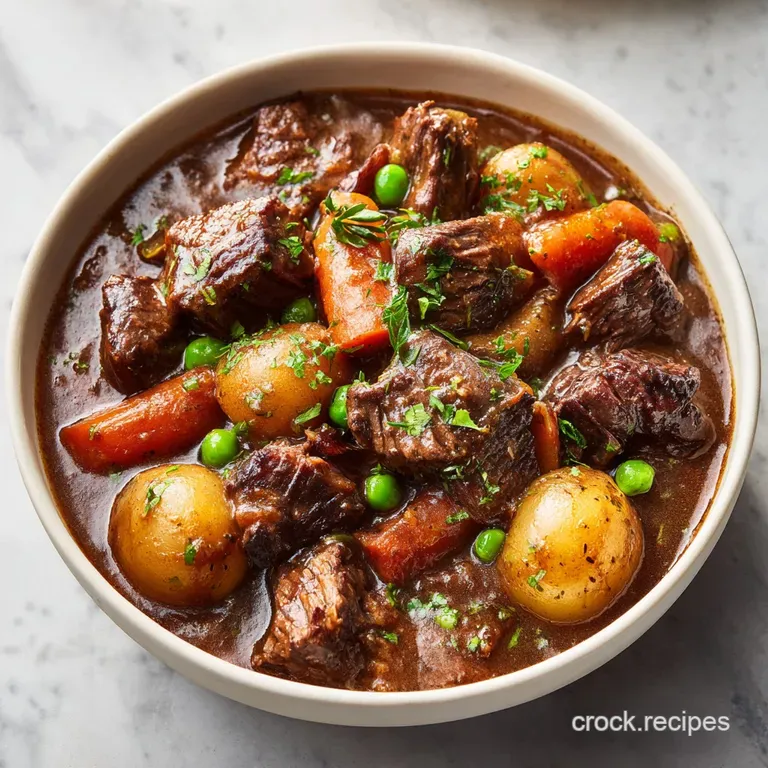
- Dry the beef. Pat the 2.5 lbs of cubed chuck roast with paper towels. Note: Moisture is the enemy of a good sear; wet meat steams instead of browning.
- Sear the meat. Heat avocado oil in a skillet until shimmering. Brown the beef in batches until a dark, crusty "shatter" forms on the edges.
- Prep the base. Place the quartered Yukon Golds, carrots, celery, onion, and garlic into the Crockpot.
- Deglaze the pan. Pour a splash of the broth into your hot skillet, scraping up the brown bits with a wooden spoon.
- Build the braise. Add the seared beef, skillet juices, remaining broth, tomato paste, vinegar, Worcestershire, and herbs to the pot.
- Set and forget. Cover and cook on LOW for 8 hours. Note: Resist the urge to peek! Opening the lid lets out critical heat.
- Create the slurry. About 30 minutes before serving, whisk the cornstarch and cold water in a small bowl.
- Thicken the sauce. Stir the slurry into the bubbling liquid. Cook for 20-30 minutes until the gravy is glossy and velvety.
- Seasoning check. Taste the broth. If it feels flat, add a tiny pinch more salt or a drop of vinegar.
- Rest and serve. Let it sit for 5 minutes before ladling into bowls to let the sauce tighten up.
Avoiding Common Crockpot Kitchen Disasters
The "Gray Meat" Syndrome
If you skip the searing step, your beef will look gray and unappealing. More importantly, you lose the Maillard reaction that complex chemical change that creates "meatiness." If you're in a rush, even searing half the meat is better than none.
The Excess Grease Issue
Sometimes a chuck roast is extra fatty, leaving a pool of oil on top. Don't panic. You can lay a clean paper towel lightly over the surface for two seconds to soak it up, or use a spoon to skim the "slick" off the top before adding your slurry.
The "Flour Paste" Mistake
Adding dry flour directly to hot liquid creates "clumps of doom." Always mix your cornstarch with cold water first. This creates a suspension that integrates smoothly without turning your Hearty Vegetable Beef recipe into a lumpy mess.
| Problem | Root Cause | Solution |
|---|---|---|
| Thin/Watery Broth | Too much liquid or no slurry | Simmer with lid off for 30 mins + add more cornstarch |
| Tough Meat | Cooked too fast or too short | Add 1 hour to cook time; always use LOW setting |
| Mushy Vegetables | Cut too small | Keep carrots/potatoes in 1 inch (2.5cm) chunks |
- ✓ Always pat the beef dry before searing to ensure a proper crust.
- ✓ Don't overcrowd the skillet; brown the beef in 2-3 batches.
- ✓ Keep the lid closed for the full 8 hours to maintain a steady temperature.
- ✓ Use a waxy potato like Yukon Gold to prevent a "grainy" texture.
- ✓ Add the thickening slurry only at the very end.
Smart Variations and Thrifty Substitutions
If you're looking to save a few dollars, look for "stew meat" packs, but be careful these are often a mix of different cuts that cook at different rates. I usually buy a whole chuck roast on sale and cube it myself. It's cheaper and higher quality.
| Original Ingredient | Substitute | Why It Works |
|---|---|---|
| Beef Bone Broth | Water + Beef Bouillon | Much cheaper. Note: Slightly higher sodium, so reduce salt. |
| Balsamic Vinegar | Red Wine Vinegar | Similar acidity but less sweet; adds a sharper tang. |
| Avocado Oil | Lard or Beef Tallow | High smoke point and adds "traditional" beefy richness. |
If you find yourself wanting something a bit different, you can always pivot this into a Crock Pot Dinners recipe style dish by adding mushrooms and a dollop of sour cream at the very end.
Scaling for a Crowd
Scaling Down (½ Recipe) If you are cooking for two, use a smaller 3 quart Crockpot. If you use a large 6 quart pot for a half recipe, the liquid will evaporate too quickly, and the meat might dry out. Reduce the cook time by about 20% and check for doneness at 6.5 hours.
Scaling Up (2x Recipe) For a big party, you’ll need a massive 8 quart pot or two separate 6 quart units. When doubling, do not double the salt or spices immediately use 1.5x and adjust at the end.
Liquids should be reduced by 10% because the large volume of meat will release a significant amount of its own moisture.
If you want a deeper flavor, do this: Add 120 ml of dry red wine to deglaze the skillet. Toss in a rind of Parmesan cheese during the slow cook. Grate a tablespoon of frozen butter into the bowl just before serving.
Preservation and Zero Waste Secrets
Storage: This stew actually tastes better on day two! Keep it in an airtight container in the fridge for up to 4 days. The flavors continue to meld, and the starches thicken the sauce even further.
Freezing: This recipe freezes beautifully. Store in freezer safe bags or containers for up to 3 months. To reheat, thaw in the fridge overnight and warm it on the stovetop.
Note: Potatoes can sometimes get a slightly "mealy" texture after freezing, but in a thick stew, it's hardly noticeable.
Zero Waste: Don't throw away those onion skins or celery ends! Throw them in a freezer bag and use them next time you want to make your own beef bone broth. If you have leftover gravy but no meat, use it as a base for a Crock Pot Meatloaf recipe to keep the loaf moist.
Perfect Complements for Your Stew
While this is a meal in-a pot, I usually serve it with a thick slice of crusty sourdough bread to "mop" up the velvety gravy. A simple side of steamed green beans or a crisp garden salad provides a nice crunch to contrast the soft, slow cooked textures of the beef and potatoes.
If you’re feeling extra, a glass of Malbec or Cabernet Sauvignon pairs perfectly with the rich fats of the chuck roast. The tannins in the wine cut right through the "heavy" mouthfeel of the stew, making every bite feel fresh.
Honestly, though, a cold glass of water and a warm bowl of this is all you really need for a perfect night in.
Recipe FAQs
Can I use frozen beef chunks instead of fresh, thawed beef?
No, you should always thaw the beef first. Adding frozen meat significantly lowers the temperature of the liquids, preventing the collagen from breaking down properly and resulting in tough, gray meat.
Why does the beef need to be seared if it cooks for 8 hours?
Searing develops deep flavor through the Maillard reaction. Even though the beef cooks low and slow, the initial high heat creates the crust and savory compounds that define the final dish.
How do I ensure the vegetables don't turn into mush after 8 hours of cooking?
Cut the carrots and potatoes into large, uniform 1 inch chunks. Waxy potatoes, like Yukon Golds used here, hold their shape much better than starchy varieties like Russets over extended cooking times.
Is it true that the "High" setting on the slow cooker works just as well for this recipe?
False. The "Low" setting is critical for tenderness. Cooking on High often causes muscle fibers to seize up before the connective tissue fully converts to gelatin, leading to dry meat even when submerged in liquid.
What is the best way to thicken the sauce at the end without lumps?
Mix the cornstarch with an equal amount of COLD water first to create a slurry. Whisk this mixture into the hot liquid during the final 30 minutes of cooking until the sauce becomes glossy.
Can I substitute vegetable broth for the beef bone broth to lighten the flavor?
Yes, but the texture will suffer slightly. If you use vegetable broth, consider adding one teaspoon of unflavored gelatin with the slurry at the end to compensate for the lost collagen structure.
I want a richer sauce; should I add the balsamic vinegar early or late?
Add the balsamic vinegar with the other liquids at the beginning. The low, slow heat mellows the sharp acidity while allowing the vinegars' complex notes to integrate fully into the beef proteins, similar to the flavor balancing used in our Easy & Creamy Crock recipe.
Easy Crock Pot Beef Stew
Ingredients:
Instructions:
Nutrition Facts:
| Calories | 538 kcal |
|---|---|
| Protein | 37 g |
| Fat | 30 g |
| Carbs | 30 g |
| Fiber | 4.5 g |
| Sugar | 5.5 g |
| Sodium | 585 mg |
