Strip Loin Roast: the Perfect Herb-Crusted Sunday Roast
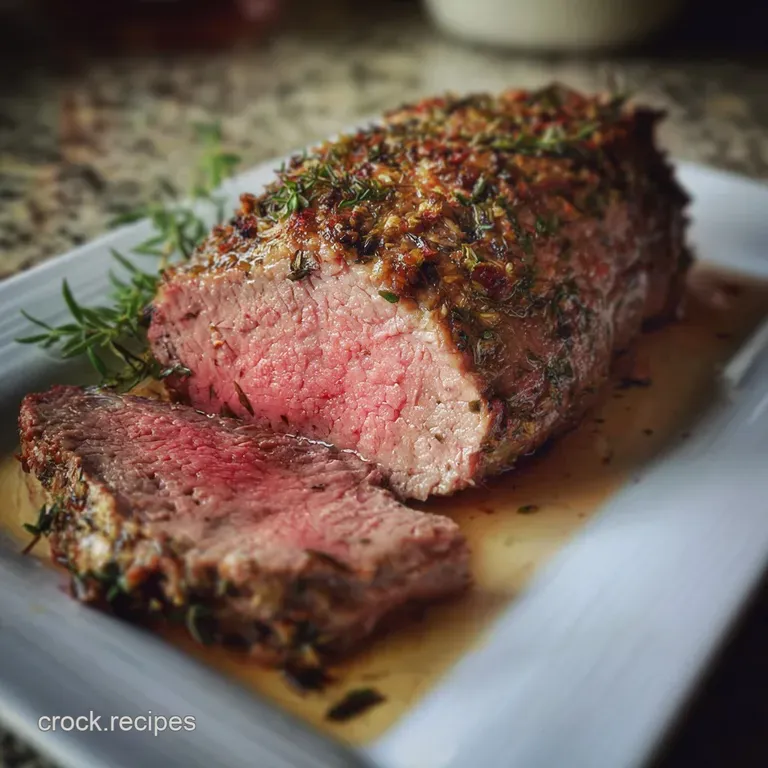
- The Perfect Sunday Roast: Mastering the Strip Loin Centerpiece
- The Science of Succulence: Why Reverse Sear is Best for Large Cuts
- Essential Components for the Herb Crust and Roast
- From Prep to Platter: Step-by-Step Strip Loin Roast Directions
- Troubleshooting and Expert Tips for Your Strip Loin Roast
- Maximizing Flavor: Storing and Reheating Leftover Roast
- Elevated Pairings: What to Serve Alongside the Herb-Crusted Strip Loin
- Recipe FAQs
- 📝 Recipe Card
The Perfect Sunday Roast: Mastering the Strip Loin Centerpiece
That deep, savory aroma of garlic and herbs is everything, isn't it? When a beautiful, crisp crusted Strip Loin Roast comes out of the oven, the whole house smells like a special occasion. Honestly, the sound of that crackling crust as you slice into it is pure culinary music.
Look, I know large roasts feel intimidating, especially if you’ve had a dry, grey experience in the past. But this is the genius of the reverse sear method applied to the Strip Loin Roast Recipe .
It delivers serious flavour and guaranteed wall-to-wall medium rare perfection without the stress associated with tricky cuts. This process is truly a lifesaver for Sunday dinners or casual celebrations.
We are skipping the dry, overcooked mistakes of conventional roasting. We are leveraging simple kitchen science to achieve a tender centre and the most flavourful crust imaginable.
If you want a perfect, celebratory meal without the fuss, let’s crack on with this incredible Garlic Herb Strip Loin Roast .
The Science of Succulence: Why Reverse Sear is Best for Large Cuts
This specific technique is the only way I cook large roasts now, and you absolutely must try it. Why? Because the enemy of a tender roast is temperature inconsistency. You often end up with overcooked edges just to get the centre done.
Defining the Cut: Why Strip Loin Excels as a Roast
The strip loin is the muscle responsible for New York strip steaks, making it inherently tender and beautifully marbled. This cut, sometimes known as the top loin roast, has a lovely layer of fat on one side that renders down during cooking, bathing the meat in flavour.
The Strip Loin Roast vs Prime Rib debate often comes down to personal preference and budget; the loin roast is leaner than a prime rib but offers a rich, satisfying taste that is far easier to manage in a standard home oven.
Overview of the Reverse Sear Method
The reverse sear flips the traditional technique on its head. We start low and slow, typically at 250°F (120°C). This gentle heat slowly raises the internal temperature, cooking the Loin Roast uniformly from edge to centre. This is the secret to avoiding that dreaded grey band.
We then finish it with a blast of 500°F heat to create that signature, deeply caramelised crust.
Preparing the Roast for the Ultimate Herb Crust
The single most important prep step here is the dry brine. Salting the Strip Loin Roast and letting it sit uncovered in the fridge for 12 to 24 hours draws moisture out of the surface. A dry surface is the foundation of a fantastic crust.
If the surface is damp, the oven spends all its energy evaporating water instead of browning the herbs and fat.
Achieving Wall-to-Wall Medium Rare Consistency
This is where your instant read thermometer earns its keep. Since we are cooking slowly, we can watch the temperature creep up gently. We pull the roast out at a temperature lower than our final target, knowing that the residual heat (carry over cooking) and the final over high heat sear will bring it up to perfect medium rare (130°F / 54°C).
The Role of Rest Time in Moisture Retention
Listen to me: If you skip the rest, you are wasting perfectly good ingredients. As the Strip Loin Roast heats, the muscle fibers contract and push the internal juices to the center. Resting allows those fibers to relax and redistribute the juices evenly throughout the cut.
If you carve too early, those delicious juices spill out onto the board, leaving your meat dry. Trust me on this; rest for 20 minutes.
Maximizing Crust Development with High Heat Finishing
Once the meat has been cooked perfectly internally and rested briefly, we unleash the heat. By cranking the oven up to 500°F (260°C), we create the Maillard reaction in seconds, achieving a dark, crackling finish that contrasts beautifully with the tender, pink interior.
This is what truly turns this into a showstopper Strip Loin Roast Oven recipe.
Essential Components for the Herb Crust and Roast
Selecting the Ideal Strip Loin: Bone-In vs. Boneless
You can use either, but I usually recommend a boneless, trimmed cut for this Easy Strip Loin Roast Recipe . It’s much easier to tie into a uniform shape, which is crucial for even cooking, and carving is a breeze.
If you opt for bone-in, remember to account for slightly longer cooking times and ensure your probe thermometer doesn't hit the bone that will give you a false reading.
Building the Aromatic Herb Paste
For our beautiful crust, we want aromatics that can withstand high heat without burning immediately. Rosemary and thyme are brilliant for this. We mix them with garlic and a touch of fat (olive oil or rendered dripping) to create a paste that sticks perfectly to the dry-brined surface.
This simple Strip Loin Roast Marinade is where 80% of the crust flavour comes from.
Chef’s Note: Use fresh herbs! Dried herbs can turn gritty and bitter during the over high heat sear. The fresh stuff releases a much better aroma when roasted.
Temperature Guide and Necessary Kitchen Tools
I cannot stress this enough: you need a reliable, leave-in probe thermometer for this whole process. Forget the dial thermometer stuck in the side; get a digital one with a cable that connects to an external display.
Knowing the exact temperature is the difference between perfection and disaster when cooking a large Strip Loin Roast .
Ingredient Alternatives for Dietary Needs
Need to swap something out? No problem. The core flavor of the beef is key, but these substitutions work great for the crust and sauce:
| Ingredient | Use this instead... |
|---|---|
| Kosher Salt | Coarse sea salt (use 1/4 less volume) |
| Fresh Rosemary/Thyme | Dried herbs (use 1/3 the amount) |
| Olive Oil | Rendered duck fat or clarified butter |
| Crème Fraîche | Full fat Greek yogurt or sour cream (for sauce) |
From Prep to Platter: step-by-step Strip Loin Roast Directions
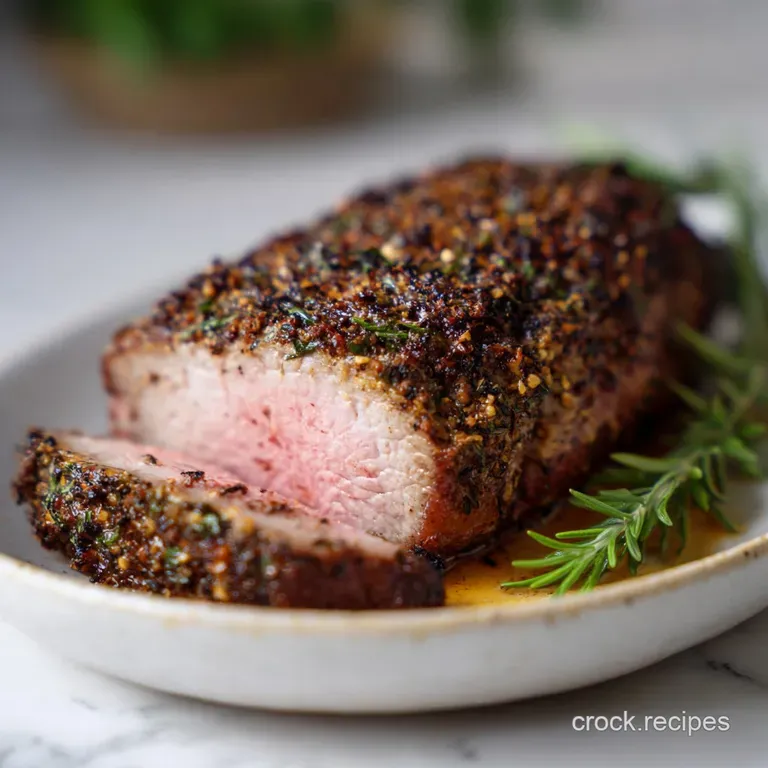
Prepping and Tempering the Roast
Start by tying your roast firmly every 1.5 inches; this keeps the shape uniform. Then, pat it bone dry and rub generously with salt for the dry brine. Chill it overnight seriously, don't skip this chilling stage.
Before you start cooking, pull the roast out and let it sit at room temperature for about 30 minutes. This allows the chill to come off the surface, promoting more even heating.
Slow Roasting for Internal Temperature Targets
Preheat your oven to a gentle 250°F (120°C). Apply that pungent garlic herb rub all over the surface. Insert your probe into the center and place the roast on a rack (air circulation underneath is important!).
Slow cook until the internal temperature hits 120°F (49° C) for medium rare. That's usually about 60– 90 minutes, which makes this a very manageable Strip Loin Roast Cooking Time .
The Critical Rest Period (Do Not Skip!)
As soon as the probe hits the target low temperature, remove the roast and place it on a clean board. Tent it lightly with foil don’t wrap it tightly yet, we need the residual heat to carry over cook, but we don't want the crust steaming. Turn your oven way up to 500°F (260°C) now.
This rest only needs to be 10– 15 minutes while the oven preheats.
The over High heat Final Sear
Once the oven is screaming hot, slide the roast back in, unwrapped. Listen for the sizzle! Sear for 5 to 10 minutes. Watch closely you want deep browning and a cracking crust, not burnt herbs.
This final blast perfects the appearance of your amazing Strip Loin Roast . When it looks deeply caramelised and the probe temperature has ticked up to your final target (130°F/54°C), take it out.
Troubleshooting and Expert Tips for Your Strip Loin Roast
Fixing an Uneven Sear or Pale Crust
Did your crust come out looking pale despite the high heat? This usually happens if the surface of the roast wasn't dry enough before the rub was applied. Next time, give it the full overnight dry brine.
If you're short on time, you can quickly move the roast to a very hot skillet with a little fat for 60 seconds per side after the oven rest, focusing only on the pale spots.
Dealing with Temperature Spikes (Overcooking Prevention)
If you see the internal temperature rising too fast during the slow roast, your oven might be running hotter than it says. Always use an external oven thermometer to check your calibration.
If the temp spikes, open the oven door for a minute to release heat, or simply remove the Loin Roast five minutes earlier than planned. Better underdone than overdone!
Tips for Perfect Carving and Presentation
Make sure your knife is wicked sharp! Slice the meat against the grain . The grain refers to the direction the muscle fibers run. Cutting perpendicular to these fibers shortens them, ensuring every bite of your Strip Loin Roast is incredibly tender.
I like slices about a half inch thick.
Maximizing Flavor: Storing and Reheating Leftover Roast
Best Practices for Cooling and Refrigeration
Once you have carved what you need, let the remaining roast cool quickly before refrigerating. Store slices or the remaining large chunk in an airtight container. It keeps beautifully for 3 to 4 days. If I have substantial leftovers, I often plan on turning them into something delicious like Creamy Roast Beef Enchiladas: Make Leftover Roast Beef Amazing , which is a massive crowd pleaser!
Safely Freezing Cooked Strip Loin
Yes, you can freeze it! Slice the cooked Strip Loin Roast before freezing. Place slices tightly in freezer bags, removing as much air as possible, or vacuum seal them. Label with the date. Frozen slices are best consumed within 3 months and are perfect for quick sandwiches or warm salads.
Gentle Reheating Methods to Preserve Tenderness
Never, ever use the microwave unless you enjoy chewy boot leather. To reheat slices, the best method is low and slow. Place slices in a roasting pan, add a splash of broth or water to keep them moist, cover tightly with foil, and warm in a 300°F (150°C) oven for about 10– 15 minutes.
This gentle steam bath preserves the texture of your beautifully cooked meat.
Elevated Pairings: What to Serve Alongside the Herb Crusted Strip Loin
This majestic centerpiece deserves sides that can hold their own. Think about balancing the richness of the Strip Loin Roast with something bright and acidic, or rich and earthy.
My favourite classic sides include a proper purée of parsnip and celeriac, or some creamy potatoes au gratin. For a fantastic vegetable side that offers great textural contrast, you could try my recipe for Roasted Green Beans with Mushrooms Balsamic and Pa - Charred Perfection . The balsamic tang cuts through the richness beautifully. Alternatively, if you want something vibrant and spicy, serve it up with my Broccoli and Cauliflower Recipes: Smoky Harissa Roast w Whipped Feta ! That salty feta and spicy harissa are a killer combo with the savoury garlic herb crust.
Seriously, making a perfect Strip Loin Roast is totally achievable at home. Stick to the temperatures, be patient during the rest, and you will be utterly delighted with the results. Now go make some magic!

Recipe FAQs
Why did my roast end up dry, even though the internal temperature reading was perfect?
The most common cause of a dry roast, despite reaching the correct temperature, is insufficient resting time. After the low-temperature cook and the final sear, the juices must redistribute throughout the muscle fibers, which takes at least 15-20 minutes under a loose foil tent.
If you slice it too early, those delicious juices will leak out onto the cutting board instead of remaining in the meat.
How crucial is the reverse sear method compared to a traditional high heat roast?
The reverse sear method is highly recommended, especially for large cuts like the Strip Loin, as it offers unparalleled temperature control. Cooking slowly first ensures the roast achieves wall-to-wall doneness preventing the dreaded grey band associated with traditional high heat searing.
This technique guarantees a much more consistently tender and juicy result across the entire joint.
I don't have fresh rosemary and thyme. Can I substitute dried herbs in the crust?
Yes, you can substitute dried herbs, but you must significantly reduce the quantity as their flavour is far more concentrated than fresh herbs. A good rule of thumb is to use one-third the amount of dried herbs compared to what the recipe calls for in fresh herbs.
For the best aromatic results, try to use high-quality dried herbs and allow them to rehydrate slightly in the oil paste before application.
What is the best way to store and reheat leftover strip loin roast without drying it out?
Store leftover roast wrapped tightly in plastic or in an airtight container for up to four days. To reheat, slice the roast thinly against the grain, place the slices in a baking dish with a small amount of beef broth or water, and cover tightly with foil.
Reheat gently in an oven set to 250°F (120°C) until just warmed through, avoiding high heat which will instantly seize and dry the meat.
My final sear created a lot of smoke, but the crust wasn't as brown and crispy as I expected. What went wrong?
Excessive smoke usually indicates the oil is past its smoke point, but if the crust is pale, the pan temperature might have dropped too quickly once the roast was added. Ensure your heavy skillet is smoking hot before adding the beef, and only sear for 60 to 90 seconds per side.
Alternatively, you may have used too much fat, which coats the surface and inhibits a proper crust formation.
Can I prepare the herb crust the day before the roast?
Absolutely, preparing the herb crust the day before is an excellent time saver. Mix all the components together, cover the mixture tightly, and store it in the refrigerator. Remember to take the herb paste out about an hour before applying it to the roast so that the butter or oil softens and it is easier to spread evenly.
What internal temperature should I aim for if I prefer my roast medium instead of medium rare?
For a perfect medium doneness, remove the roast from the low-heat oven when the internal temperature hits 125°F (52°C) instead of the standard 120°F (49°C) for medium rare.
After the high heat sear and resting period, the final carry over cooking should bring the roast up to the ideal 135°F to 140°F (57°C to 60°C) medium range. Always use a reliable meat thermometer inserted into the thickest part of the roast.
Herb Crusted Strip Loin Roast
Ingredients:
Instructions:
Nutrition Facts:
| Calories | 120 kcal |
|---|---|
| Protein | 6.3 g |
| Fat | 2.3 g |
| Carbs | 22.2 g |
