Herb-Roasted Chicken with Seasonal Vegetables

- Prep15 Mins
- Cook1 Hrs 30 Mins
- Servings6
- Time: 15 min active + 90 min roasting + 15 min resting
- Flavor & Texture: Hearty, aromatic, and golden brown
- Perfect for: Sunday family dinner or meal prep
Have you noticed how some roast dinners result in limp, colorless vegetables while others are deeply browned and flavorful? It usually comes down to how you organize the roasting pan.
Placing the chicken directly atop the vegetables creates a concentrated flavor zone. As the chicken fat renders, it effectively confits the carrots and potatoes in a fragrant, herb-infused oil.
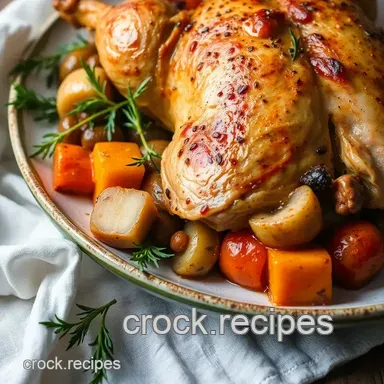
This Herb-Roasted Chicken with Seasonal Vegetables provides a complete, effortless meal. Expect a rich, mahogany-hued skin and succulent meat, with the aroma of rosemary and garlic filling your home.
Herb-Roasted Chicken with Seasonal Vegetables
The Vegetable Nest: Placing the chicken on the produce prevents the breast from drying out. The vegetables confit in the chicken fats, making them rich and tender.
Under-Skin Butter: Putting seasoned butter directly on the breast meat creates a moisture barrier. This keeps the meat juicy while the skin gets a deep gold color.
High Heat Start: Starting at 425°F (220°C) kicks off the browning process quickly. This ensures the skin is crisp before the meat overcooks.
| Bird Choice | Roast Time | Texture Result | Best For |
|---|---|---|---|
| Whole Chicken | 75-90 mins | Juicy breast, tender dark meat | Family feast |
| Chicken Pieces | 35-45 mins | More crispy skin per bite | Weeknight dinner |
| Breast Only | 20-30 mins | Lean and tender | Quick meal prep |
Quick Recipe Specs
This recipe focuses on traditional roasting techniques to get a reliable result. It is designed for a standard roasting pan or a large rimmed sheet pan.
Estimates draw on typical ingredient data from public nutrition databases such as the USDA FoodData Central. They are general guidelines for a standard 4 lb bird.
The Ingredient Breakdown
The balance of acidity and fat is what makes this recipe successful. I prefer Yukon Gold potatoes for their ability to stay intact while developing a creamy center.
While the butter carries the primary flavors, the lemon juice provides a necessary brightness to offset the heavy chicken fat. Fresh herbs add a vibrant, earthy touch to the savory roasted profiles.
For the Chicken and Rub
- 4 lb whole chicken (1.8 kg)
- 113 g unsalted butter, softened (½ cup) Why this? Ensures golden browning and a rich taste
- 1 tbsp fresh rosemary, finely chopped (3 g)
- 1 tbsp fresh thyme, finely chopped (3 g)
- 4 garlic cloves, minced (12 g)
- 2 tsp kosher salt (12 g)
- 1 tsp black pepper (2 g)
- 1 lemon, halved Why this? Provides acidity to counter the fat
For the Seasonal Vegetables
- 1 lb Yukon Gold potatoes, cubed (450 g) Why this? For its naturally buttery texture and flavor
- 1 lb carrots, sliced into rounds (450 g)
- 1 large yellow onion, cut into wedges (200 g)
- 3 tbsp extra virgin olive oil (45 ml)
- 1 tsp kosher salt (6 g)
- ½ tsp black pepper (1 g)
Necessary Kitchen Gear
You don't need fancy tools here. A 12x17 inch rimmed sheet pan or a standard roasting pan is the main requirement.
The most important tool is a digital meat thermometer. It is the only way to know for sure when the chicken is safe to eat without overcooking the breast.
The Cooking Process

Phase 1: Preparing the Aromatic Base
Set your oven to 425°F (220°C). In the roasting pan, combine the cubed potatoes, carrot rounds, and onion wedges with 3 tbsp olive oil, 1 tsp kosher salt, and ½ tsp black pepper. Arrange them in an even layer to create a vegetable bed.
Phase 2: Seasoning the Chicken
Use paper towels to pat the chicken completely dry, as damp skin will steam rather than brown. In a small bowl, blend the softened butter, minced garlic, rosemary, thyme, 2 tsp kosher salt, and 1 tsp black pepper into a paste.
Carefully separate the skin from the breast meat using your fingers. Apply half of the herb butter directly to the breast underneath the skin. Rub the remaining butter over the exterior skin and inside the cavity.
Drizzle the juice of half a lemon over the bird, then fill the cavity with the other lemon half (cut into wedges) and several whole sprigs of rosemary and thyme.
Phase 3: The Roasting Process
Set the chicken breast side up on top of the vegetables. Roast at 425°F (220°C) for 15 minutes; you'll notice the scent of garlic and rosemary filling the room as the butter sizzles.
Lower the oven temperature to 375°F (190°C) and continue roasting for another 60 to 75 minutes. Cook until a meat thermometer inserted into the thickest part of the thigh reads 165°F (74°C) and the vegetables are tender. By now, the onions should be deeply caramelized.
Phase 4: The Rest and Reveal
Move the bird to a cutting board and allow it to sit for at least 15 minutes. This resting period ensures the juices redistribute instead of running out onto the board. Carve the chicken and serve it with the roasted vegetables from the pan.
Fixing Common Problems
Rubbery Skin Fix
This often occurs if the skin is damp or the oven temperature is too low. Use paper towels to ensure the skin is completely dry before applying butter. If you haven't achieved a deep brown color by the end, use the broiler for 2-3 minutes, but monitor it carefully to avoid burning.
Burning Veggies
If the vegetables are browning too rapidly before the chicken reaches 165°F (74°C), pour a small splash of chicken stock or water into the bottom of the pan. This generates a bit of steam to slow the caramelization.
Dry Breast Meat
Overcooking is typically the cause. Since the breast cooks faster than the thigh, start checking the internal temperature early. If you're concerned, you can cover the breast with a piece of foil for the final 30 minutes of roasting.
Customizing Your Roast
For a Mediterranean vibe, toss in some pitted Kalamata olives and halved cherry tomatoes with the vegetables. I like adding a handful of capers for a salty pop.
If you want an Autumn harvest feel, swap the carrots for parsnips and chunks of butternut squash. These root vegetables have a natural sweetness that pairs well with the thyme.
For a dairy-free version, replace the butter with a neutral oil or a vegan butter alternative. Use a bit more olive oil on the skin to ensure it still browns well. If you enjoy bold flavors, you might enjoy my Zesty Soy Ginger Sauce as a dipping sauce for the carved meat.
Storage and Leftovers
Keep any leftover chicken and vegetables in an airtight container in the refrigerator for a maximum of 4 days.
To warm it up, avoid using the microwave so that the skin doesn't get rubbery. Instead, place the meal on a baking sheet and heat at 350°F (175°C) for 10-15 minutes.
Do not freeze the entire dish. While the chicken is fine to freeze, the roasted vegetables will turn mushy and lose their consistency upon thawing. If you have bones remaining, simmer them with a carrot and an onion for a simple homemade stock.
Serving Your Meal
This is a complete meal on its own, but a fresh side helps cut through the richness. I recommend a simple arugula salad with a lemon vinaigrette.
Garnish the platter with fresh parsley or extra thyme leaves for a pop of color. If you have a bit of the pan juices left, drizzle them over the sliced breast meat just before serving to keep it moist.
High in Sodium
1100 mg of sodium per serving (48% of daily value)
The American Heart Association recommends a daily sodium limit of no more than 2,300 mg for most adults to maintain heart health.
Tips to Reduce Sodium
-
Reduce Added Salt
Significantly cut back on the kosher salt used for both the chicken rub and the vegetable seasoning.
-
Amplify Citrus
Increase the use of lemon juice and zest to provide a bright, acidic flavor that helps mimic the taste of salt.
-
Enhance Fresh Herbs
Double the amount of fresh rosemary and thyme to add more aromatic depth and flavor without adding sodium.
-
Increase Aromatics
Add more minced garlic or include shallots to create a more savory, punchy flavor profile.
-
Caramelize Vegetables
Allow the carrots and onions to roast longer to develop natural sweetness, reducing the reliance on salt for flavor.
Recipe FAQs
Can I roast raw chicken and vegetables together?
Yes, this is the recommended method. Placing the bird on a nest of potatoes, carrots, and onions allows the vegetables to roast in the pan juices for maximum flavor.
How do you prepare the herb butter crust?
Mash softened butter with minced garlic, rosemary, thyme, salt, and pepper. Spread half of this mixture under the breast skin and the remainder on the exterior and inside the cavity.
Which herbs are most suitable for this roast?
Fresh rosemary and thyme are the best choices. These hardy herbs withstand the initial 425°F heat and provide a classic savory aroma.
Is it possible to make this a Mediterranean style dish?
Yes, the roasting technique is adaptable. You can use the same process with different regional herbs or seasonal vegetables to create a Mediterranean variation.
Where should I keep the leftover chicken?
Store them in a sealed container in the refrigerator for up to 4 days. Reheat the meat and vegetables on a baking sheet at 350°F (175°C) for 10-15 minutes to maintain the skin's texture.
Herb-Roasted Chicken for 6 Servings
Ingredients:
Instructions:
More to Cook

How to Make Starlight Green Egger Chicken: A Flavorful Family Feast
Looking for a mouthwatering roast? This starlight green egger chicken recipe features a zesty herb…

How to Make the Best Succulent Lavender Orpington Roast Chicken
Looking for a delicate roast chicken recipe? My tender Lavender Orpington Chicken with herb-infused…

Easy & Savory Make Homemade Gravy with Chicken Wings: My Family Favorite
Craving the best Make Homemade Gravy with Chicken Wings? Try my simple recipe for a rich, flavorful…

How to Grill Potatoes: Easy & Delicious Herb-Glazed Perfection
Learn how to grill potatoes like a pro! My simple herb-glazed method makes the best BBQ potatoes,…

Savoring Creamy Broccoli Stilton Soup
Diced potatoes naturally thicken the base so you can skip the roux and flour.

Homemade Vegetable Soup: Hearty, Healthy, and Built from Scratch
This classic Homemade Vegetable Soup recipe is the ultimate comfort food, built from scratch with…
