Slow Cooker Asian Chicken Noodles with Honey and Soy

- Prep15 Mins
- Cook4 Hrs
- Servings6
- Time: 15 min active + 4 hours cooking
- Make it when: You want a low-effort meal with the flavors of takeout
- Pairs with: Steamed bok choy or crisp cucumbers in rice vinegar
Slow Cooker Asian Chicken Noodles
The goal is chicken thighs that shred with a fork and a shimmering, deep amber glaze. Many slow cooker recipes result in dry, tasteless meat because lean breasts don't hold up well under prolonged heat.
This approach solves that by opting for thighs and timing the noodles just right. You'll end up with a rich, savory sauce and tender chicken without spending your entire evening tending to a stove.
Preparing this dish is incredibly simple. Just mix the sauce, let the Crockpot do the hard work, and fold in the greens and noodles at the end for a fresh, vibrant touch.
Key Numbers
To get the timing just right, remember these three checkpoints. First, ensure the chicken is cooked to 165°F (74°C) before adding the noodles. Second, the noodles require only 20 to 30 minutes of cooking. Third, if you use the cornstarch slurry, it takes just 10 minutes to thicken the glaze.
Why This Recipe Works
Thighs over Breasts: The higher fat content in thighs keeps the meat succulent during the long simmer, so it doesn't dry out.
Staggered Cooking: Adding wheat noodles and frozen veg at the end prevents them from overcooking and becoming a soggy mass.
Balanced Glaze: Honey and rice vinegar work together to cut through the salty soy sauce, creating a balanced flavor.
| Heat Setting | Cooking Time | Texture | Best For |
|---|---|---|---|
| High | 3 to 4 hours | Tender, easy to shred | Tight schedules |
| Low | 7 to 8 hours | Very soft, fall-apart | All-day simmering |
Fresh Ingredients
Opt for boneless skinless thighs for the protein, as they are far more resilient than breasts in a slow cooker. For the sauce, honey ensures a glossy finish, while rice vinegar provides a bright, acidic balance.
The Meat and Aromatics
- 2 lb (900 g) boneless, skinless chicken thighs Why this? Stays juicy during long cooks
- 4 cloves (12 g) garlic, minced
- 1 tbsp (15 g) fresh ginger, grated
The Savory Glaze
- 1/2 cup (120 ml) reduced-sodium soy sauce
- 1/3 cup (110 g) honey Why this? Adds sweetness and a glossy finish
- 1/4 cup (60 ml) chicken broth
- 2 tbsp (30 ml) rice vinegar Why this? Cuts the salt with acidity
- 1 tbsp (15 ml) toasted sesame oil
- 1 tsp (5 g) sriracha
The Finishers
- 12 oz (340 g) dried wheat noodles
- 2 cups (300 g) frozen mixed Asian vegetables Why this? Adds color and crunch quickly
- 3 stalks (45 g) green onions, sliced
- 1 tbsp (8 g) toasted sesame seeds
- 1 tbsp (8 g) cornstarch
- 1 tbsp (15 ml) cold water
The Kitchen Gear
This recipe requires very little equipment. A 6-quart slow cooker is ideal, but a smaller one will work provided there is enough room for the noodles to be fully covered by the liquid later.
Use a small whisk or fork to stir the soy sauce and honey, and check the chicken with a meat thermometer to ensure it is safe to serve.
From Prep to Plate
Organizing the Base
Arrange the chicken thighs across the bottom of your 6-quart slow cooker. In a separate bowl, combine the reduced-sodium soy sauce, honey, chicken broth, rice vinegar, sesame oil, and sriracha. Drizzle this sauce over the meat.
Stir in the grated ginger and minced garlic, ensuring every piece of chicken is thoroughly coated.

The Low and Slow Simmer
Secure the lid on the pot. Cook on High for 3 to 4 hours, or on Low for 7 to 8 hours.
Use a thermometer to check the internal temperature. The meat is done once it reaches 165°F (74°C) as per USDA food safety guidelines and shreds easily with a fork. Keep the lid shut to preserve the steam.
Incorporating Noodles and Veggies
About 30 minutes before serving, stir the contents gently. Use a spoon to break the chicken into bite-sized pieces. Fold in the dried wheat noodles and frozen vegetables, pushing the noodles down so they are mostly submerged in the liquid.
Cover and cook on High for 20 to 30 minutes. Check for doneness at the 20-minute mark; the noodles should be tender but al dente.

Achieving the Glossy Finish
If the sauce is too thin, whisk cornstarch and cold water until smooth. Stir this blend into the bubbling sauce during the final 10 minutes of cooking to create a thick glaze that clings to the noodles. Turn off the heat and top with toasted sesame seeds and sliced green onions.

Avoiding Kitchen Disasters
The most common issue is a sauce that feels watery. This usually happens if the chicken released a lot of moisture or the lid was left open. Adding the cornstarch slurry fixes this quickly.
Another problem is mushy noodles. This happens if you add them too early. Only put the noodles in during the last 30 minutes.
Fixing a Thin Sauce
If the liquid is too runny, do not keep cooking the noodles. They will overcook and turn into paste before the sauce thickens. Use the cornstarch slurry mentioned in the steps.
Preventing Mushy Noodles
Wait until the chicken is fully cooked before adding the pasta. If you are using a very high-powered slow cooker, check the noodles at 15 minutes.
| Problem | Fix |
|---|---|
| Sauce is too watery | Stir in cornstarch slurry for 10 mins |
| Noodles are mushy | Reduce cooking time to 20 mins |
| Chicken is too tough | Use thighs instead of breasts |
| Dish is too salty | Add a squeeze of fresh lime juice |
Keeping It Fresh

Store any leftovers in an airtight container in the fridge for 3 to 4 days.
When you reheat, use the microwave in 1-minute intervals. The noodles absorb the sauce while they sit in the fridge, so add a splash of water or chicken broth to loosen everything back up. Heat until the food reaches 165°F (74°C) as recommended by USDA.
Do not freeze the completed dish. The noodles lose their structure and become grainy. If you want to meal prep, freeze the cooked chicken and sauce together, then boil fresh noodles when you are ready to eat.
Creative Twists
For a spicy Szechuan version, double the sriracha and add a teaspoon of crushed red pepper flakes to the glaze. If you want something creamier, swap the chicken broth for full-fat coconut milk. This makes the sauce rich and lush, though it changes the profile to something more like a curry.
If you enjoy zesty flavors in your meal prep, this spicy pineapple stir fry sauce works well as a side dip or a base for other proteins. For a gluten-free option, swap the wheat noodles for rice noodles and use tamari (labelled gluten-free) instead of soy sauce. Note that rice noodles cook faster, so only leave them in the pot for 5 to 10 minutes. For this gluten-free version, also use products labelled gluten-free for all soy sauces, the broth or stock.
Final Presentation
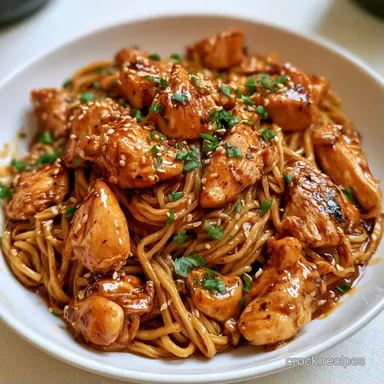
Serve this in wide bowls to show off the deep amber color of the sauce. The contrast of the bright green onions and the white sesame seeds makes the dish look like it came from a restaurant.
For an extra touch, place a few fresh cilantro leaves on top. If the sauce is thick and glossy, it will coat the noodles beautifully, making the meal feel rich and satisfying.
Critical in Sodium
1783 mg of sodium per serving (78% of daily value)
American Heart Association recommendation: no more than 2,300 mg of sodium per day
Tips to Reduce Sodium
-
Swap the Soy Sauce
Replace the reduced-sodium soy sauce with coconut aminos, which naturally contains much less sodium while maintaining a similar savory profile.
-
Use Unsalted Broth
Substitute the chicken broth with unsalted chicken stock or a homemade version to remove unnecessary added salt.
-
Fresh Chili Alternative
Replace sriracha with freshly minced red chilies or red pepper flakes to provide heat without the processed sodium.
-
Increase Acidity
Add an extra splash of rice vinegar or a squeeze of fresh lime juice to brighten the sauce, which reduces the craving for salt.
-
Enhance Aromatics
Increase the amount of fresh garlic and grated ginger to build a more robust flavor foundation using herbs and spices instead of salt.
Common Questions
Why did the sauce turn out watery or too thin?
The glaze may require a thickening agent to achieve the desired deep amber consistency.
Tip: stir in a cornstarch slurry during the final 10 minutes of cooking.
How do I keep the chicken from turning tough or rubbery?
Use boneless, skinless chicken thighs.
Tip: the higher fat content in thighs keeps the meat succulent during the long simmer.
Is it true that noodles must be added at the beginning?
Actually, no.
Tip: stir them in during the last 30 minutes of cooking to ensure they stay al dente.
Which noodle type works best, and can rice or ramen be swapped in?
Dried wheat noodles are ideal, but rice or ramen are acceptable alternatives.
Tip: monitor rice noodles closely for doneness; for another bold flavor, try our Caribbean Jerk Sauce.
Slow Cooker Asian Chicken Noodles
Ingredients:
Instructions:
More to Cook

Slow Cooker Orange Chicken: Easy Sticky Sauce with No Deep Frying
Make restaurant-quality Slow Cooker Orange Chicken at home tonight!

Slow Cooker Chicken Tenderloins with Sweet Sauce
Enjoy Slow Cooker Honey Garlic Chicken Tenderloins in just 6 hours!

Soy Sauce Chicken
Soy Sauce Chicken made simple. These Crockpot Soy Sauce Chicken Thighs are tender and rich.

Chicken Noodle Soup Noodles: Grandma's Homemade Recipe!
Chicken noodle soup noodles like Grandma used to make! Silky homemade noodles elevate this…

Homemade Macaroni and Cheese with Sharp Cheddar
Master Homemade Macaroni and Cheese using this Sharp Cheddar Cheese Sauce Recipe.

Easy Baked Tortellini Cheese Casserole with Ground Beef and Marinara Sauce
Master Easy Baked Tortellini Cheese Casserole with Ground Beef and Marinara Sauce.
