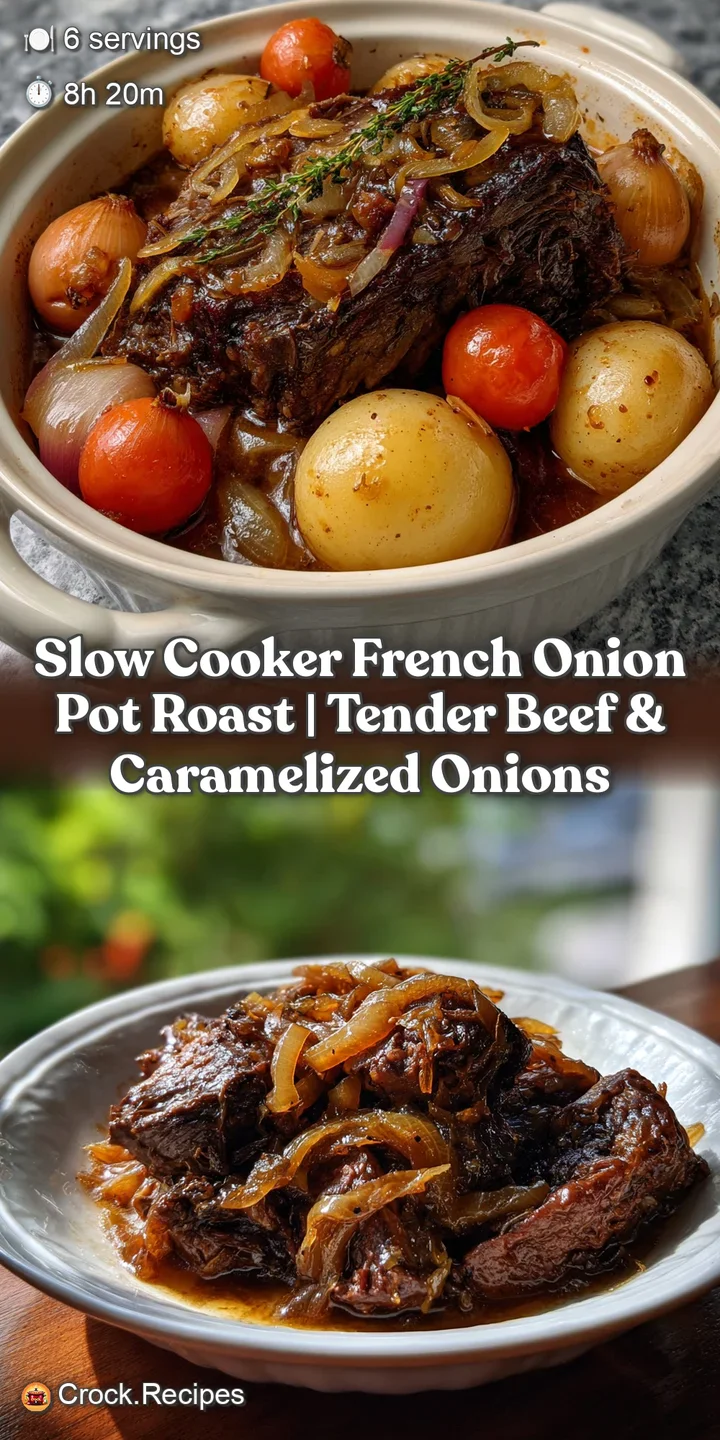
Slow Cooker French Onion Pot Roast
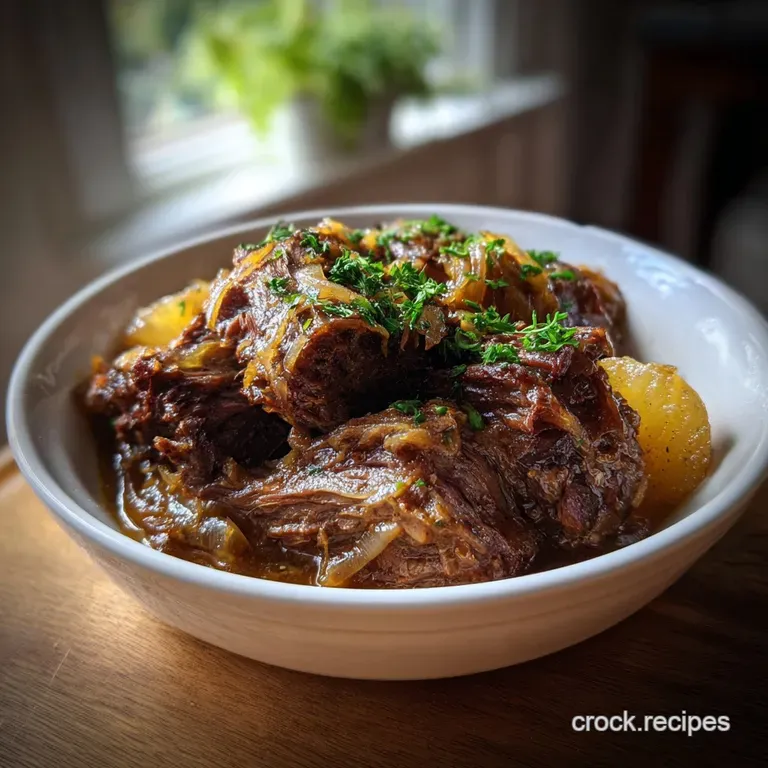
- Time: Active 20 minutes, Passive 8 hours, Total 8 hours 20 minutes
- Flavor/Texture Hook: Velvety beef paired with buttery, sweet onions and a shatter crisp baguette topping
- Perfect for: Sunday family dinners, winter meal prep, or a cozy weeknight feast
- Smart Techniques for Tender Beef
- Cooking Times and Nutrition Data
- Essential Components for Deep Flavor
- Tools Required for Kitchen Success
- Step-by-Step Guide to Perfection
- Preventing Mistakes for Better Results
- Creative Variations and Ingredient Swaps
- Managing Leftovers and Proper Reheating
- Plating Suggestions and Side Dishes
- Helpful Answers for Home Cooks
- Recipe FAQs
- 📝 Recipe Card
Imagine walking through your front door after a long, rainy day and being hit with the scent of onions that have spent eight hours getting cozy with beef broth and butter. It is that specific, deep aroma that makes you instantly hungry.
We are talking about the kind of comfort food that feels like a warm hug, but looks fancy enough to serve to guests who think you spent all day hovering over a hot stove.
This Slow Cooker French Onion Pot Roast is my go to when I want maximum flavor with minimal fuss. I have tried many pot roast versions, and frankly, some of them come out tasting like nothing but wet meat.
This one is different because we treat the onions with the respect they deserve and use a few simple techniques to ensure the beef is actually tender, not just stringy.
Right then, let's get into how we make this happen. We are going to use the Crockpot to our advantage, letting time do all the heavy lifting. By the time you sit down to eat, that beef will pull apart with nothing more than a gentle tug from your fork, and the sauce will be so rich you will want to drink it with a spoon.
Trust me on this one, it is a total winner.
Smart Techniques for Tender Beef
The magic of this recipe lies in the transformation of the meat. When we use a 3.5 lbs Beef Chuck Roast, we are dealing with a muscle that worked hard during the cow's life, meaning it is full of tough fibers.
The low heat of the Crockpot over eight hours allows for protein denaturation, where those tight protein coils slowly unwind and soften. This is not something you can rush; high heat just makes the fibers tighten up like a clenched fist.
Another reason this method works so well is the collagen to gelatin conversion. As the internal temperature of the roast stays in that sweet spot between 160°F and 180°F, the tough collagen melts into silky gelatin.
This gelatin coats the meat fibers, giving us that velvety mouthfeel we all crave. Without this process, you just have dry, chewy beef.
The Science of Why it Works
The secret to that deep, dark color and rich taste is the Maillard reaction, which occurs when proteins and sugars are exposed to high heat during the initial sear. By browning the beef and the onions before they ever touch the slow cooker, we create hundreds of new flavor compounds that raw simmering simply cannot produce.
Chef's Tip: For a hidden depth of flavor, add a tiny splash of fish sauce or a teaspoon of anchovy paste to the braising liquid. You won't taste "fish," but the natural glutamates will make the beef taste twice as meaty.
Cooking Times and Nutrition Data
Getting the timing right is the difference between a great dinner and a disappointment. You want to aim for a long, slow cook to ensure the fat has fully rendered into the sauce.
| Cooking Phase | Duration | Numeric Checkpoint |
|---|---|---|
| Searing & Sautéing | 20 minutes | Meat surface should be dark mahogany |
| Slow Cooking (Low) | 8 hours | Internal temp of beef should hit 195°F |
| Final Broiling | 5 minutes | Cheese should be bubbling and browned |
Essential Components for Deep Flavor
When we talk about flavor, we have to look at how each ingredient plays its part. We aren't just tossing things into a pot; we are building layers. If you enjoy the deep, wine infused flavors of this dish, you'll find the same comfort in a Classic beef bourguignon recipe.
Component Analysis
| Ingredient | Science Role | Pro Secret |
|---|---|---|
| 3.5 lbs Beef Chuck Roast | Connective Tissue Source | Pat it bone dry before searing for a better crust |
| 3 Large Yellow Onions | Sugar & Texture | Slice them pole to pole so they hold their shape |
| 1/2 cup Dry red wine | Acid & Solvent | Use a Cabernet to dissolve browned bits (fond) |
| 2 cups Beef bone broth | Liquid Base | Choose bone broth over regular stock for more gelatin |
Selection and Substitutions
- 3.5 lbs Beef Chuck Roast: This is the king of roasts for the slow cooker. Why this? High fat and collagen content ensure it stays moist during the long braise.
- Substitute: 3.5 lbs Beef Brisket (fatty end). It will be slightly more fibrous but very tender.
- 3 Large Yellow Onions: These provide the bulk of the sauce flavor. Why this? They have a higher sugar content than white onions, making them perfect for browning.
- Substitute: 4-5 Large Shallots. They offer a milder, more refined onion flavor.
- 1 cup Shredded Gruyère cheese: This provides that classic nutty, salty finish. Why this? It melts beautifully without becoming oily or stringy.
- Substitute: Shredded Swiss or Comté. Both offer similar melting properties and nuttiness.
- 1/2 cup Dry red wine: This cuts through the richness of the beef fat. Why this? The tannins and acidity balance the sweet caramelized onions.
- Substitute: 1/2 cup Extra Beef bone broth with 1 tbsp extra Balsamic vinegar.
Tools Required for Kitchen Success
You don't need a professional kitchen, but a few specific items make this much easier. I always reach for my Lodge Cast Iron Skillet for the searing phase. Cast iron holds heat better than stainless steel, meaning the temperature won't drop the second the cold meat hits the pan.
If you use a thin non stick pan, the meat will likely steam instead of sizzle, and you will lose out on all that flavor.
For the main event, a KitchenAid Crockpot or any reliable 6 quart slow cooker is essential. You want one with a tight fitting lid to prevent moisture loss. If your lid is a bit loose, you can place a piece of parchment paper or foil over the pot before putting the lid on to create a better seal.
Finally, a sharp Global Chef's Knife is your best friend when thinly slicing those three large onions.
step-by-step Guide to Perfection
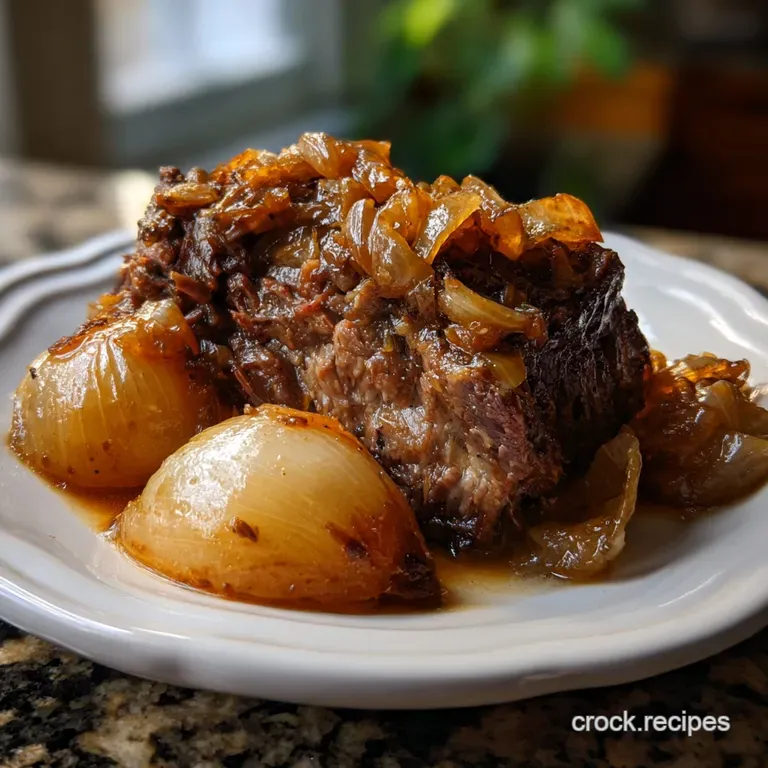
Let's crack on with the actual cooking. Follow these steps closely, especially the browning part, as that is where the soul of the dish is born.
- Dry the beef. Use paper towels to remove every bit of moisture from the 3.5 lbs Beef Chuck Roast. Note: Moisture creates steam, which prevents a proper brown crust from forming.
- Season heavily. Rub 2 tsp Kosher salt and 1 tsp Coarse black pepper over all sides of the meat.
- Sear the meat. Heat 2 tbsp Neutral oil in your skillet until it is almost smoking. Brown the roast for 5 minutes per side until a dark, crusty exterior forms.
- Sauté the onions. Remove the meat and add 2 tbsp Unsalted butter to the same pan. Toss in the 3 Large Yellow Onions and 4 cloves Garlic.
- Caramelize slightly. Cook the onions for 8 minutes until they turn golden and smell sweet.
- Deglaze the pan. Pour in 1/2 cup Dry red wine. Use a wooden spoon to scrape up all those browned bits from the bottom.
- Assemble the pot. Place the beef in the slow cooker. Pour the onion and wine mixture over the top.
- Add liquids. Pour in 2 cups Beef bone broth, 2 tbsp Worcestershire sauce, 1 tbsp Balsamic vinegar, 1 tsp Dried thyme, and 2 Bay leaves.
- Slow cook. Cover and cook on LOW for 8 hours until the beef shreds easily with two forks.
- The cheesy finish. Slice the French baguette and toast it. Top the beef servings with the bread and 1 cup Shredded Gruyère cheese, then broil for 3 minutes until the cheese is bubbling and brown.
This method of melting cheese over a savory broth is exactly why people love a good French Onion Soup recipe.
Preventing Mistakes for Better Results
Even simple recipes can go sideways if you aren't careful. The biggest mistake people make is choosing the wrong cut of meat or rushing the onions.
Solving Tough Meat Issues
If you pull the lid off and the beef feels like a rubber ball, it simply hasn't cooked long enough. Most slow cookers take a few hours just to get the meat up to the temperature where the collagen starts to break down. Don't panic; just put the lid back on and give it another hour.
Quick Fix Table
| Problem | Cause | Fix |
|---|---|---|
| Greasy Sauce | Too much rendered fat | Use a bread slice to soak up oil from the surface |
| Thin Gravy | Too much liquid | Whisk 1 tbsp cornstarch with water and stir it in at the end |
| Bland Flavor | Lack of acidity | Add a tiny squeeze of fresh lemon juice before serving |
Chef's Tip: Freeze your 2 tbsp Unsalted butter for 10 minutes before grating it into the onions. This helps the butter melt more slowly, coating the onions more evenly for better caramelization.
Creative Variations and Ingredient Swaps
I love the classic version, but sometimes you have to work with what is in the pantry. If you want a non alcoholic version, just swap the wine for more broth and a splash of extra vinegar. It won't have the same complexity, but the balsamic vinegar will still provide the necessary acid.
- For a lower carb option: Skip the baguette and serve the roast over roasted cauliflower or just in a bowl with extra cheese.
- For the spice lovers: Add a pinch of red pepper flakes to the onions while they sauté.
- For a different protein: This works surprisingly well with a pork shoulder, though the flavor profile will be much sweeter.
For more reliable Crock Pot Dinners recipe ideas, our collection has plenty of weeknight wins.
| Feature | Fresh Method | Shortcut Method |
|---|---|---|
| Onions | Hand sliced yellow onions | Pre cut frozen onions (may be watery) |
| Broth | Beef bone broth | Water + bouillon cubes (saltier, less body) |
| Cheese | Block Gruyère (hand grated) | Pre shredded Swiss (contains anti clumping starch) |
Managing Leftovers and Proper Reheating
This roast actually tastes better the next day. As it sits in the fridge, the flavors have more time to mingle and penetrate the meat fibers.
- Storage
- Keep leftovers in an airtight container in the fridge for up to 4 days.
- Freezing
- You can freeze the cooked beef and onions (without the bread and cheese) for up to 3 months. Let it thaw in the fridge overnight before reheating.
- Reheating
- The best way to reheat is in a small pot on the stove over medium low heat. Add a splash of broth if it looks too thick. Avoid the microwave if possible, as it can make the beef feel a bit rubbery.
Zero Waste Tip: Don't throw away those onion peels! Keep them in a bag in your freezer. Once the bag is full, simmer them with water and other veggie scraps to make a vibrant, golden vegetable stock for your next soup.
Plating Suggestions and Side Dishes
When it comes to serving, you want something that can soak up all that incredible onion gravy. A pile of buttery mashed potatoes is the classic choice, but a simple side of roasted green beans or a crisp green salad with a sharp vinaigrette helps cut through the richness of the beef and cheese.
If you are feeling extra, you can serve the roast "open faced" style. Place a thick slice of toasted sourdough on a plate, pile on the shredded beef and onions, then top with a massive amount of Gruyère and torch it until it's gooey. It's a messy, glorious way to eat.
Helpful Answers for Home Cooks
Using Different Beef Cuts
You might be tempted to use a leaner cut like a bottom round or eye of round roast because they are often on sale. Resist the urge! These cuts don't have enough fat or connective tissue to withstand 8 hours in a slow cooker. They will end up dry and mealy. Stick to the chuck roast for the best results.
Cooking Without Red Wine
If you don't want to use alcohol, simply replace the 1/2 cup of red wine with an equal amount of beef broth mixed with 1 tablespoon of Worcestershire sauce and a teaspoon of balsamic vinegar. The goal is to provide acidity to balance the fats.
Alcohol Burns Off Instantly
This is a common misconception. While much of the alcohol evaporates during the deglazing and the 8 hour cook, a small percentage usually remains. However, the amount per serving is negligible. If you are strictly avoiding alcohol for health or religious reasons, use the broth and vinegar swap mentioned above.
Searing Seals In Juices
Honestly, searing does not "seal in" anything. Moisture is lost the moment the meat hits the heat. We sear purely for the Maillard reaction. That crust is where 90% of your flavor lives. If you skip the sear, your roast will be gray and have a much flatter flavor profile.
It is worth the extra 10 minutes of work.
This Slow Cooker French Onion Pot Roast is proof that you don't need a complicated list of ingredients to make something spectacular. By focusing on the quality of your beef and the patience of your onions, you can create a meal that feels truly special.
Give it a try this weekend, and I promise your kitchen will smell like the best restaurant in town. Happy cooking!
Recipe FAQs
What is the key difference between searing and slow cooking this roast?
Searing is for flavor, slow cooking is for texture. Searing uses high heat to trigger the Maillard reaction, creating deep flavor compounds on the surface. The slow cooker then uses low, moist heat to break down tough collagen into silky gelatin.
Can I skip caramelizing the onions since the slow cooker cooks for 8 hours?
No, caramelization must be done beforehand. The slow cooker heat won't fully brown the natural sugars in the onions sufficiently to develop that necessary deep, sweet flavor base.
Why is the chuck roast specified instead of a leaner cut like sirloin?
Yes, you must use a high collagen cut like chuck roast. Leaner cuts lack the connective tissue required for the long, slow breakdown into moist, tender fibers; they will simply dry out.
What is the best way to ensure the final cheese topping melts perfectly under the broiler?
Yes, use block Gruyère and serve immediately. Make sure the beef is shredded and placed in oven safe bowls first, and avoid broiling for more than a few minutes to prevent overcooking the already tender meat.
I am avoiding alcohol; what should I substitute for the 1/2 cup of red wine?
Yes, substitute with broth and acid. Use 1/2 cup beef bone broth mixed with 1 tablespoon of balsamic vinegar to mimic the acidity needed to cut richness. If you enjoy rich, wine braised flavors, you might also appreciate the depth in our Classic Beef Burgundy Recipe: My Family's Favorite French Stew.
My sauce looks thin after 8 hours; how should I thicken the gravy at the end?
No need to worry; use a cornstarch slurry. Remove the meat, bring the remaining liquid to a simmer, and whisk in one tablespoon of cornstarch mixed with cold water until the gravy coats the back of a spoon.
Can I prepare the meat and onions a day ahead, similar to other slow cooked dishes?
Yes, prep the searing and onions 24 hours early. You can sear the roast and caramelize the onions, then store both components separately in the refrigerator before assembling them in the slow cooker the next day.
Slow Cooker Onion Pot Roast
Ingredients:
Instructions:
Nutrition Facts:
| Calories | 852 kcal |
|---|---|
| Protein | 58g |
| Fat | 48g |
| Carbs | 39g |
| Fiber | 3g |
| Sugar | 6g |
| Sodium | 1083mg |
