The Ultimate Crispyskinned Baked Sweet Potatoes

- Moving Beyond Flabby Skins: Achieving the Molten Interior
- The Holy Grail of Tubers: Why Texture Matters in Baked Sweet Potatoes
- Gathering Your Supplies: Ingredients and Essential Equipment
- Selecting the Right Sweet Potato for Maximum Crisp
- Step-by-Step Technique: Baking for Optimal Fluff and Crunch
- The High-Heat Ritual: Finessing the Oven for Golden Skin
- Maximizing Flavor and Texture: Expert Tips and Troubleshooting
- Serving Suggestions and Creative Variations on Classic Baked Sweet Potatoes with Crispy Crust
- Recipe FAQs
- 📝 Recipe Card
Moving Beyond Flabby Skins: Achieving the Molten Interior
The simple act of baking a sweet potato can often result in a disappointing experience: a tender interior, certainly, but wrapped in a flabby, chewy, moisture laden skin. We are aiming higher today.
We want the kind of textural complexity that elevates this humble tuber from a simple side dish to a standalone culinary event. The pursuit of the Perfect Baked Sweet Potato centers entirely on contrast a velvety, nearly molten interior housed within a magnificent, aggressively golden, salty crust.
This requires moving beyond traditional low-and-slow baking and embracing a high heat, two-phase method designed specifically to dry out the exterior while simultaneously allowing the sugars inside to caramelize into a deep, earthy sweetness.
Achieving this balance is the key to unlocking the true potential of Sweet Potato Recipes Baked .
The Holy Grail of Tubers: Why Texture Matters in Baked Sweet Potatoes
Texture is everything when working with tubers, especially one as naturally sweet and starchy as the sweet potato. While the flesh will always soften with heat, retaining structural integrity on the outside requires calculated effort.
This textural achievement is what differentiates a merely passable spud from the Best Baked Sweet Potato you have ever tasted.
Identifying the Common Pitfalls of Conventional Baking
The number one enemy of a crunchy skin is moisture. Most home cooks, trying to replicate methods suitable for Russets, often pierce the potatoes and wrap them tightly in aluminum foil. While foil speeds cooking time by trapping heat and steam, it also guarantees a soggy exterior.
We must avoid trapping steam at all costs. On top of that,, under oiling or using an oil with a low smoke point prevents the necessary crisping reaction from occurring evenly.
The Science Behind Aggressively Crispy Crusts
The secret to learning How to Make Crispy Baked Sweet Potatoes lies in understanding surface dehydration and the Maillard reaction. We need the skin to dry out rapidly in a high heat environment.
By rubbing the potato liberally with oil and salt, we create a barrier that holds flavour and assists in conductivity. The heat forces the moisture inside the potato to convert to steam, which must escape through the pierced holes, leaving the skin dry and primed for browning.
Introducing the Secret Weapon for Golden Perfection
While oil and heat handle most of the work, there is a simple pantry ingredient that takes the crispness from good to sublime: a small amount of baking powder. When mixed into the oil rub, the baking powder raises the pH level on the skin's surface.
This chemical change significantly accelerates the Maillard reaction, ensuring a brittle, glass like crunch rather than a leathery chew. This step is non-negotiable for true success in producing Baked Sweet Potatoes with Crispy Crust .
Is High Heat Essential for Fluffy Results?
Yes, but it must be managed. High heat is essential initially (we start at 425°F or 220°C) to shock the skin and immediately begin the dehydration process. However, if we maintain that high temperature for the entire 60 minutes, the skin will burn before the interior achieves that desired Fluffy Baked Sweet Potato Interior .
The ideal method involves an initial blast of high heat followed by a reduction in temperature, allowing the heat to penetrate slowly and evenly, transforming the starches into sweet, silky perfection.
Gathering Your Supplies: Ingredients and Essential Equipment
Before starting the preparation, ensure you have gathered all necessary items. While the ingredient list for this method is minimal, the quality and choice of both ingredients and equipment directly impact the final textural contrast we are striving for.
We rely on simple components, but precision is key, especially concerning oil choice and the addition of our crisping agent.
Selecting the Right Sweet Potato for Maximum Crisp
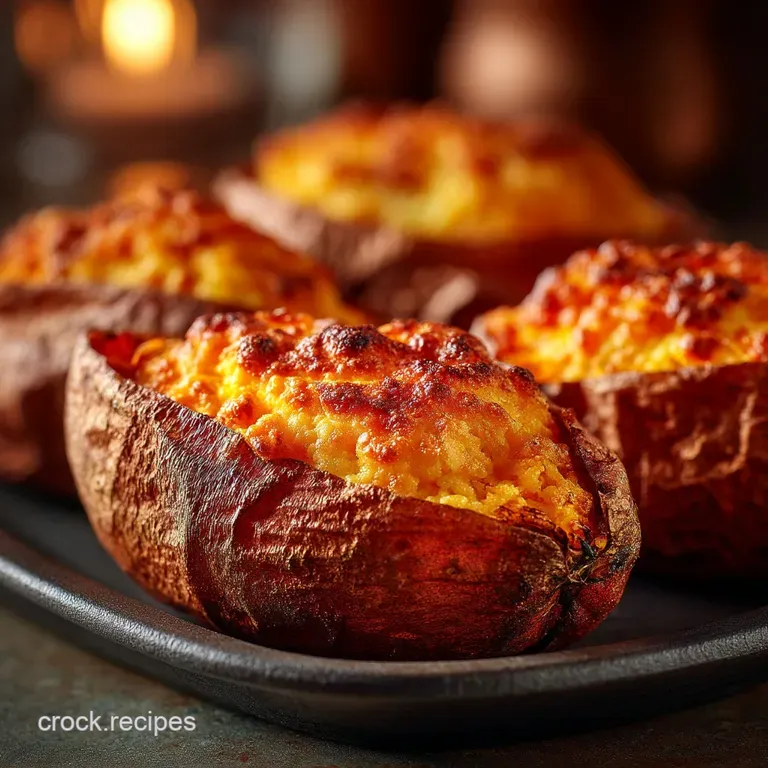
For the Best Baked Sweet Potato , size uniformity is the most critical selection factor. Choose four medium sweet potatoes (around 10 12 oz each, or 1.2 kg total). Beauregard or Jewel varieties are excellent choices due to their reliable moisture content and sweetness.
Uniform size ensures that every potato finishes cooking at the exact same time, preventing some from overcooking while others lag behind.
Ingredient Checklist: Simple Items, Dramatic Results
The crucial components for the external rub include 3 tablespoons of high heat cooking oil, 1 teaspoon of fine sea salt, 1/2 teaspoon of freshly ground black pepper, and 1/4 teaspoon of the magic aluminium free baking powder.
A final dusting of flaky sea salt (like Maldon) once they are out of the oven adds both texture and intense flavour.
The Must Have Tool for the Best Baked Sweet Potatoes with Crispy Crust
To maximize the drying and crisping effect, you absolutely must avoid wrapping the potatoes in foil. The single most helpful piece of equipment is a sturdy baking rack placed inside a standard metal baking sheet.
This allows the hot air to circulate completely around the potato, ensuring the bottom of the spud gets just as crunchy as the top essential for true all-around crispness.
Why Neutral Oil is Key for High Temperature Baking
For the oil rub, select a neutral oil with a high smoke point, such as avocado or grapeseed oil. Since our initial bake is conducted at a blazing 425°F (220°C), lower smoke point oils like standard extra virgin olive oil are prone to burning, which will impart a bitter, unpleasant flavour to your crust long before the potato is cooked through.
How to Properly Prep Your Spuds for Success
The preparation stage is vital. First, scrub the sweet potatoes thoroughly with a vegetable brush under cold water, removing all dirt and debris. Second, and most importantly, dry them completely with a towel. Residual moisture is the enemy of the crust.
Finally, use a fork or skewer to pierce each potato 8 10 times all over. These holes serve as steam vents, ensuring the internal moisture escapes slowly, guaranteeing a fluffy consistency and preventing the potatoes from bursting.
Related Recipes Worth Trying
- Speedy OnePan Garlic Butter Cod with Lemon Asparagus Skillet — This onepan wonder delivers a crisp golden sear on your cod in under 35 minutes Doused in rich garlic butter this Garlic Butter Cod with Lemon Asparagus...
- 30Minute OnePan Garlic Butter Chicken Bites with Lemon Asparagus — The ultimate weeknight warrior Get golden juicy Garlic Butter Chicken Bites with Lemon Asparagus in one pan A delicious healthy dinner recipe ready in 30...
- Foolproof Juicy Roasted Turkey Breast with Garlic Herb Butter — Guaranteed juicy This Roasted Turkey Breast with Garlic Herb Butter recipe uses our secret compound butter trick for succulent meat and gloriously crisp...
step-by-step Technique: Baking for Optimal Fluff and Crunch
The methodology for achieving these spectacular results is a structured three step process: preparation, initial high heat shock, and tempered finishing. Following these steps ensures both the magnificent exterior crispness and the velvety softness within, resulting in truly Rustic Baked Sweet Potatoes .
The High Heat Ritual: Finessing the Oven for Golden Skin
Preheat your oven to 425°F (220°C) with the rack placed in the middle position. This high temperature provides the initial power punch needed for crisping.
The Crucial Pre-Bake Step: Piercing and Oiling
In a small bowl, whisk together the high heat oil, fine sea salt, black pepper, and the 1/4 teaspoon of baking powder. Place the completely dry, pierced potatoes into the bowl. Using your hands, thoroughly rub the oil mixture into the skin of each potato. Ensure a uniform, glistening coat across the entire surface.
Arrange the potatoes on the prepared baking sheet (or rack), making sure they do not touch, thus preventing them from steaming each other.
Phase One: Achieving the Initial Tenderization
Place the tray into the preheated 425°F oven. Bake for precisely 20 minutes. This period is aggressive; it's designed to activate the baking powder, rapidly dry the skin, and start the crisping process before the potato's internal temperature gets too high.
The Final 15 Minutes: Turning Up the Heat for the Crust
After the initial 20 minutes, reduce the oven temperature down to 375°F (190°C). Continue baking for an additional 30– 45 minutes.
This lower temperature allows the heat to penetrate slowly, coaxing the starches to convert to sugar, which creates the Fluffy Baked Sweet Potato Interior . The skin, already set by the initial blast, continues to deepen in colour and crunch.
Testing for Doneness: Achieving the 'Molten' Consistency
The potatoes are finished when they are tender throughout. You should be able to insert a thin skewer or fork easily into the centre with absolutely zero resistance. Plus,, the skin should be deep golden brown and, critically, audibly crispy when tapped.
Remove the potatoes and immediately sprinkle them generously with flaky sea salt while they are still steaming hot for the final flourish.
Maximizing Flavor and Texture: Expert Tips and Troubleshooting
Several factors ensure consistent success in making the Best Baked Sweet Potato . First off,, always ensure the potatoes are uniform in size. If one is significantly larger than the others, it will drag down the entire cooking process.
Next,, never, under any circumstances, wrap these spuds in foil we are deliberately exposing them to dry heat. The role of the baking powder cannot be overstated; it is the critical ingredient for achieving that spectacular, shattering crunch.
Finally, ensure you are using a neutral oil with a high smoke point, as this prevents scorching during the initial high heat phase.
Serving Suggestions and Creative Variations on Classic Baked Sweet Potatoes with Crispy Crust
The beauty of a perfectly executed Baked Sweet Potatoes with Crispy Crust is its versatility. It can handle powerful, savoury toppings or lean into its natural sweetness for a dessert like finish.
The Best Ways to Store Leftover Crispy Sweet Potatoes
If you have leftovers, allow the potatoes to cool completely at room temperature before storing them in an airtight container in the refrigerator. Storing them while hot will trap steam, immediately compromising the crust. They will keep well for up to four days.
Making Them Ahead: Reheating Without Losing the Crunch
Reheating is crucial for maintaining the desired texture. Avoid the microwave, which turns the crust soft and damp. To restore the crispy skin, preheat your oven to 350°F (175°C).
Place the chilled potatoes directly onto a wire rack and bake for 10– 15 minutes, or until heated through. This dry heat process revitalizes the crust beautifully.
Savory vs. Sweet Toppings: Finding the Perfect Pairing
The flaky, salty crust is the perfect foil for rich toppings. For a savoury take, try splitting them open and filling the Fluffy Baked Sweet Potato Interior with a dollop of Greek yogurt or sour cream, fresh chives, and crumbled feta cheese or crispy bacon bits.
Alternatively, embrace the sweetness: dust them with cinnamon sugar (omitting the pepper from the rub) and top with a scoop of vanilla ice cream or melted butter and pecans. We can also make Baked Sweet Potato Halves Oven style by slicing before the final bake phase for easier topping distribution.
Addressing Common Issues: Why Is My Crust Still Soft?
If your crust is still soft after the recommended cooking time, it is almost certainly due to residual moisture. This happens for three main reasons: 1) the potatoes weren't dried properly before oiling; 2) they were overcrowded on the baking sheet, causing them to steam; or 3) you skipped the baking powder.
If they are cooked through but still lack crunch, you can return them to the oven set to a high broiler setting (watching them very closely) for 2– 3 minutes to finish drying and crisping the skin.

Recipe FAQs
I followed the instructions, but why is my sweet potato skin still leathery, not crispy?
Ah, that’s usually a moisture problem, isn't it? To achieve that proper shatteringly crisp result, you must dry the potatoes absolutely completely after scrubbing them residual water is the enemy of a decent crunch.
Also, ensure you haven't crowded them on the baking tray; if they're too close, they steam each other, guaranteeing a miserable, soggy finish.
What is the point of the baking powder? Is it safe to eat on these Baked Sweet Potatoes with Crispy Crust?
The baking powder is our secret weapon for that aggressively golden, glass like crust! It works by slightly raising the pH of the potato surface, which accelerates the Maillard reaction (that lovely browning process) and allows the crust to become brittle rather than chewy.
It is perfectly safe to eat; just a pinch makes all the difference between good spuds and truly magnificent ones.
Can I wrap the sweet potatoes in foil to save on washing up?
Please, for the love of all that is crispy, resist the foil! Wrapping them completely defeats the object of this recipe, as the foil traps the steam released by the potato flesh. This steam then softens the skin, resulting in that disappointing, pale, and flabby texture we are trying desperately to avoid.
We need that direct, dry heat to work its magic.
These are cracking! How should I store the leftovers, and can I reheat them without losing the crispness?
We're glad you enjoyed them! Leftovers keep beautifully in an airtight container in the fridge for up to three days. To bring the texture back to life, avoid the microwave that's a cardinal sin here.
Instead, pop them back into a hot oven (around 350°F/180°C) or, better yet, an air fryer for 10-15 minutes until the skin is singing again.
I’m fancying a change what are the best toppings to pair with the sweet and savoury crust?
You can go the "Full Monty" route! For a savoury experience, nothing beats the fluffiness topped with a dollop of crème fraîche, salty feta, and finely chopped spring onions.
Alternatively, try a drizzle of chilli infused honey and lime for a sweet and-spicy kick, or go for a pudding vibe with cinnamon butter and toasted pecans.
Ultimate Crispy Baked Sweet Potatoes

Ingredients:
Instructions:
Nutrition Facts:
| Calories | 374 kcal |
|---|---|
| Protein | 3.2 g |
| Fat | 1.0 g |
| Carbs | 29.9 g |
| Fiber | 8.2 g |
| Sodium | 18104 mg |
