Best Crock Pot French Onion Pot Roast with Savory Gravy
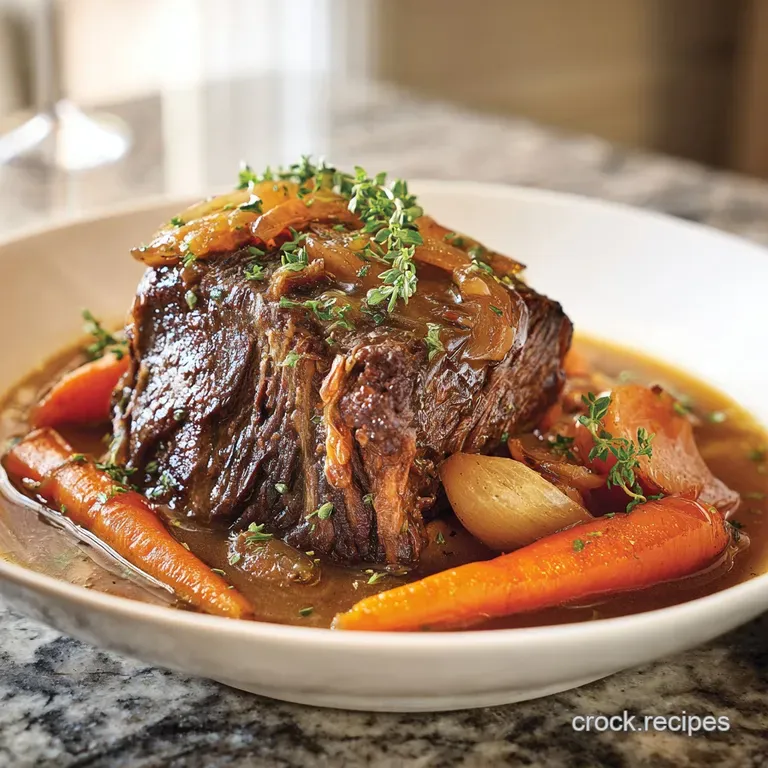
- Time: Active 20 minutes, Passive 8 hours, Total 8 hours 20 minutes
- Flavor/Texture Hook: Velvety beef that falls apart at the touch of a fork
- Perfect for: Stress free Sunday family dinners or easy meal prep
- Best Crock Pot French Onion Pot Roast with Savory Gravy
- The Science Behind Perfect Results
- Recipe Specs
- Shopping List Breakdown
- Equipment Needed
- From Prep to Plate
- What Can Go Wrong (and How to Fix It)
- Creative Twists and Swaps
- Storage & Reheating
- Pairing Ideas
- Myths About Pot Roast
- High in Sodium
- Recipe FAQs
- 📝 Recipe Card
Best Crock Pot French Onion Pot Roast with Savory Gravy
The first time I pulled a chuck roast out of my slow cooker without searing it first, I was heartbroken. It looked gray, the house didn't have that "something's cooking" aroma, and the flavor was just... flat.
Since that day, I’ve made it my mission to treat the crockpot like a chef’s tool rather than just a dump and go bucket. This recipe is the culmination of those experiments, focusing on the deep, concentrated flavors of a classic French bistro translated into a comforting family roast.
When you lift the lid after 8 hours, the first thing that hits you isn't just "meat" it is the rich, sweet, and slightly pungent scent of three large yellow onions that have practically melted into the beef.
This article shares the best Crock Pot French Onion Pot Roast with Savory Gravy recipe you'll ever need. It’s the kind of meal that makes you want to drag a piece of crusty bread through every single drop of that sauce left on your plate.
We're not just making a roast; we're using the slow cooker to mimic the complex layering of a French Onion Soup recipe. We'll start with a heavy sear that builds a dark crust, then let the beef simmer in a bath of balsamic, thyme, and onion soup mix. By the time we're done, the gravy is so thick and savory you won't believe it came out of a ceramic pot while you were at work.
The Science Behind Perfect Results
To get that fork tender texture without the meat turning into dry strings, we have to understand the chemistry of the "low and slow" method. It’s about more than just heat; it’s about a specific biological transformation happening inside the muscle.
- Collagen Metamorphosis: At 8 hours on low, the tough connective tissue (collagen) in the chuck roast dissolves into gelatin, providing a silky mouthfeel and keeping the meat moist.
- Enzymatic Breakdown: Onions contain sulfur compounds that, when cooked slowly, undergo a chemical shift from pungent to sweet, creating a natural flavor base for the gravy.
- Aromatic Infusion: Fat is a flavor carrier; as the marbling in the beef melts, it picks up the volatile oils from the fresh thyme and garlic, distributing them throughout the entire roast.
| Beef Thickness | Cooking Time | Internal Temp | Visual Cue |
|---|---|---|---|
| 1.5 kg (Standard) | 8 hours (Low) | 95°C | Shreds easily with a fork |
| 1 kg (Small) | 6 hours (Low) | 95°C | Connective tissue looks translucent |
| 2+ kg (Large) | 10 hours (Low) | 95°C | Meat pulls away from the center |
A huge part of why this works is the choice of fat. Using a high smoke point oil like avocado oil allows us to get the pan screaming hot for the sear without filling the kitchen with acrid smoke.
This creates the Maillard reaction that brown crust which is responsible for 90% of the deep beefy flavor we associate with a "good" roast.
Recipe Specs
Before we jump into the sizzle of the pan, let's look at the hard data for this cook. Precision is your best friend when you're working with larger cuts of meat, ensuring you don't end up with a center that's still tough.
| Ingredient | Science Role | Pro Secret |
|---|---|---|
| 1.6 kg Chuck Roast | Connective tissue source | Pat it bone dry before searing to prevent steaming. |
| Yellow Onions | Natural sweetness/Bulk | Slice them into thick half moons so they don't vanish entirely. |
| Balsamic Vinegar | Acid balance | The acidity cuts through the heavy fat and brightens the gravy. |
| Cornstarch Slurry | Emulsification | Use cold water only to prevent the starch from clumping into "fish eyes." |
If you find yourself running short on time and need something a bit more traditional, you might also enjoy a Crock Pot Dinners recipe that uses similar slow cooking principles. The key is always in how you treat the protein before it hits the pot.
Shopping List Breakdown
I'm a big believer in using fresh aromatics where they count the most. While the packet mix does the heavy lifting for the "French Onion" profile, the fresh garlic and thyme add layers that a powder simply can't replicate.
- 3.5 lbs (1.6 kg) beef chuck roast: Look for heavy marbling (white flecks of fat) throughout the meat.
- 2 tbsp (30 ml) avocado or grapeseed oil: Why this? These oils handle the high heat needed for a dark, crusty sear.
- 1 tsp (5 g) kosher salt: Why this? The coarse grains stick better to the meat surface than table salt.
- 1 tsp (5 g) coarse black pepper: Adds a spicy bite to balance the sweet onions.
- 3 large yellow onions: Yellow onions have the highest sugar content for caramelizing.
- 4 cloves garlic: Smashed and minced to release all those pungent oils.
- 1 tbsp fresh thyme leaves: Why this? Dried thyme can be woody; fresh provides a bright, floral aroma.
- 2 bay leaves: These add a subtle herbal depth that connects the meat and gravy.
- 2 cups (475 ml) low sodium beef broth: Controls the saltiness while providing the liquid base.
- 1 packet (1 oz/28 g) French onion soup mix: Provides the concentrated "French Onion" flavor profile.
- 2 tbsp (30 ml) Worcestershire sauce: Adds fermented umami and salty complexity.
- 1 tbsp (15 ml) balsamic vinegar: The "secret" ingredient for a balanced sauce.
- 2 tbsp (30 g) cornstarch: For the final thickening process.
- 2 tbsp (30 ml) cold water: To create the slurry.
| Original Ingredient | Substitute | Why It Works |
|---|---|---|
| Chuck Roast | Bottom Round | Leaner, but will still shred. Note: May be slightly drier. |
| Fresh Thyme | Dried Thyme (1 tsp) | Concentrated flavor. Note: Add at the start of cooking. |
| Balsamic Vinegar | Red Wine Vinegar | Similar acidity. Note: Lacks the subtle sweetness of balsamic. |
Equipment Needed
You don't need a professional kitchen, but a few specific tools make the transition from stovetop to crockpot much smoother. I personally swear by my cast iron skillet for the initial sear nothing else creates that shatter crisp crust quite as well.
- 6 Quart Slow Cooker: The standard size that fits a 1.6 kg roast comfortably without overcrowding.
- Large Skillet (Cast Iron preferred): For searing the beef and sautéing the onions.
- Tongs: To flip the heavy roast without piercing the meat and losing juices.
- Whisk: Essential for ensuring your cornstarch slurry is perfectly smooth.
- Sharp Chef's Knife: For slicing those onions into uniform half moons.
From Prep to Plate
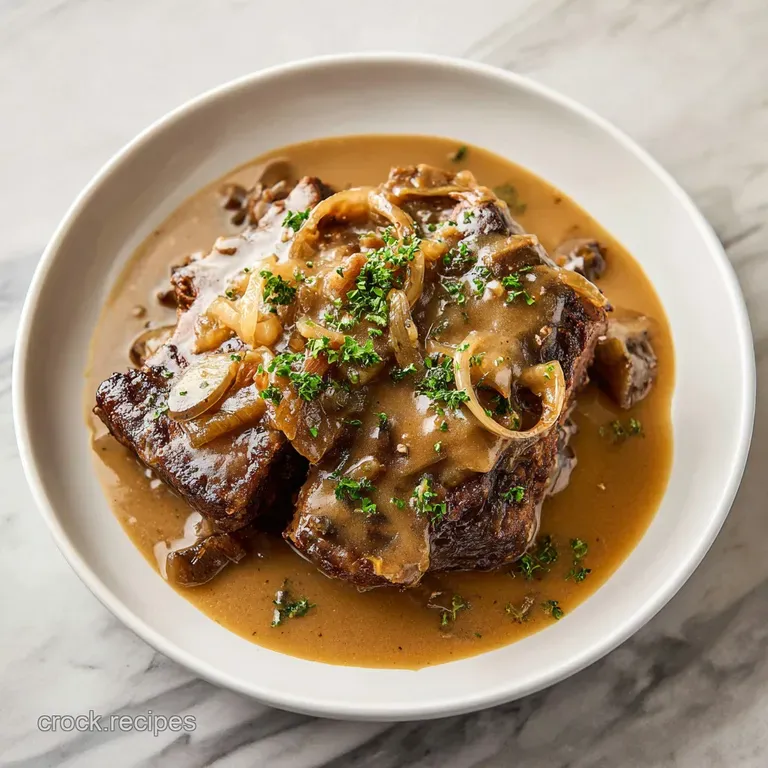
The secret to this dish is a three phase timeline. Don't rush the sear; it's where the flavor is born. If you skip the pan work, you're essentially boiling the meat, which results in a much weaker gravy.
Phase 1: The Maillard Sear & Sauté
- Prep the meat. Pat the 3.5 lbs (1.6 kg) chuck roast completely dry with paper towels. Note: Moisture on the surface creates steam, which prevents browning.
- Season heavily. Rub the salt and coarse pepper into all sides of the beef, including the edges.
- Sizzle and sear. Heat 2 tbsp (30 ml) oil in your skillet over medium high heat. Place the roast in the pan and cook for 5-6 minutes per side until a dark, mahogany crust forms.
- Transfer to crockpot. Place the seared roast directly into the slow cooker.
- Sauté aromatics. In the same skillet (don't wash it!), add the sliced onions. Cook for 4-5 minutes until they soften and pick up the brown bits from the beef.
- Add garlic. Stir in the minced garlic and thyme for 60 seconds until the fragrance fills the kitchen.
Phase 2: The Slow Infusion
- Deglaze the pan. Pour a splash of the beef broth into the hot skillet, scraping the bottom with a wooden spoon to release the "fond" (brown bits).
- Combine liquids. Stir the remaining broth, onion soup mix, Worcestershire sauce, and balsamic vinegar into the skillet, then pour the whole mixture over the roast.
- Set and forget. Add the bay leaves on top. Cover and cook on Low for 8 hours.
Phase 3: The Gravy Transformation
- Thicken the sauce. Remove the roast carefully (it will be fragile!) and set it on a platter.
- Slurry time. Whisk 2 tbsp cornstarch and 2 tbsp cold water in a small bowl. Stir this into the liquid in the crockpot.
- Final simmer. Turn the crockpot to High for 15-20 minutes until the gravy is velvety and coats the back of a spoon. Pour the gravy over the shredded beef and serve.
What Can Go Wrong (and How to Fix It)
Even with a slow cooker, things happen. Maybe your roast was a bit leaner than usual, or perhaps your slow cooker runs "hot." Don't panic; most issues with pot roast are easily corrected at the end of the cooking cycle.
Why Your Roast is Tough
If you try to shred the beef and it resists, it hasn't reached the temperature where collagen melts. Many people think they've overcooked it when it's tough, but in a slow cooker, it's usually the opposite. Give it another hour on low.
Why Your Gravy is Thin
Sometimes the onions release more water than expected, leaving you with a watery sauce. The cornstarch slurry is your best friend here. If it's still too thin after one round, repeat the slurry process with 1 more teaspoon of cornstarch.
| Problem | Root Cause | Solution |
|---|---|---|
| Greasy Gravy | High fat content in beef | Skim the top with a wide spoon or use a fat separator. |
| Too Salty | Broth or soup mix | Add a splash of water or a tiny pinch of sugar to balance. |
| Bland Sauce | Under searing | Stir in an extra teaspoon of balsamic vinegar or Worcestershire. |
Common Mistakes Checklist:
- ✓ Never skip the searing step; it's the foundation of the savory gravy flavor.
- ✓ Don't add the cornstarch directly to the hot liquid; it will clump instantly.
- ✓ Avoid the "Warm" setting for actual cooking; it doesn't get hot enough to break down the meat.
- ✓ Keep the lid closed; every time you peek, you lose 15-20 minutes of cooking heat.
- ✓ Check your expiration dates on the onion soup mix; stale spices lead to a flat sauce.
Creative Twists and Swaps
Once you've mastered the basic version, you can start playing with the flavors. My favorite "cheat" is adding a teaspoon of instant espresso powder to the broth it doesn't make it taste like coffee, but it makes the beef taste ten times beefier.
The Low Carb/Keto Variation
If you're watching carbs, skip the cornstarch. Instead, take half of the cooked onions and a cup of the broth and blitz them in a blender until smooth, then stir back into the pot. It thickens the sauce using the fiber from the onions instead of starch.
This pairs beautifully with mashed cauliflower or roasted radishes.
The "French Onion Soup" Melt
For a real showstopper, shred the beef and place it on thick slices of toasted baguette. Top with a slice of Gruyère or Swiss cheese and pop it under the broiler for 2 minutes until the cheese is bubbly and browned.
It’s like a French Onion Soup sandwich that will change your life.
| Factor | Standard Method | Oven Method |
|---|---|---|
| Active Time | 20 minutes | 30 minutes |
| Heat Distribution | Constant/Low | Radiant/Ambient |
| Texture | Very soft/shredded | Tender/sliceable |
Storage & Reheating
Pot roast is one of those rare dishes that actually tastes better the next day. As it sits, the beef absorbs even more of that savory gravy, making the leftovers a prize in the fridge.
Storage: Keep the beef and gravy together in an airtight container in the fridge for up to 4 days. If you want to freeze it, this dish handles the freezer beautifully for up to 3 months. I recommend freezing it in smaller portions so you can grab a quick lunch.
Zero Waste: Don't you dare throw out that extra gravy! If you have leftovers, use them as a base for a Hearty PubStyle Beef recipe the following night. You can also toss the shredded beef with some pasta or use the onions as a topping for a steak.
Pairing Ideas
Since this roast is so rich and savory, you need something to soak up that gravy. Mashed potatoes are the classic choice, but if you want to feel a bit more sophisticated, try serving it over creamy polenta or wide egg noodles.
I also love serving this alongside a bright, acidic side dish to cut through the richness of the beef fat. A simple green salad with a sharp lemon vinaigrette works wonders. If you're looking for something more substantial, these Au Gratin Potatoes recipe with Gruyère are a match made in heaven for the French Onion flavors.
Myths About Pot Roast
There are a few kitchen tales that just won't die, so let's set the record straight so you can cook with confidence.
Myth 1: Searing seals in the juices. This isn't actually true. Searing creates a flavor through the Maillard reaction, but moisture is still lost during cooking. The reason seared meat tastes "juicier" is because the crust provides such an intense flavor hit that it stimulates more saliva, making the meat feel more moist.
Myth 2: You can't overcook meat in a slow cooker. You absolutely can. While the "Low" setting is forgiving, if you leave a chuck roast in for 12 or 14 hours, the muscle fibers will eventually give up all their moisture and turn into dry, flavorless mush, even if they are sitting in liquid.
Stick to the 8 hour mark for the best results.
Myth 3: High heat is faster and just as good. Cooking on High for 4 hours will get the meat cooked, but it won't be as tender as 8 hours on Low. The slower the collagen melts, the more "velvety" the texture of the beef will be.
If you have the time, Low is always the superior choice for a chuck roast.

High in Sodium
980 mg mg of sodium per serving (43% % of daily value)
The American Heart Association recommends limiting sodium intake to about 2,300mg per day.
Tips to Reduce Sodium in Your French Onion Pot Roast
-
Broth Swap-30%
Use unsalted or homemade beef broth instead of low-sodium broth. This can significantly cut the sodium without sacrificing flavor.
-
Reduce Added Salt-25%
Reduce the amount of kosher salt added. Start by halving the amount to ½ tsp and adjust to taste after cooking. Remember you can always add more but you can't take it away!
-
Omit Soup Mix-20%
French onion soup mix is a major source of sodium. For a healthier option, skip it entirely and rely on the natural sweetness of caramelized onions and other seasonings. Add a pinch of sugar to assist with caramelization.
-
Limit Worcestershire-15%
Worcestershire sauce contains a decent amount of sodium. Use it sparingly or replace it with a mixture of balsamic vinegar, a dash of soy sauce (low-sodium, if available) and a pinch of smoked paprika for a similar umami flavor. Start with just 1 tbsp.
-
Herb Power
Experiment with additional herbs and spices to enhance flavor without adding sodium. Consider adding extra thyme, rosemary, or a pinch of red pepper flakes for depth. Focus on building layers of flavors instead of relying on salt.
Recipe FAQs
Is searing the beef mandatory for this French Onion Pot Roast?
Yes, it is crucial for flavor depth. Searing creates the Maillard reaction, which develops the deep, caramelized crust responsible for the savory base of your gravy. Skipping it results in a flatter, boiled taste.
How long should the roast cook on the low setting in the Crock Pot?
Aim for 8 hours on Low. This extended period allows the tough collagen in the chuck roast to fully dissolve into gelatin, creating the signature silky texture you want in pot roast.
How to thicken the savory gravy at the end of cooking?
Create a cornstarch slurry using cold water. Whisk 2 tablespoons of cornstarch with 2 tablespoons of cold water until smooth, then stir this mixture into the liquid in the slow cooker. Turn the heat to High for 15-20 minutes until it coats the spoon.
Is it true that cooking the roast longer than 8 hours makes it more tender?
No, this is a common misconception. While slow cooking is key, leaving meat past the 10-hour mark on low can cause the muscle fibers to dry out and become stringy, even if they are sitting in liquid.
How do I reduce the fat content in the final gravy?
Skim the fat after the main cooking cycle. Once the roast is removed, carefully use a wide spoon or ladle to skim the layer of fat floating on top of the liquid before adding your thickener.
What can I serve with this pot roast if I want to skip mashed potatoes?
Serve over creamy polenta or wide egg noodles. These sides are excellent for soaking up the rich gravy, similar to how we use a pastry crust in our Classic Chicken Pot recipe.
What is the purpose of adding balsamic vinegar to the liquid base?
The balsamic vinegar provides necessary acid balance. The acidity cuts through the richness of the rendered beef fat and the sweetness of the caramelized onions, preventing the final dish from tasting too heavy.
French Onion Pot Roast
Ingredients:
Instructions:
Nutrition Facts:
| Calories | 769 kcal |
|---|---|
| Protein | 51g |
| Fat | 55g |
| Carbs | 13.5g |
| Fiber | 1.3g |
| Sugar | 4.2g |
| Sodium | 980mg |
