Classic French Toast Recipe
- Time: Active 10 minutes, Passive 0 mins, Total 20 minutes
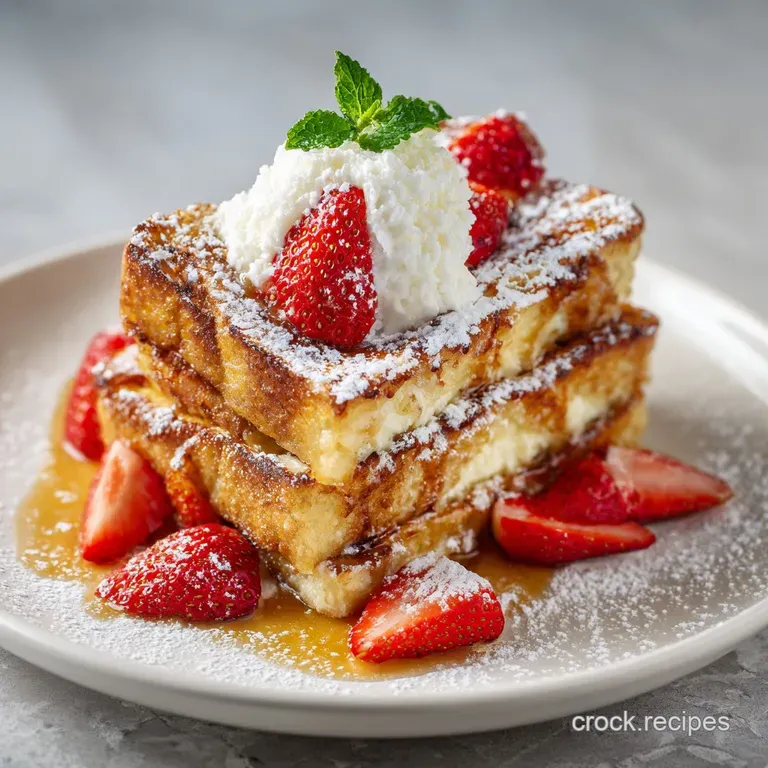
- Flavor/Texture Hook: Buttery, custardy center with a crisp cinnamon spiced exterior
- Perfect for: Slow Sunday mornings or a satisfying weekend brunch for two
- Master the Ultimate French Toast Recipe for Breakfast
- The Physics of the Soak
- Components for a Richer Breakfast Experience
- Essential Tools for the Perfect Sear
- Executing the French Toast Recipe
- Troubleshooting Common Texture Issues
- Adjusting the Yield and Method
- Breakfast Myths Debunked
- Storage and Reheating Guidelines
- How to Serve and Enjoy
- Recipe FAQs
- 📝 Recipe Card
Master the Ultimate French Toast Recipe for Breakfast
The sound of butter hitting a warm skillet is the best alarm clock I know. I still remember the first time I actually got this right the smell of warm cinnamon and toasted brioche filled my tiny apartment, and I realized I'd been doing it wrong for years by using thin, flimsy white bread.
There is a specific magic that happens when a thick slice of bread hits a foaming pan, turning a simple custard into something that feels like a hug on a plate.
We've all had that sad, soggy version of this dish that tastes like wet cardboard. Trust me, I've made plenty of those mistakes so you don't have to. The secret isn't just in the ingredients, but in the patience of the soak and the steady heat of the pan.
We are going for a texture that is substantial enough to hold up to a pour of syrup but soft enough to yield to the side of a fork.
This isn't just about throwing bread in some eggs and hoping for the best. It's about layers of flavor vanilla, nutmeg, and a hint of sea salt all working together to make the bread taste more like itself.
It's hearty, satisfying, and honestly, once you nail this technique, you'll never look at a diner menu the same way again. Right then, let's get into the mechanics of what makes this work.
The Physics of the Soak
Starch Retrogradation: Using slightly stale bread allows the dry starches to act like a sponge, pulling the custard deep into the crumb without the bread collapsing.
If the bread is too fresh, the moisture from the custard will simply turn the interior into a structural mess before it even hits the heat.
- The Emulsion Factor: Whisking the 4 large eggs with 0.25 cup heavy cream creates a stable fat in-water emulsion that coats the bread evenly rather than leaving "egg streaks."
- Thermal Stability: Adding 1 tsp vegetable oil to the 2 tbsp unsalted butter prevents the milk solids in the butter from burning before the center of the bread is cooked.
- The Maillard Boost: The 2 tbsp granulated sugar in the custard isn't just for sweetness; it caramelizes against the hot pan to create that iconic brown crust.
- Aromatic Infusion: Fat carries flavor, so the vanilla and cinnamon bind to the cream, ensuring every bite is fragrant.
Method Comparison for Desired Texture
| Method | Time | Texture | Best For |
|---|---|---|---|
| Stovetop | 10 minutes | Crispy edges, custardy center | Individual servings/Texture purists |
| Oven Baked | 25 minutes | Uniformly soft, cake like | Large groups/Meal prep |
| Air Fryer | 8 minutes | Very dry and crunchy exterior | Quick snacks/Low mess |
Using the stovetop method allows for the most control over the sear, which is vital for achieving that specific contrast between the crisp outside and the velvety inside. While the oven is great for a crowd, it often lacks the direct contact browning that makes this french toast recipe so memorable.
Components for a Richer Breakfast Experience
When you are looking for that classic diner style richness, the quality of your bread is your foundation. Much like choosing the right flour for a Homemade Ciabatta Authentic recipe, the structure of your brioche determines how much liquid it can hold. Brioche is naturally high in egg and butter, meaning it shares a DNA with our custard base.
The Flavor Layer Breakdown
| Ingredient | Science Role | Pro Secret |
|---|---|---|
| Heavy Cream | Increases fat content for mouthfeel | Use cold cream to keep the eggs from thinning too much. |
| Brioche Bread | High fat crumb resists sogginess | Slice it at least 1 inch thick for a "pillowy" effect. |
| Fine Sea Salt | Sharpens the sweetness of the sugar | Don't skip this; it makes the cinnamon "pop." |
| Ground Nutmeg | Adds earthy depth to the custard | Grate it fresh if possible for a more intense aroma. |
A quick tip from my kitchen to yours: if your brioche is too soft and fresh, put the slices in a 300°F (150°C) oven for about 5 minutes per side. This "artificial staling" dries out the surface just enough to prevent the dreaded soggy center.
Essential Tools for the Perfect Sear
You don't need a professional kitchen, but a heavy bottomed skillet is non negotiable here. I prefer a cast iron pan because it holds heat like a champion, ensuring the temperature doesn't drop the moment you add the cold, soaked bread.
If you use a thin pan, you'll find the butter burns in some spots while the bread stays pale in others.
A wide, shallow bowl or a glass pie plate is also your best friend for the soaking phase. It gives you enough surface area to lay the bread flat so it absorbs the custard evenly. You'll also want a sturdy slotted spatula something that can get under the slice without tearing the softened edges.
Executing the French Toast Recipe
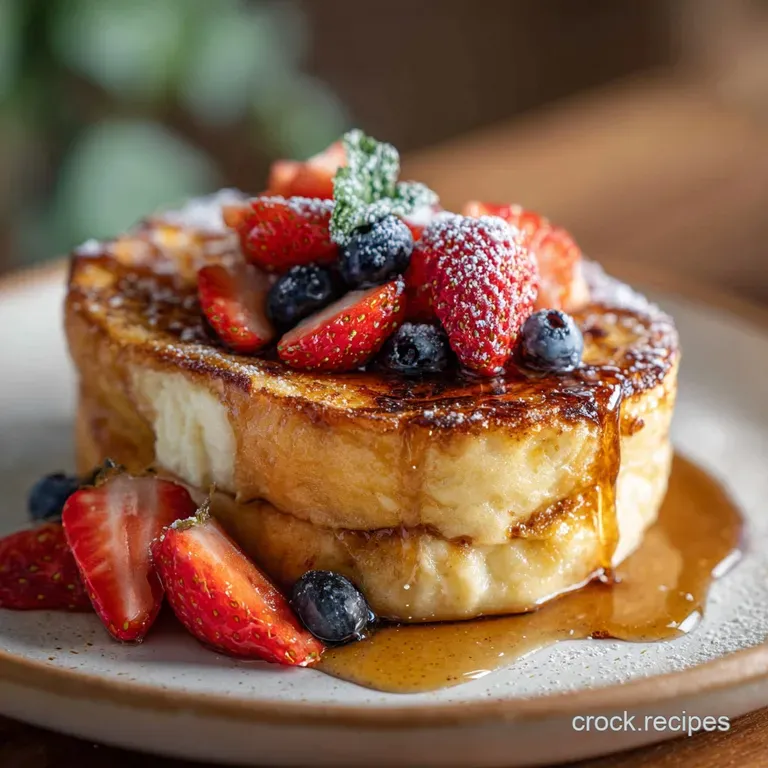
For the Custard Base
- Step 1: Whisk 4 large eggs in a wide, shallow dish. Note: Whisk until no streaks of egg white remain for a smooth finish.
- Step 2: Pour in 0.5 cup whole milk and 0.25 cup heavy cream. Note: This combination provides the "richness" without being too heavy.
- Step 3: Add 2 tbsp granulated sugar, 1 tbsp pure vanilla extract, 1 tsp ground cinnamon, 0.25 tsp ground nutmeg, and 0.5 tsp fine sea salt.
- Step 4: Whisk vigorously until the spices are evenly distributed and the sugar dissolves.
For the Pan and Searing
- Step 5: Place 8 thick slices brioche bread into the custard. Note: Soak for 1 minute per side until the bread feels heavy but not falling apart.
- Step 6: Heat a heavy skillet over medium low heat and add 2 tbsp unsalted butter and 1 tsp vegetable oil. Wait until the butter foam subsides.
- Step 7: Place 2-3 slices in the pan, being careful not to overcrowd. Note: Overcrowding drops the pan temperature and causes steaming.
- Step 8: Cook 3-4 minutes per side until the surface is a deep mahogany brown and the edges sizzle.
- Step 9: Press the center lightly with a finger; it should feel springy and firm, not squishy.
- Step 10: Transfer to a wire rack or serve immediately to keep the bottom from getting soggy.
Chef's Tip: If you are making a big batch, keep the finished slices on a wire rack set over a baking sheet in a 200°F (95°C) oven. The wire rack allows air to circulate, preventing the "steam softening" that happens when you stack them on a plate.
Troubleshooting Common Texture Issues
The most common frustration I hear from friends is that their toast looks perfect on the outside but is raw and runny in the middle. This usually happens because the heat was too high. You want a slow, steady heat that allows the heat to penetrate the thick brioche before the exterior sugar burns.
Why Your Toast Isn't Quite Right
| Problem | Root Cause | Solution |
|---|---|---|
| Soggy/Raw Center | Heat too high or soak too long | Lower heat to medium low; soak for max 2 mins total. |
| Burnt Edges | Using only butter without oil | Add a teaspoon of neutral oil to raise the smoke point. |
| Bland Flavor | Lack of salt or low quality vanilla | Always add 0.5 tsp salt; use pure vanilla extract. |
Common Mistakes Checklist
- ✓ Avoid using fresh, soft sandwich bread - it will disintegrate in the custard.
- ✓ Don't skip the "resting" phase if the bread is very dry; give it time to drink.
- ✓ Never use high heat; medium low is the "sweet spot" for thick slices.
- ✓ Wipe the pan between batches to remove burnt butter bits.
- ✓ Use a mixture of milk and cream; milk alone is often too thin for brioche.
Adjusting the Yield and Method
If you're making a simple french toast recipe for two, you can easily halve the custard. Just use 2 eggs and a generous splash of milk and cream. Since you can't really "half" a single egg effectively without a scale, I usually just make the full amount of custard and save any extra for a small bread pudding later.
When scaling up for a crowd, don't just double the cinnamon. Spices can become overwhelming when multiplied linearly. Increase the spices and salt by about 1.5x instead of 2x. Also, remember that you'll need to work in batches.
If you try to cram 6 slices into a pan meant for 3, you'll end up with boiled bread rather than seared toast.
For those busy mornings, you might be tempted by air fryer french toast recipes. They are great for "toasts" (cutting the bread into strips), but for the full thick slice experience, the skillet is king.
However, you can use the air fryer at 350°F (180°C) for about 6-8 minutes if you're in a real rush just flip halfway through!
Breakfast Myths Debunked
Many people believe you must use day old bread for a successful toast recipe. While it helps, you can actually use fresh bread if you lightly toast it in the oven first to remove surface moisture. The goal is dehydration, not necessarily age.
Another myth is that you need to soak the bread for hours. With a porous bread like brioche or challah, an "overnight soak" will often result in a mushy mess that is impossible to flip. A 1 to 2 minute soak is all you need for the liquid to reach the center of a 1 inch slice.
Storage and Reheating Guidelines
I actually love making a double batch because these freeze beautifully. Let the slices cool completely on a wire rack first. If you stack them while warm, they'll stick together and turn into a giant block of ice. Once cool, wrap individual slices in parchment paper and pop them into a freezer bag.
They'll stay fresh for up to 2 months.
To reheat, skip the microwave it makes the bread rubbery. Instead, use a toaster oven or a standard toaster on a low setting. This revives the crispy exterior while warming the custardy center. If you have leftovers in the fridge, they'll last about 3 days.
A quick 5 minute stint in a 350°F (180°C) oven will bring them back to life perfectly.
How to Serve and Enjoy
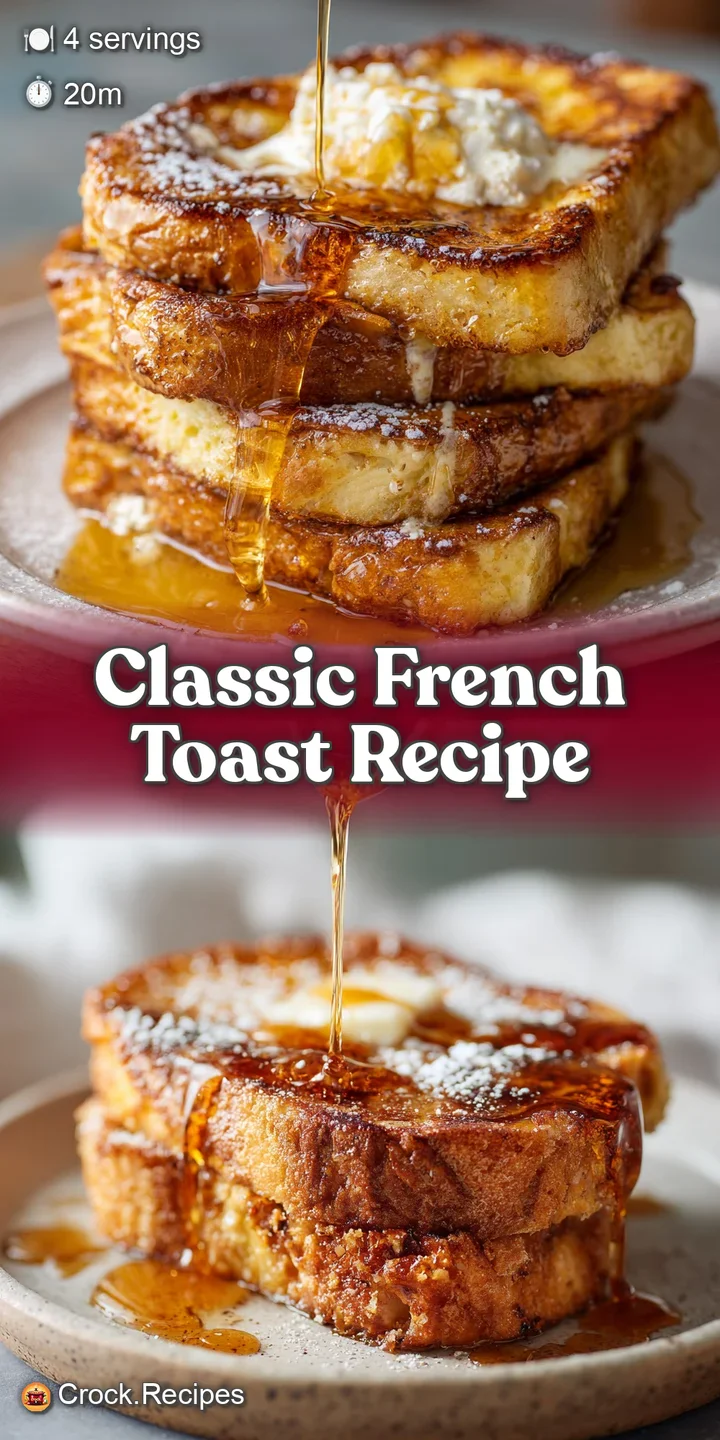
Presentation is half the fun here. I love a heavy dusting of powdered sugar and a massive knob of salted butter melting into the crevices of the bread. Since this is a rich, satisfying dish, I often pair it with something acidic, like fresh raspberries or a squeeze of lemon juice, to cut through the fat.
If you are feeling particularly fancy, you could serve this alongside a Peach Frangipane Tart recipe for a full on brunch spread. The almond flavors in the tart play beautifully with the nutmeg in the toast. And of course, real maple syrup is non negotiable don't even think about using the corn syrup stuff! The woody, complex notes of Grade A maple syrup are the perfect final layer for this breakfast masterpiece.
Recipe FAQs
What are the ingredients of French toast?
Thick sliced brioche, eggs, heavy cream, whole milk, sugar, vanilla, cinnamon, and salt. Heavy cream is essential for a rich, custardy interior texture that stands up to soaking.
What is one common mistake when preparing French toast?
Using heat that is too high during the searing stage. High heat burns the sugar coating before the thick bread has time to cook through, leaving a raw center.
What is the trick to French toast?
Using slightly stale or pre-toasted bread that is cut at least 1 inch thick. This allows the bread to absorb the custard deep into the crumb without collapsing structurally upon contact with the hot pan.
What is the ratio of milk to eggs when making French toast?
For 4 large eggs, use 0.5 cup of milk and 0.25 cup of heavy cream. This combination ensures enough liquid for absorption but adds necessary fat from the cream to prevent sogginess.
How to prevent the French toast from becoming soggy?
Soak the bread for no more than 1 minute per side before cooking. The key is a quick absorption rather than saturation; this technique ensures you develop a firm crust. If you want to practice temperature control, see how we apply those same sensory cues in our Classic Butter Cookies recipe.
Is it true I must use a double boiler to cook French toast?
No, this is a common misconception; you cook it directly in a preheated skillet. You should use a heavy bottomed pan, like cast iron, over medium low heat with a combination of butter and oil to achieve an even, mahogany sear without burning the exterior.
How to get a crispy edge on thick cut French toast?
Use medium low heat and ensure the pan is hot before adding the butter. Once the butter melts and the foam subsides, place the soaked slices in the pan without overcrowding, cooking 3-4 minutes per side until the edges begin to sizzle audibly.
Best French Toast Recipe
Ingredients:
Instructions:
Nutrition Facts:
| Calories | 498 calories |
|---|---|
| Protein | 15.4 g |
| Fat | 27.9 g |
| Carbs | 46.2 g |
| Fiber | 1.4 g |
| Sugar | 13.5 g |
| Sodium | 378 mg |
