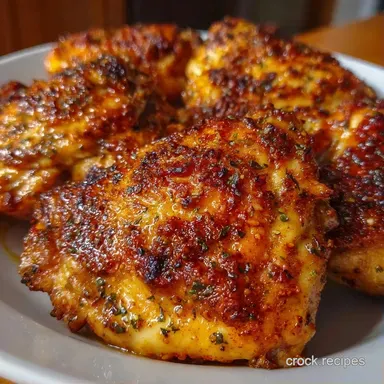
Perfect Temperature Chicken Thighs: Crispy and Juicy
- Time: 10 min active + 45 min roasting
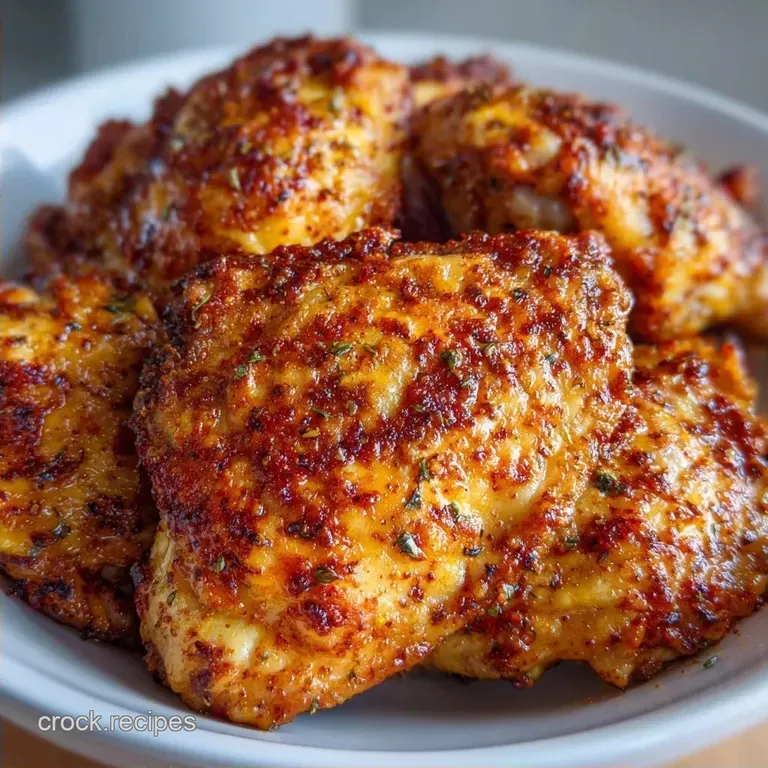
- Flavor/Texture Hook: Deep mahogany, blistered skin with a smoky, savory crust
- Perfect for: Easy weeknight dinners or meal prep for the week
- The Best Roasted Chicken Thighs
- The Secret to Crispy Skin
- Component Analysis
- Gathering Your Essentials
- Essential Tools
- Cooking Step by Step
- Fixing Common Problems
- Troubleshooting Common Issues
- Dietary Tweaks
- Adjusting the Batch Size
- Common Kitchen Misconceptions
- Storage and Scraps
- Best Side Pairings
- Recipe FAQs
- 📝 Recipe Card
The Best Roasted Chicken Thighs
That first sound is what gets me. It is that sharp, rhythmic crackle when the skin finally hits the peak of its rendering and starts to blister. Then the smell hits, a heavy, savory cloud of smoked paprika and garlic that fills the kitchen and makes everyone suddenly very hungry.
I remember the first time I tried making these, I didn't bother drying the skin. I ended up with something that felt like wet leather, and it was a total disaster.
Once I learned the importance of moisture control, everything shifted. Now, this is my go to when I need a meal that feels like a big, warm hug but doesn't keep me in the kitchen all night. It is a satisfying, comfort food staple that works every single time if you follow a couple of non negotiable rules.
You can expect meat that pulls away from the bone with almost no effort and skin that actually snaps. We are not aiming for "done," we are aiming for "succulent." By the time these come out of the oven, the house smells like a professional rotisserie shop, and the meat is incredibly juicy.
The Secret to Crispy Skin
Most people stop cooking chicken the second it hits 165°F. For breast meat, that is fine. But for Chicken Thighs, that is where you make a mistake. Thighs have more connective tissue and collagen than breasts. If you pull them too early, the meat feels rubbery and resists the fork.
Collagen Breakdown: Cooking the meat to 185°F allows the collagen to melt into gelatin, which creates that velvety, melt in-your mouth texture.
Airflow Dynamics: Using a wire rack prevents the bottom of the meat from sitting in its own grease. This means the heat hits the skin from all angles, preventing the "soggy bottom" effect.
Surface Evaporation: Patting the skin bone dry removes the water barrier. This allows the oil and spices to bond directly to the skin, creating a hard, crisp shell instead of steaming the meat.
Over High heat Rendering: At 425°F, the subcutaneous fat melts quickly. As it drips away, it leaves behind a thin, concentrated layer of skin that browns rapidly.
| Feature | Fresh Thighs | Pre cut/Frozen Thighs | Impact |
|---|---|---|---|
| Skin Integrity | Taut and thick | Often torn or damp | Fresh skin crisps faster |
| Moisture Level | Natural juices | Can be water logged | Fresh tastes heartier |
| Prep Time | 10 minutes | 5 minutes (if thawed) | Minimal difference |
Component Analysis
I don't use fancy ingredients here. The goal is to support the natural flavor of the bird, not hide it.
| Ingredient | Science Role | Pro Secret |
|---|---|---|
| Avocado Oil | High smoke point | Prevents the rub from burning at 425°F |
| Smoked Paprika | Color and depth | Adds a "grilled" aroma without a grill |
| Kosher Salt | Moisture draw | Large grains create a better crust than table salt |
| Garlic Powder | Savory base | Powder sticks better to skin than fresh minced garlic |
Gathering Your Essentials
You only need a few things to get this right. Keep it simple.
- 2 lbs bone in, skin on Chicken Thighs Why this? Bone in keeps the meat juicy during over high heat roasting
- 1 tbsp avocado oil Why this? It handles the high oven temp without smoking
- 1 tsp kosher salt Why this? Better distribution and cleaner salt taste
- 1/2 tsp cracked black pepper Why this? Coarse pepper adds a subtle bite
- 1 tsp garlic powder Why this? Even coating and concentrated flavor
- 1 tsp smoked paprika Why this? Gives that deep mahogany color
- 1/2 tsp dried oregano Why this? Adds a slight earthy, herbal note
Quick Substitutions:
| Original Ingredient | Substitute | Why It Works |
|---|---|---|
| Avocado Oil (1 tbsp) | Grapeseed Oil (1 tbsp) | Similar high smoke point. Note: Neutral flavor |
| Smoked Paprika (1 tsp) | Sweet Paprika (1 tsp) | Same color, but loses the smoky depth |
| Dried Oregano (1/2 tsp) | Dried Thyme (1/2 tsp) | Similar herbal profile. Note: Slightly more floral |
I once tried using butter for the rub, but it burnt almost instantly at 425°F. Stick to the oil. Trust me on this.
Essential Tools
You do not need a professional kitchen, but a couple of specific tools make the difference between a "okay" dinner and something truly satisfying.
First, get a digital meat thermometer. Guessing the doneness of Chicken Thighs is a gamble you will eventually lose. You want to hit that 185°F mark precisely. Second, a wire cooling rack is a must. If you place the chicken directly on a foil lined sheet, the bottom will just stew in fat.
I usually use a standard rimmed baking sheet. Lining it with foil isn't about the chicken, it is about my sanity during cleanup. Grease is a nightmare to scrub, but foil just peels away.
Cooking step by step
Now, let's get into it. Focus on the textures and smells as you go.
- Preheat oven to 425°F (218°C). Line a baking sheet with foil and place a wire cooling rack on top.
- Pat the Chicken Thighs extremely dry with paper towels. Note: Use a fresh towel for each piece to ensure no moisture remains on the skin
- Rub the chicken thighs with avocado oil. Until the skin feels slick but not dripping.
- In a small bowl, mix kosher salt, black pepper, garlic powder, smoked paprika, and dried oregano. Coat both sides of the thighs, pressing spices into the skin.
- Place thighs skin side up on the wire rack. Roast for 35 to 45 minutes until the skin is deep mahogany and blistered.
- Use a digital meat thermometer to verify the thickest part of the thigh reaches 185°F (85°C).
- Remove from oven.
- Let the meat rest for 5-10 minutes. Note: This allows carry over cooking to reach 190°F and lets juices redistribute
Chef's Note: If you smell the paprika starting to scent the air too strongly (almost like it's burning), check your oven rack position. Move it to the center if the top is browning too fast.
Fixing Common Problems
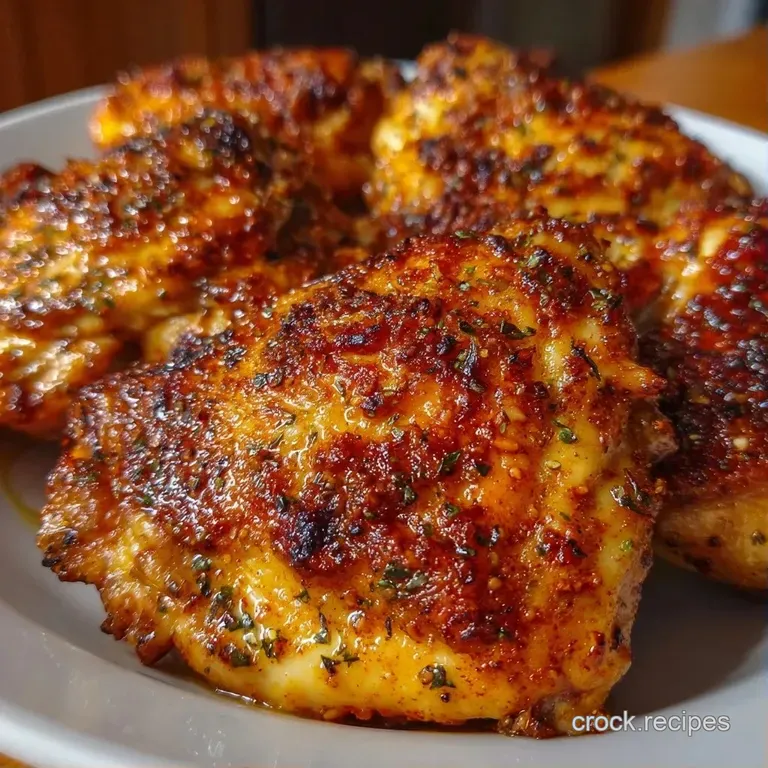
Even with a plan, things happen. The most common issue I see is skin that doesn't quite shatter when you bite into it. This usually happens because the chicken was too crowded on the pan. When thighs are touching, they create a "steam zone" that softens the skin. Give them at least an inch of space.
Troubleshooting Common Issues
| Issue | Solution |
|---|---|
| Why Your Skin Is Rubbery | This is almost always a moisture issue. |
| Why The Meat Is Dry | Surprisingly, undercooking can feel like dryness. If you pull the meat at 165°F, the fibers are still tight and "rubbery," which people often mistake for being dry. |
| Why Seasoning Is Burnt | If you use a rub with sugar or a low smoke point oil, the 425°F heat will carbonize the spices. Stick to the avocado oil and the simple spice blend listed above. |
Common Mistakes Checklist
- ✓ Patted skin dry with paper towels
- ✓ Used a wire rack for airflow
- ✓ Checked temp in the thickest part of the thigh
- ✓ Allowed the meat to rest for at least 5 mins
- ✓ Avoided crowding the baking sheet
Dietary Tweaks
If you are avoiding salt, you can swap the kosher salt for a salt free lemon pepper seasoning. It gives a bright, zesty hit that cuts through the fat. For those doing a keto or low carb diet, this recipe is already basically there. Just be careful with what you serve it with.
If you want something a bit richer, you can try a cream cheese chicken style sauce on the side. It turns a simple roast into something that feels like a restaurant meal.
For a honey glazed twist, brush a mix of honey and soy sauce on the thighs during the last 5 minutes of cooking. Don't do it earlier, or the sugar will burn and turn bitter.
Adjusting the Batch Size
When you are cooking for a crowd, don't just double the spices.
Scaling Down (2 thighs): Use the same temperature, but keep a close eye on the clock. Smaller batches often cook about 5-10 minutes faster because there is more air circulation in the oven.
Scaling Up (8-12 thighs): Work in batches. If you crowd the oven, the temperature drops and you end up steaming the meat. If you must do two pans at once, rotate them halfway through (top to bottom, front to back) to ensure even browning.
For very large batches, lower the temp to 400°F and extend the time by 10 minutes to prevent the outside from burning before the inside hits 185°F.
| Goal | Action | Expected Result |
|---|---|---|
| More Crisp | Add 2 mins | Risk of overcooking internal meat |
| More Juiciness | Pull at 180°F | Slightly firmer texture |
| Faster Cook | Use boneless | Reduce time by 15-20 mins |
Common Kitchen Misconceptions
I hear a lot of advice about chicken that just isn't true. For example, some people swear that searing the meat in a pan first "seals in the juices." It doesn't. Searing is for flavor and color. The moisture loss happens regardless.
In this recipe, the high oven heat does the work of the sear without the mess of a frying pan.
Another myth is that you should cook Chicken Thighs at a low temperature for a long time to make them tender. While "low and slow" works for pork shoulder, it often results in flabby skin on chicken. High heat is the only way to get that satisfying snap.
Storage and Scraps
Once cooled, these keep great in the fridge for 3-4 days. Store them in an airtight container. To reheat without losing the crisp, avoid the microwave. Instead, pop them back in the oven at 350°F for 10 minutes. This refreshes the skin and warms the center without drying it out.
You can freeze cooked thighs for up to 3 months, though the skin won't be as crisp after thawing.
Don't throw away the bones if you have leftovers. Toss the bone in scraps into a pot of water with some carrots and celery. It makes a fantastic base for homemade chicken noodle soup later in the week. Zero waste, maximum flavor.
Best Side Pairings
Since these are hearty and rich, you need something to cut through that fat. A sharp, vinegary slaw or roasted Brussels sprouts with a drizzle of balsamic glaze are my favorites. If you want something more filling, go with a creamy mashed potato or a wild rice pilaf.
The drippings on the foil can be scraped up and stirred into a quick pan sauce with a splash of white wine and a knob of butter. It is a simple addition that makes the whole meal feel more complete. Just make sure the chicken is resting on the counter while you whisk that sauce together.
Recipe FAQs
Is it better to bake chicken thighs at 350 or 400?
Neither; bake at 425°F. This higher heat is essential to get the skin deep mahogany and blistered rather than rubbery.
Are chicken thighs 165 or 185?
Target 185°F for the best texture. While 165°F is safe, pulling them too early leaves the fibers tight and rubbery, which many people mistake for dryness.
Is it true that chicken breast is the best part of the chicken?
No, this is a common misconception. Thighs are more flavorful and forgiving to cook because their higher fat content prevents them from drying out as easily.
Are chicken thighs good for diabetics?
Yes, they are an excellent protein source. They provide satiety and essential nutrients, though you can trim excess skin to manage fat intake.
Is 450 too hot for chicken thighs?
No, but 425°F is the sweet spot. Temperatures that are too high can carbonize the spices in the rub, whereas 425°F achieves a perfect crisp without burning the seasoning.
Can I use chicken thighs instead of chicken breasts?
Yes, and they often taste better. Thighs stay juicy across many cooking styles, such as a slow cooker orange chicken.
What is the best way to cook skinless chicken thighs?
Sear them in avocado oil before roasting. This creates the flavor and browning usually provided by the skin while keeping the meat moist in the oven.
Crispy Roasted Chicken Thighs