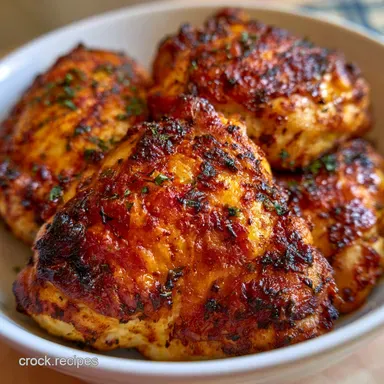
Crispy Oven Baked Chicken Thighs: Simple Recipe

- Time: 5 min active + 40 min cooking = Total 50 mins
- Flavor/Texture Hook: Smoky, hearty flavor with skin that actually shatters
- Perfect for: Weeknight comfort dinners or easy meal prep
That first hiss when the thighs hit the hot parchment paper is the best part. I can still smell the smoked paprika hitting the oil, filling the kitchen with that deep, campfire aroma that makes the whole house feel warm. It's the kind of scent that makes everyone wander into the kitchen asking when dinner is ready.
Honestly, for a long time, I struggled with "soggy skin syndrome." I'd throw chicken in the oven, and it would come out grey and rubbery. The secret wasn't a fancy gadget, but just paying attention to the moisture on the skin.
Once I started treating the surface of the chicken like a science project, everything changed.
You're going to love this because it's low effort but high reward. We're using a Simple Baked Thighs Recipe that focuses on a few key steps to build layers of flavor. You'll get a hearty, satisfying meal that tastes like you spent hours on it, even though you were probably scrolling through your phone while it baked.
How to Actually Nail This Simple Baked Thighs Recipe
Getting that deep brown color isn't about luck; it's about how you handle the chicken before it even sees the oven. I once made the mistake of seasoning the chicken while it was still damp from the package. The result? The spices turned into a paste that steamed the skin instead of crisping it.
Now, I'm obsessive about the paper towel step.
The magic happens when the skin is bone dry. When moisture hits a hot oven, it turns into steam, and steam is the enemy of crispiness. By removing every drop of water, the olive oil can bond directly to the skin, creating a thin, fried like layer that protects the meat inside.
Another thing to watch is the spacing. It's tempting to crowd the pan to save space, but if the thighs are touching, they'll release juices that pool around the edges. This turns your roast into a boil. Give them room to breathe, and you'll get that consistent, mahogany finish across the whole batch.
How the Skin Shatters
- Moisture Removal
- Dry skin allows the fat to render quickly without the interference of steam.
- High Heat
- 425°F is the sweet spot for browning the surface before the inside overcooks.
- Fat Conduction
- Olive oil spreads the heat evenly, helping the spices toast instead of burn.
| Method | Time | Texture | Best For |
|---|---|---|---|
| Oven Baked | 40 mins | Shatter crisp skin, juicy interior | Hands off cooking |
| Stovetop | 25 mins | Charred skin, faster cook | Small batches |
| Slow Cooker | 6 hours | Fall apart tender, no crisp skin | Shredded chicken |
The Flavor Building Blocks
I've tried a dozen different spice blends, but this specific combo is the gold standard for comfort food. The smoked paprika is the real hero here. It doesn't just add a red hue; it provides a woody, deep undertone that mimics a grill. If you use regular paprika, it's fine, but you lose that hearty, outdoorsy vibe.
The garlic powder is essential because fresh garlic often burns at 425°F, leaving you with bitter black bits. The powder distributes evenly and toasts into the skin, creating a savory crust. It's a simple approach, but when these layers hit the heat, they transform into something really satisfying.
Component Analysis
| Ingredient | Science Role | Pro Secret |
|---|---|---|
| Bone in Thighs | Fat reservoir | The bone keeps the meat moist during high heat |
| Olive Oil | Heat conductor | Use a high smoke point oil for better browning |
| Smoked Paprika | Color and Aroma | Adds a "charred" taste without an actual fire |
| Garlic Powder | Savory depth | Toasts into the skin for a concentrated flavor |
The Essential Kitchen Gear
You don't need a professional kitchen for this, but a few things make it way easier. I always use a rimmed baking sheet. Without the rim, any oil or rendered fat that escapes could end up on the bottom of your oven, and nobody wants to deal with a grease fire.
Parchment paper is a non negotiable for me. Not only does it stop the chicken from sticking, but it also makes cleanup a breeze. If you have a wire cooling rack that fits inside your baking sheet, use it! According to Serious Eats, elevating the meat allows air to circulate underneath, which prevents the bottom from getting soggy.
Step-by-step Cooking Guide
Let's get into the actual process. Keep it simple and follow these steps exactly for the best results.
- Preheat your oven to 425°F (218°C) and line a large rimmed baking sheet with parchment paper. Note: A hot oven is critical for the initial sizzle.
- Use paper towels to pat every inch of the chicken skin completely dry. Note: Be thorough; any dampness will prevent the skin from shattering.
- In a small bowl, whisk together the olive oil, salt, black pepper, garlic powder, and smoked paprika.
- Rub the oil mixture generously over the skin and underneath the chicken. Note: Press the seasoning into the skin to create a savory crust.
- Place the thighs skin side up on the prepared tray, leaving at least an inch of space between each piece. Note: This prevents the chicken from steaming.
- Bake for 35–40 minutes until the skin is deep mahogany brown and the internal temperature reaches 175°F (80°C).
- Remove from the oven and let the meat rest for 5 minutes before serving. Note: This allows the juices to redistribute for a velvetier texture.
Fixing Common Kitchen Disasters
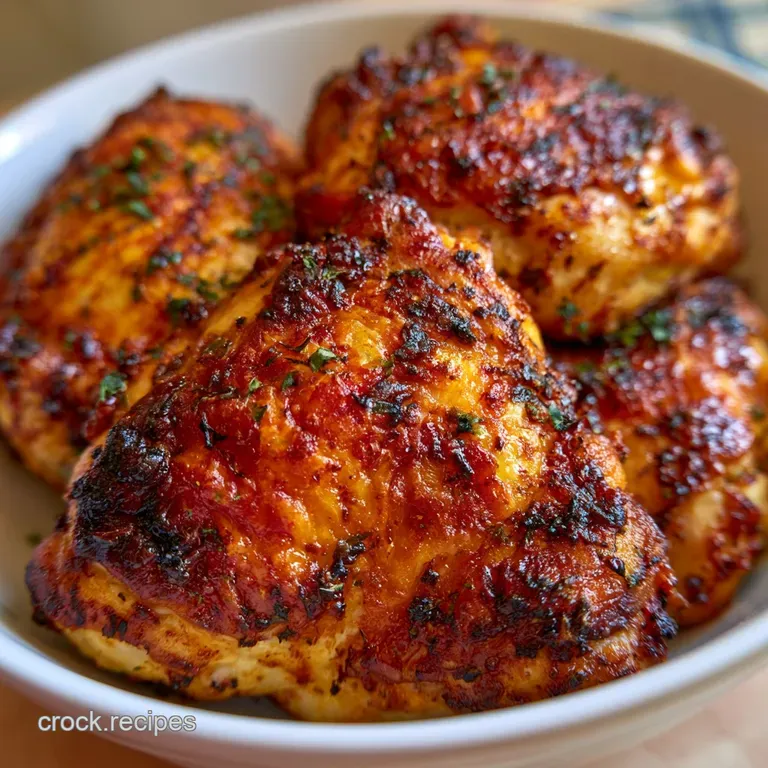
Even the best of us hit a snag. The most common issue I see is skin that stays soft. This usually happens because the oven wasn't hot enough or the pan was too crowded. When the thighs are too close, they create a humid environment that traps steam.
Another problem is the "dry out." While thighs are forgiving, if you cook them way past 175°F, you lose that juicy interior. Unlike breasts, thighs actually taste better when cooked slightly higher because the collagen breaks down, but there's still a limit.
Rubbery Skin
If your skin isn't crisp, it's usually a moisture issue. Either the chicken was damp or the oven temperature dropped too much when you opened the door.
Dry Meat
Overcooking can happen if your oven runs hot. Use a meat thermometer to pull them at the exact right moment.
| Problem | Root Cause | Solution |
|---|---|---|
| Pale Skin | Oven temp too low | Increase heat to 425°F |
| Soggy Bottom | Crowded pan | Space thighs 1 inch apart |
| Burnt Spices | Too much oil/sugar | Stick to the measured spices |
Common Mistakes Checklist
- ✓ Patting skin dry with paper towels
- ✓ Using a rimmed tray for fat catch
- ✓ Leaving space between chicken pieces
- ✓ Resting meat for 5 minutes
- ✓ Using a meat thermometer for 175°F
Tasty Twists and Swaps
Once you've got the base down, you can really play with this Simple Baked Thighs Recipe. I love adding a drizzle of honey in the last 5 minutes of cooking to get a sticky, glazed finish. Just be careful, as honey burns quickly at high heat.
If you're in the mood for something more creamy, maybe try my Cream Cheese Chicken for a change. It's a different vibe entirely, but great for those cozy winter nights. For a zesty version of this roast, swap the paprika for lemon zest and dried oregano.
The Boneless Modification
If you use boneless, skinless thighs, reduce the bake time to 20-25 minutes. Since there's no bone to insulate the meat, they cook much faster.
The Low Sodium Swap
Replace the salt with a salt free herb blend or increase the paprika and garlic powder to maintain the flavor profile.
| Original Ingredient | Substitute | Why It Works |
|---|---|---|
| Olive Oil (2 tbsp) | Avocado Oil (2 tbsp) | Higher smoke point. Note: Neutral flavor, better for very high heat |
| Smoked Paprika (1 tsp) | Chipotle Powder (1 tsp) | Adds heat and smoke. Note: Makes the dish spicy |
| Garlic Powder (1 tsp) | Onion Powder (1 tsp) | Similar savory profile. Note: Slightly sweeter, less pungent |
If you're scaling this up for a crowd, don't just double the pan. Work in batches or use two separate trays. If you crowd a single large tray, the temperature in the center of the oven drops, and you'll lose that shatter crisp skin.
Truths About Baking Chicken
I hear people say that you need to sear chicken in a pan first to "lock in the juices." That's just not true. Searing is for flavor and color, but it doesn't create a seal. The high heat of the oven in this recipe does the same job without the extra messy pan.
Some also think you should cook chicken until it's exactly 165°F. While that's the safety standard for breasts, thighs have more connective tissue. Cooking them to 175°F actually makes them more tender because the collagen turns into gelatin, which gives the meat a silky feel.
Storage and Zero Waste
If you have leftovers from this Simple Baked Thighs Recipe, store them in an airtight container in the fridge for up to 4 days. To reheat, avoid the microwave if you can. Use a toaster oven or air fryer for 5 minutes to bring that skin back to life.
For freezing, let the chicken cool completely, wrap them individually in foil, and freeze for up to 3 months. Thaw in the fridge overnight before reheating in the oven.
Don't toss the bones! If you used bone in thighs, save the carcasses in a freezer bag. Once you have a few, simmer them with carrot tops and onion skins to make a hearty, homemade stock. It's a waste to throw away that collagen rich gold.
Hearty Pairing Suggestions
Since these thighs are rich and smoky, you need something to cut through that fat. I love serving them with a crisp apple slaw or roasted Brussels sprouts with a splash of balsamic vinegar. The acidity balances the heartiness of the meat.
If you want a different sauce profile for your next meal, the Tomato Garlic Chicken is a winner. For this specific roast, though, keep the sides simple. A pile of mashed potatoes or some steamed broccoli is all you need to make this Simple Baked Thighs Recipe feel like a complete feast. Trust me, the chicken is the star here, so let it shine.
Recipe FAQs
Is it better to bake chicken thighs at 400 or 425?
Use 425°F (218°C). This higher temperature is critical for the initial sizzle and ensuring the skin becomes deep mahogany brown and crispy.
Are chicken thighs good for diabetics?
Yes, they are. Chicken thighs provide a high protein, low-carb option that helps maintain stable blood sugar levels.
Can I eat chicken thighs with IBS?
Yes, generally. They are a lean protein source, though some individuals may need to monitor their sensitivity to garlic powder.
How long does it take for thighs to cook in the oven?
Bake for 35 40 minutes. The meat is perfectly done when the internal temperature reaches 175°F (80°C).
How to cook chicken thighs in the oven with bones?
Preheat your oven to 425°F (218°C) and bake for 35 40 minutes. Pat the skin completely dry and rub with the oil and spice mixture before placing them skin side up on a parchment lined tray.
How to roast boneless skinless chicken thighs?
Reduce the roasting time. Because there is no bone or skin to insulate the meat, these cook much faster and should be monitored closely to avoid overcooking.
What are some variations for this recipe?
Swap the seasoning for international flavors. If you enjoyed the roasting process here, see how we apply similar heat in our spiced Moroccan chicken.
Simple Baked Chicken Thighs