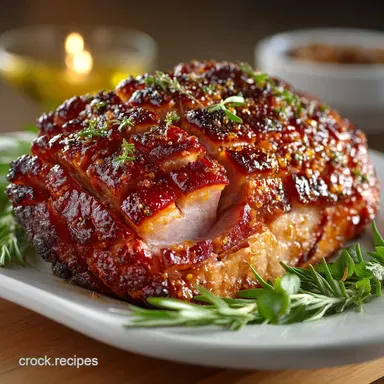
The Festive Honeymustard Glazed Baked Ham
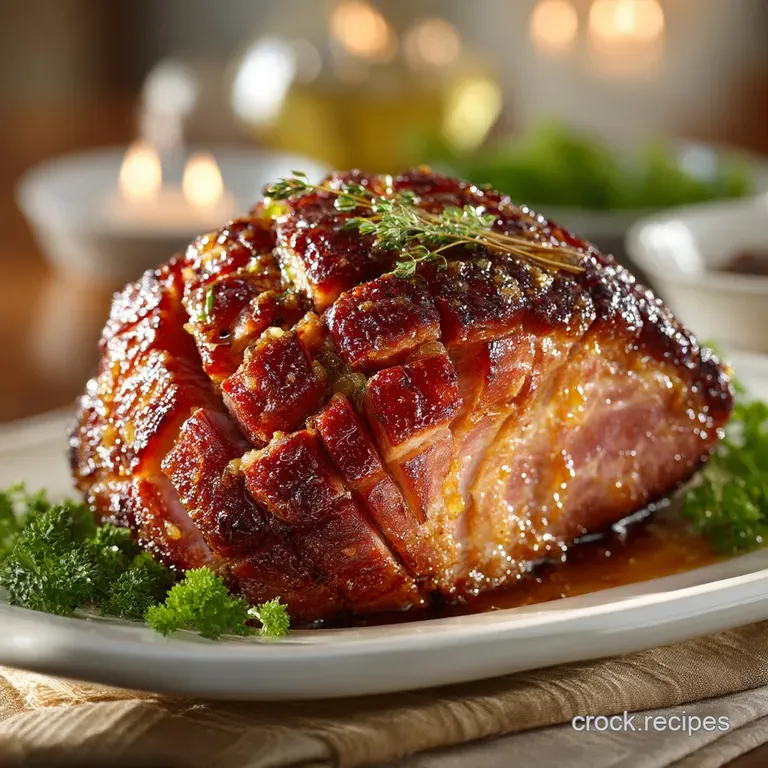
- The Essential Guide to a Perfectly Moist Baked Ham
- Why This Honey-Mustard Glaze is Your New Holiday Secret Weapon
- Assembling Your Arsenal: Ingredients for the Ham and the Sticky Glaze
- Step-by-Step: Transforming a Simple Cut into a Glazed Masterpiece
- Troubleshooting and Expert Tips for the Ultimate Baked Ham
- Recipe FAQs
- 📝 Recipe Card
The Essential Guide to a Perfectly Moist Baked Ham
The grandeur of a beautifully prepared center-piece cannot be overstated, especially when hosting a major celebration. Whether you are aiming for the Best Thanksgiving Ham or a magnificent Ham For Christmas Dinner, the goal remains the same: a glistening, lacquered exterior paired with an impossibly moist, tender interior.
This comprehensive baked ham recipe guarantees success by controlling moisture during the critical cooking phase and timing the application of the intensely flavourful glaze perfectly.
Forget the bland, dry hams of the past; this approach transforms a simple cured pork product into a show-stopping holiday roast, revered for its balance of salt, smoke, and sticky sweetness.
Why This Honey-Mustard Glaze is Your New Holiday Secret Weapon
The secret to a truly outstanding Glazed Ham lies not just in the cooking, but in the vibrant complexity of the baked ham glaze itself. Our signature honey-mustard mixture strikes the ideal chord between pungent, sharp, and deeply sweet, creating a caramelized crust that seals in the juices and elevates the entire dish.
Deciding Between Bone-In and Boneless Hams: Pros and Cons
When selecting your foundation, you generally face a choice between bone-in and boneless varieties. While boneless hams (including spiral-cut options) offer ease of carving, they have less insulation, significantly increasing the risk of drying out.
For guaranteed moisture and a superior flavour profile, I always recommend a bone-in ham, specifically the shank or butt portion. The bone acts as a natural temperature regulator, ensuring a slower, more even heating process, which results in a far juicier finished product.
The Sweet and Savoury Science of Glazing
This baked ham glaze is built on a foundation of dark brown sugar and runny honey, which provides both the viscosity and the rich caramel notes we seek. This intense sweetness is then expertly balanced by the acidity and bite of Dijon mustard and apple cider vinegar.
A touch of fruit, we use apple cider or orange juice, adds necessary moisture to keep the glaze workable and prevents it from becoming too brittle too quickly. Finally, warming spices like ground ginger and cinnamon weave a complex aromatic background, complementing the natural smokiness of the cured ham beautifully.
Related Recipes Worth Trying
- Easy FoilBaked Salmon with Asparagus Lemon Garlic Butter — Forget washing up This easy baked salmon with asparagus and lemon garlic butter steams perfectly in foil for a foolproof bright weeknight dinner Get the recipe
- SoftBaked Cinnamon Roll Sugar Cookies with Cream Cheese Glaze — Capture that sticky bun joy without the yeast fuss These Cinnamon Roll Sugar Cookies are rolled spiced and topped with tangy cream cheese frosting Perfect...
- Easy Baked Chicken Chimichangas Recipe for Perfect Crunch — Ditch the deep fryer These Homemade Chimichangas use shredded chicken and a simple baking method for amazing flavour and crunch A new comfort food chicken...
Assembling Your Arsenal: Ingredients for the Ham and the Sticky Glaze
Preparation is key to a stress-free cooking experience. Before you even preheat the oven, ensure you have sourced high-quality ingredients and gathered the necessary tools for both scoring and basting.
Sourcing the Best Smoked Ham: Cured vs. Fresh Options
The modern baked ham recipe generally relies on a fully cooked, cured ham. This is an essential distinction: we are reheating the meat, not cooking it from a raw state. Look for an 8 to 9 lb fully cooked, bone-in piece.
If you can find one with the skin still attached, you will need to trim it down to leave a tidy 1/4-inch layer of fat, which is absolutely vital for moisture retention and for developing that magnificent crust.
The Pantry Staples That Create the Ultimate Glaze Depth
The depth of this honey-mustard glaze comes from simple pantry ingredients used in generous proportion. You will need 1 cup of packed dark brown sugar and 1/2 cup of runny honey for the sugar base, combined with 1/2 cup of apple cider and 1/4 cup of smooth Dijon mustard for the liquid and tang.
Don't forget the aromatic spices, a teaspoon of ground ginger and a half teaspoon of cinnamon, to bring warmth to the final product.
Essential Equipment for Scoring and Basting
To execute this recipe properly, certain pieces of equipment are non-negotiable. First, you need a large roasting pan fitted with a rack; this elevates the ham, allowing air to circulate and ensuring the glaze crisps up evenly.
A sharp chef’s knife or a Stanley knife is necessary for scoring the fat cap into neat, 1-inch diamond patterns. Finally, an accurate meat thermometer, a digital probe is highly recommended, is the only way to reliably monitor the internal baked ham temperature and avoid overcooking.
Step-by-step: Transforming a Simple Cut into a Glazed Masterpiece
Knowing How To Cook A Ham In The Oven is all about method and temperature control, ensuring that the ham is thoroughly heated before the highly sugary glaze is introduced.
The Crucial Prep Work: Scoring the Fat Cap and Pinning Cloves
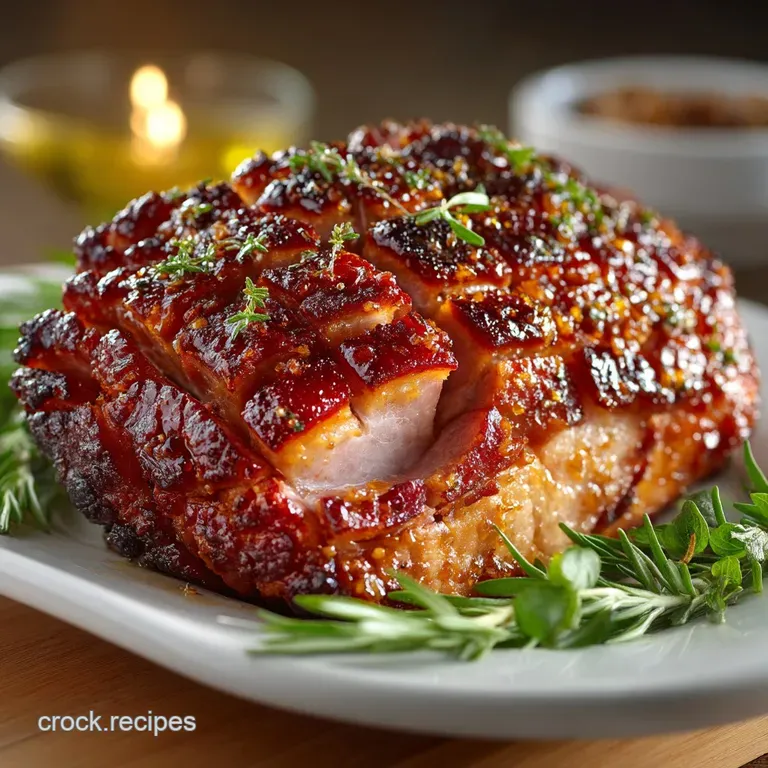
Begin by preheating your oven to a moderate 325°F (160°C). Remove any outer packaging or thick rind, leaving that crucial 1/4-inch layer of fat. Using your sharp knife, score the fat in a diamond pattern, making sure to cut only into the fat layer and not the meat itself.
This scoring allows the fat to render and provides beautiful crevices for the glaze to seep into. For traditional aesthetics and aroma, press a whole clove into the centre of each diamond.
Place the ham, fat-side up, on the rack in your roasting pan, adding about a cup of water or cider to the base of the pan to generate steam.
The Initial Bake: Achieving Optimal Internal Temperature
The first stage of the cooking process is purely about reheating and moisture retention. Cover the entire roasting pan tightly with heavy-duty foil. This steam bath prevents the exterior from drying out while the core heats up.
Bake the ham for approximately 1 hour 45 minutes, calculating 13–15 minutes per pound for an 8-pound cut. The goal for this initial bake is to reach an internal temperature of 120°F (49°C).
The Basting Ritual: When and How to Apply the Honey Glaze
Once the ham reaches 120°F (49°C), remove the foil and increase the oven temperature dramatically to 400°F (200°C). This high heat is essential for caramelizing the sugars. While the ham rests momentarily, quickly combine your glaze ingredients in a saucepan and simmer until the sugar dissolves.
Now, the basting ritual begins: brush the ham liberally with about one-third of the prepared glaze. Return the uncovered ham to the oven for 15 minutes. Repeat this process twice more, glazing every 15 minutes, until the crust is deeply golden brown, sticky, and lacquered.
The ham is finished when its internal baked ham temperature registers 140°F (60°C). Applying the glaze only in this final 45-minute window prevents the sugars from burning and becoming bitter.
Resting the Ham: Why This Final Step is Non-Negotiable
As soon as the ham hits 140°F (60°C), remove it from the oven and transfer it to a cutting board. Tent it loosely with foil, do not wrap it tightly. This mandatory 20-minute rest period allows the internal juices, which have been driven to the centre by the heat, to redistribute evenly throughout the muscle.
Skipping this step means a puddle of flavourful juice on your cutting board and a far drier slice of meat.
Troubleshooting and Expert Tips for the Ultimate Baked Ham
Preventing the Dreaded Dry Ham: Temperature Controls and Tent Techniques
The single most effective tool against a dried-out ham is your meat thermometer. Never rely solely on time; the true benchmark is the internal baked ham temperature. Ensure you use a roasting rack for even heat distribution, and utilize that heavy-duty foil tent during the initial bake to create a moist microclimate around the meat.
If you notice the glaze beginning to darken too quickly during the final stage, simply cover the top of the ham with a small piece of foil and continue baking until the temperature target is reached.
Recommended Side Dishes to Complement the Glaze
The sweet and savoury profile of a magnificent Glazed Ham requires complementary sides that offer texture and contrast. What To Eat With Glazed Ham should generally lean toward neutral starches and slightly bitter or acidic vegetables.
Creamy, buttery mashed potatoes are a classic pairing, as they soak up the pan drippings. For greens, consider roasted Brussels sprouts tossed with crispy bacon or simple steamed green beans.
To cut through the intense richness of the glaze, serve a sharply acidic accompaniment like homemade apple sauce or spiced pear chutney.
Handling Ham Leftovers: Storage, Freezing, and Reheating
If you are serving 14 to 16 people, you are likely to have leftovers. Store carved ham slices in an airtight container in the refrigerator for up to four days. For longer storage, tightly wrap individual portions in plastic wrap followed by a layer of aluminum foil, then freeze them.
Properly wrapped, the ham will remain good in the freezer for up to three months. Beyond sandwiches, the leftover bone and any remnants of meat are the perfect base for creating a rich ham hock stock, lending incredible depth to split pea soup or white bean chili.
Reheat slices gently in a pan with a splash of water or cider to prevent them from drying out, or briefly in a microwave.
Recipe FAQs
Why does my ham always turn out a bit dry? Any secret tips for keeping it moist?
Right then, dryness is the bane of any good ham cook! The trick is steam and temperature control. For the initial cook, keep the ham tightly tented with foil and use a cup of water or cider in the roasting pan, this traps moisture like a pro.
Crucially, never let the internal temperature sail past 140°F (60°C); remember, it's already cooked, we're just warming it up for that sticky lacquer.
How long should I cook a fully cooked Baked Ham for, and what’s the perfect temperature?
Timing depends entirely on the joint’s weight, usually around 13–15 minutes per pound, but a meat thermometer is your absolute best friend here. You are aiming for an internal temperature of 140°F (60°C) before resting.
Stick rigorously to this rule and resist the urge to crank up the oven heat early, otherwise, you'll end up with a burnt glaze and a dry centre!
Is scoring the fat just for looks, or does it actually help the cooking process?
Scoring the fat cap, cutting shallow diagonal lines to create diamonds, is absolutely vital, not just decoration! It allows that glorious honey-mustard glaze to seep down into the fat layer, delivering maximum flavour.
It also helps prevent the thick layer of fat from shrinking too aggressively, which can otherwise make the exterior look rather messy.
That glaze sounds glorious, but is there a way to make it less sweet?
If you prefer less of a sugar hit, you can certainly dial back the sweetness. Try cutting the amount of honey and brown sugar by a quarter, and substitute the volume with more acidic components, like extra Dijon mustard or a splash of balsamic vinegar.
Using fiery English mustard powder in place of smooth Dijon also provides a powerful counterpoint that balances the sugary element beautifully.
We're only a small family, what’s the best way to store the leftover ham?
Baked Ham is fantastic for leftovers! Once cooled, wrap the ham tightly in aluminium foil or store slices in an airtight container. It keeps beautifully in the fridge for up to 5 days.
For longer storage, slice and freeze portions; they are brilliant for quick weeknight dinners, perfect in a proper ham and cheese sandwich, or used to enrich a slow-simmered pea and ham soup.
Foolproof HoneyMustard Glazed Baked Ham Perfect for Christmas Dinner